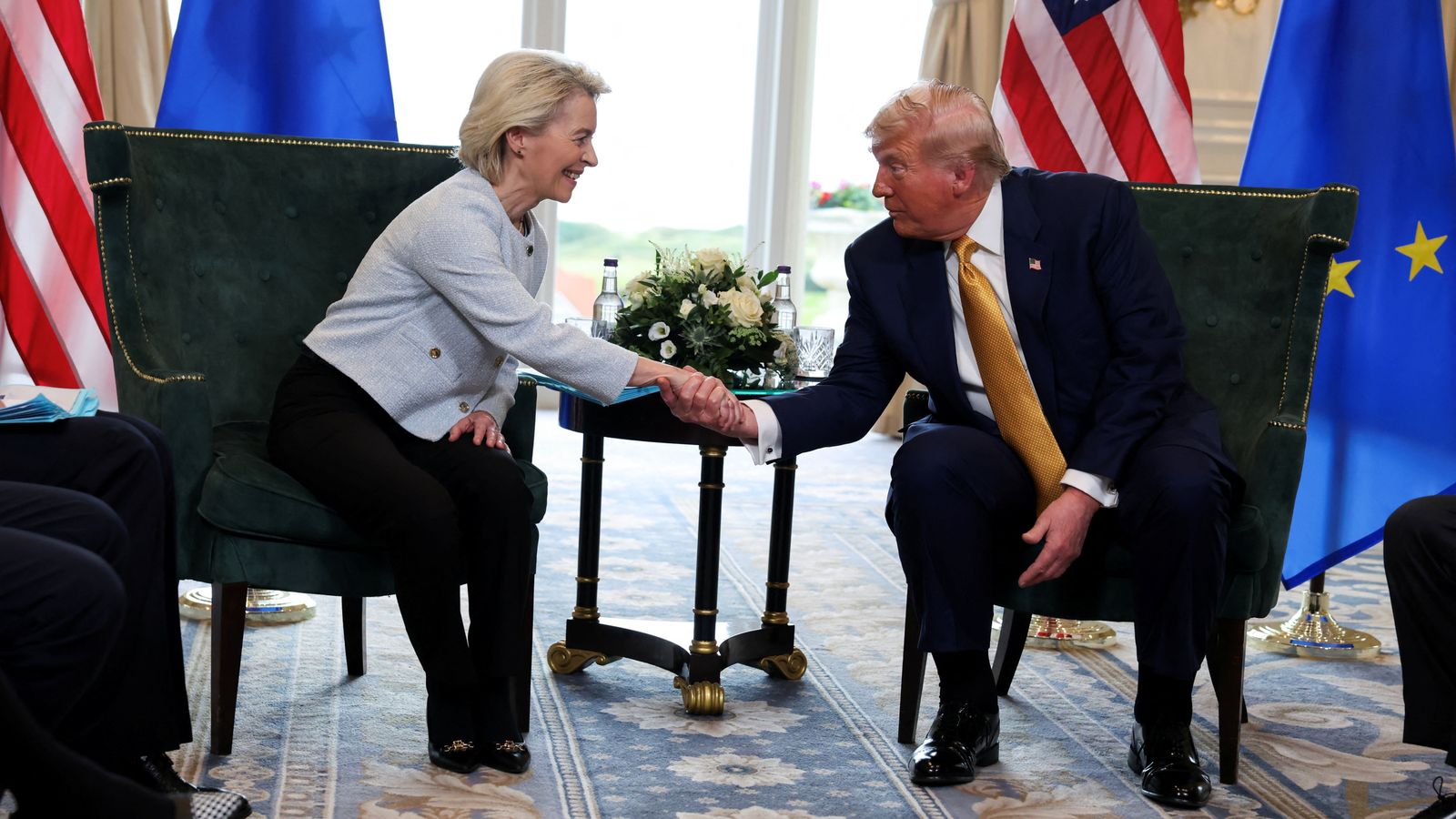
The United States and European Union have reached a trade agreement, under which the US will impose a 15% tariff on most EU goods, a reduction from the previously threatened 30%, while maintaining a 50% tariff on steel and aluminum. The deal includes significant EU commitments to invest $600 billion in the US, purchase $750 billion in US energy, and acquire American military equipment. Both sides lauded the agreement for bringing stability and predictability, with specific positive impacts anticipated for the automotive and agriculture sectors, though details for the spirits sector remain pending.
The United States and the European Union have reached a significant trade agreement, replacing a period of high uncertainty with a new, structured tariff framework. The deal centers on a new 15% US tariff on most EU goods, a notable de-escalation from the previously threatened 30% levy, which provides a degree of predictability for transatlantic trade. However, this resolution comes at a cost for European exporters and codifies a more protectionist stance. Critically, the agreement carves out exceptions for steel and aluminum, which will remain subject to a prohibitive 50% tariff, indicating sustained protection for these specific US industries. In exchange, the EU has made substantial commitments, including $600 billion in investments into the US, the purchase of $750 billion in US energy, and the acquisition of American military equipment. These provisions are poised to directly benefit the US energy and defense sectors and rebalance trade flows. While the deal is positioned as a positive outcome for the automotive sector by averting a worst-case scenario, the 15% tariff still represents a new cost. Uncertainty lingers for select industries, such as the spirits sector, where final terms remain undecided, highlighting that specific details are yet to be finalized.
AI-powered research, real-time alerts, and portfolio analytics for institutional investors.
Overall Sentiment
moderately positive
Sentiment Score
0.40
