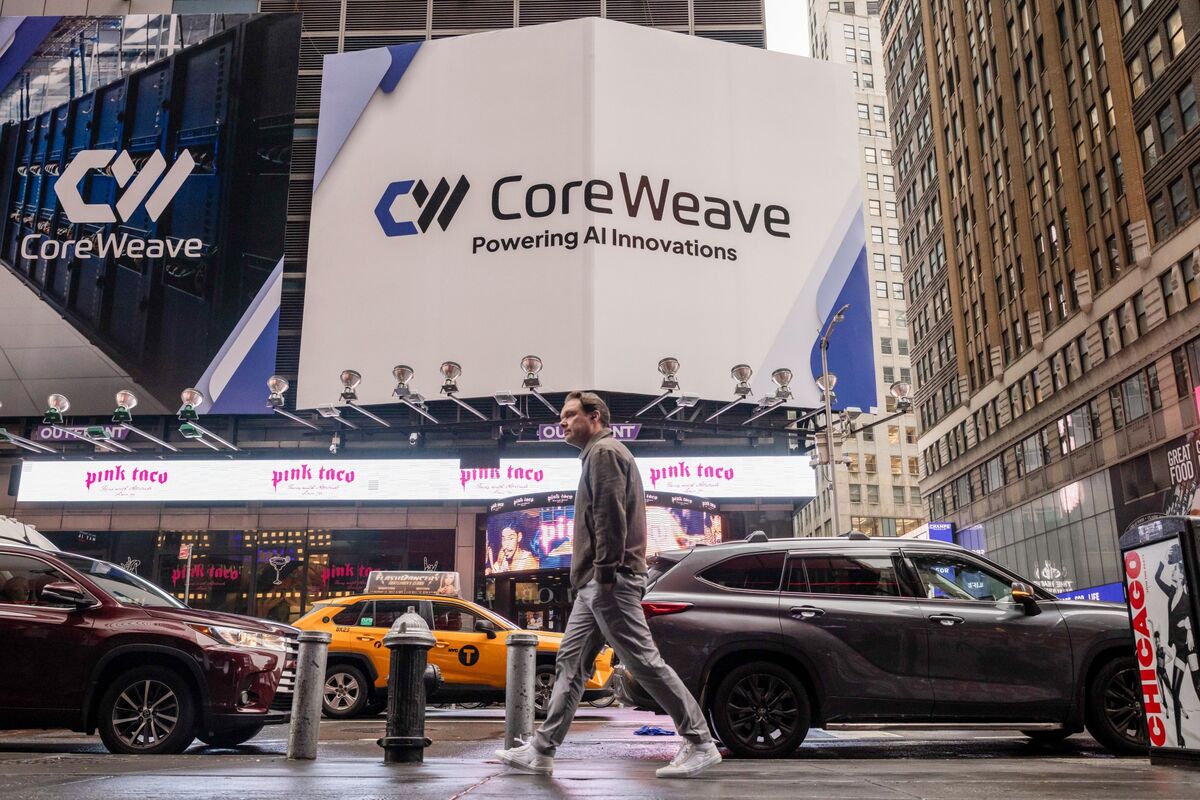
CoreWeave raised an $8.5 billion investment-grade loan secured by GPUs and a customer contract to fund cloud capacity expansion. Bloomberg reported the financing is backed by Meta contracts worth at least $19 billion, and the company says this is the largest chip-backed debt deal of its kind. The structure—chip collateral plus a major corporate customer pledge—reduces asset risk and supports aggressive growth in AI-focused infrastructure.
This financing cadence accelerates verticalization of GPU economics: large, underwritten GPU commitments convert what was a volatile spot-demand market into quasi-investment-grade collateral for banks. That reduces financing costs for scale players and raises the barrier to entry for smaller GPU clouds that rely on expensive leasing—expect a 6–18 month consolidation window where scale captures incremental share and margin.
Banks and non-bank lenders are effectively long a highly idiosyncratic hardware asset class with asymmetric resale friction; in a downside scenario the market for specialized data-center GPU inventory is shallow and highly generation-specific, so recovery values can drop 40–70% within 12–36 months depending on software compatibility. Credit tightening or a change in a large customer’s procurement cadence are 3–12 month catalysts that could crystallize lender losses and force fire-sales of inventory.
Second-order supply-chain effects: OEMs gain stronger forward order visibility, which will pull forward wafer allocations and could steepen the near-term premium on latest-gen dies while depressing secondary-market prices for previous gens. That dynamic favors dominant die vendors and hyperscalers with OEM-level bargaining power and hurts GPU leasing/hosting boutiques and used-hardware marketplaces; expect downward pressure on used-GPU pricing within 3–9 months.
The consensus sees this as demand validation for AI compute; what’s missing is the fragility of collateral fungibility and counterparty concentration. If large anchor customers internalize more of their AI stack or shift to alternative accelerators over a 12–36 month horizon, lenders—not equity holders—absorb most of the downside, creating asymmetric risk in loan participations and in equities of smaller cloud hosts.
AI-powered research, real-time alerts, and portfolio analytics for institutional investors.
Request DemoOverall Sentiment
strongly positive
Sentiment Score
0.60
Ticker Sentiment
