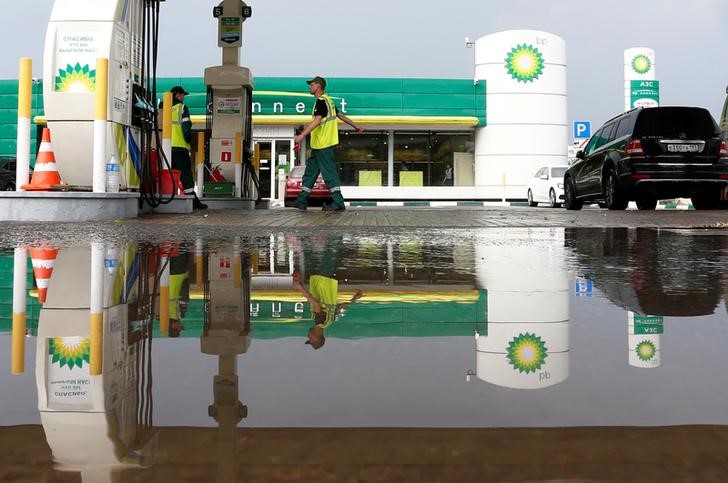
Brent crude and WTI surged more than 6% to $95.88 and $87.79 a barrel after renewed tensions around the Strait of Hormuz and a U.S. Navy seizure of an Iranian cargo ship. The disruptions lifted global oil-linked equities, with BP up 3.1%, Shell up 2.5%, TotalEnergies up 2.5%, Galp up 2.3%, and Eni up 3.2%. The escalation raises fresh doubt over the ceasefire expiring Tuesday and keeps a critical shipping chokepoint in focus.
The market is pricing a shipping bottleneck, but the bigger edge is in the dispersion between upstream cashflow winners and everyone exposed to higher freight, insurance, and working-capital drag. Integrateds with Gulf exposure should see a near-term uplift in realized margins, yet the second-order beneficiaries may be tanker owners and non-U.S. crude alternatives if Asian buyers continue to diversify away from Middle East routes. The move also compresses the relative appeal of refiners and chemical producers because feedstock costs reprice immediately while product pricing usually lags by days to weeks. The key catalyst window is very short: the next 48-72 hours around ceasefire headlines and any evidence that traffic normalizes or worsens through the strait. If more vessels continue transiting, the current risk premium can unwind quickly; if there is another high-visibility interception, energy and defense names can extend, but the asymmetry is likely better in short-dated options than outright equity longs because headline risk can reverse on one diplomatic statement. The most fragile part of the move is not physical supply today, but expectation of future disruption, which tends to mean-revert faster than realized barrels. The contrarian miss is that markets may be overestimating how much actual crude is at immediate risk and underestimating how much this helps non-OPEC supply chains. If shipping lanes remain intermittently open, the premium becomes a tax on logistics rather than a durable oil shortage, which is more bearish for industrials and airlines than for the broader market. That argues for selective exposure to assets that monetize volatility rather than direction, and for fading straight-line oil beta once front-end headlines stabilize.
AI-powered research, real-time alerts, and portfolio analytics for institutional investors.
Overall Sentiment
moderately negative
Sentiment Score
-0.45
Ticker Sentiment
