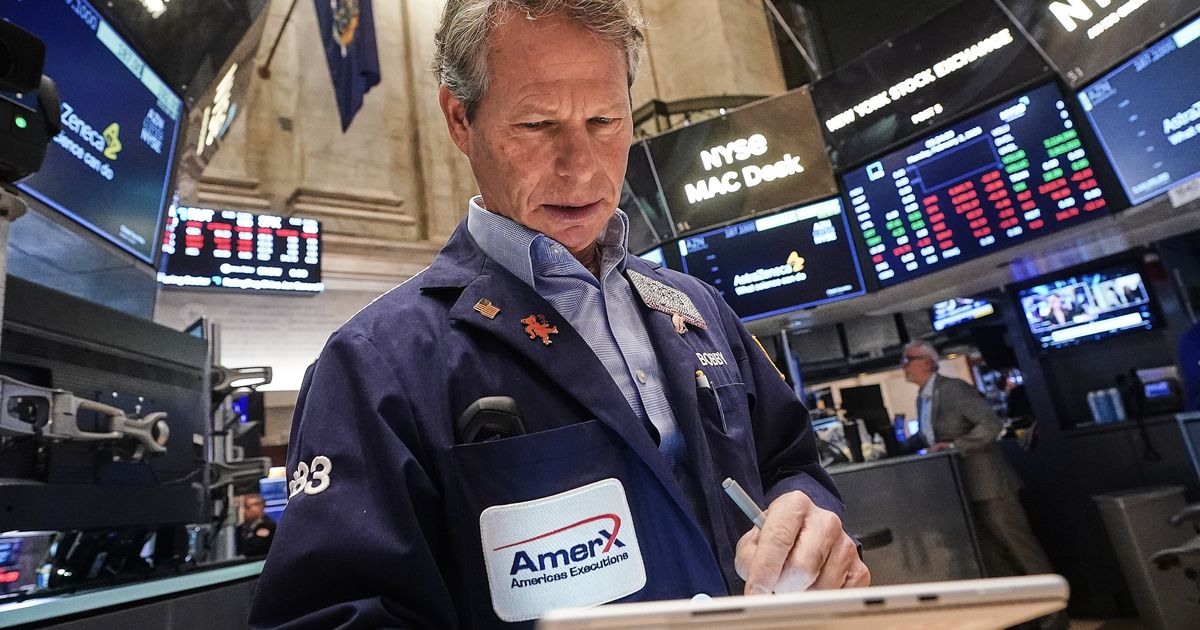
U.S. equities climbed as the S&P 500 rose 0.5% to 6,976.44, the Dow added 515.19 points to 49,407.66 and the Nasdaq gained 0.6% to 23,592.11, led by data‑storage names after stronger-than-expected results (SanDisk +15.4%). Precious metals experienced extreme volatility — gold settled at $4,652.60 (down 1.9% from Friday) after briefly trading below $4,500 and above $4,800, and silver had a dramatic recent swing including a 31.4% plunge Friday — moves markets linked to shifting Fed expectations after the nomination of Kevin Warsh. Oil fell more than 4% on signs of possible easing with Iran, boosting travel names (Carnival +8.1%, United Airlines +4.9%), while the 10-year Treasury yield ticked up to 4.28% amid stronger-than-expected U.S. manufacturing data and a postponed unemployment report.
Market structure: The immediate winners are cyclicals sensitive to energy (airlines UAL, cruise operators) and niche AI-adjacent hardware suppliers (SNDK) as oil falls >4% and data-storage demand beats estimates; losers are leveraged commodity longs (silver) and richly priced AI incumbents (NVDA) that are vulnerable to profit-taking. The violent metal swings suggest a forced-deleveraging event rather than a fundamental demand shock—liquidations compressed longs in silver/gold and likely pushed short-term volatility premium sharply higher across commodities and options.
Risk assessment: Tail risks include a Fed policy pivot (Warsh nomination ambiguity) that could flip yields >4.5% and re-price real rates, a geopolitics-driven oil shock reversing the airline trade, or contagion from highly leveraged commodity funds. Timeline: expect elevated cross-asset volatility in the next 0–30 days, sector dispersion over 1–3 months, and regime uncertainty about real rates/inflation through Q3–Q4 2026. Watch triggers: 10-year Treasury >4.5% or gold rally >10% from current levels.
Trade implications: Tactical plays favor short-duration, capital-efficient exposure: overweight SNDK (2–3% portfolio) for 3 months, tactical long UAL (1–2%) for 1–8 weeks to capture fuel tailwind, and buy 3-month put spreads on GLD/IAU or SLV to hedge renewed metal crashes. Use pair trades (long SNDK, short NVDA via 3–6 month put spreads) to express storage outperformance versus compute beneficiaries priced for perfection.
Contrarian angles: Consensus treats the metals crash as Fed-expectation driven; instead, it may be a margin-call washout—if Warsh is perceived dovish or the unemployment report (postponed) weakens, metals can reassert a multi-month bid and miners will rerate. The current equity relief rally could be overdone if yields settle higher; favor selective sector rotation rather than broad beta exposure and size stops tightly (6–10%) to avoid regime reversal.
AI-powered research, real-time alerts, and portfolio analytics for institutional investors.
Request DemoOverall Sentiment
mildly positive
Sentiment Score
0.25
Ticker Sentiment
