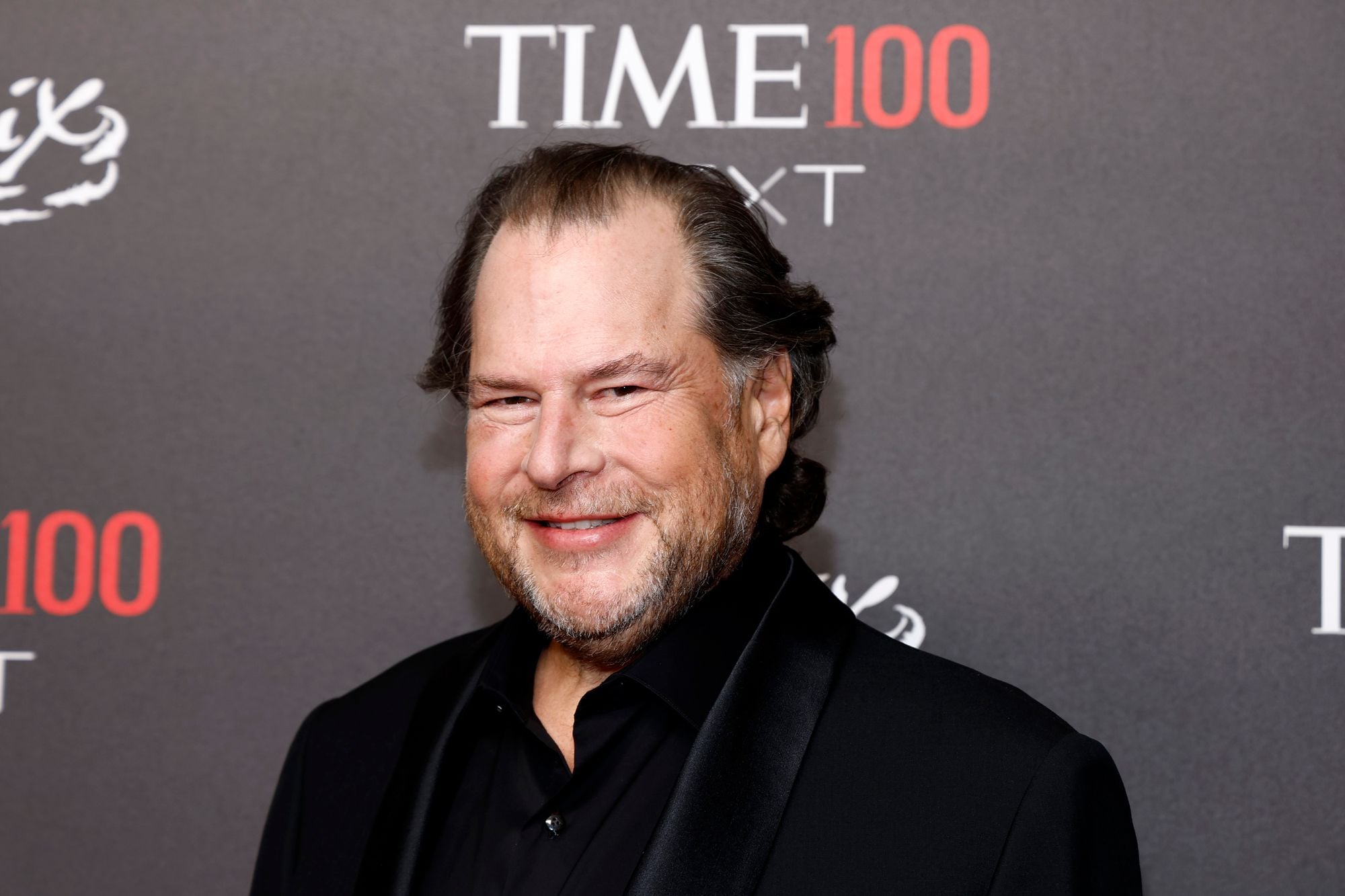
Salesforce CEO Marc Benioff made jokes about ICE during his opening keynote at the company kickoff in Las Vegas, reportedly suggesting immigration enforcement agents were monitoring international employees, prompting strong internal backlash and leaked Slack messages. Employees are circulating an open letter asking Salesforce to stop selling products to ICE and to denounce the agency's conduct, creating a reputational and ESG risk for the company. While the incident poses limited immediate financial impact, continued employee activism or client/contract pressures could create governance and reputational headwinds that investors should monitor.
Market structure: This is primarily a reputational/ESG shock to CRM rather than a demand-cycle or product-competitiveness event; losers are Salesforce (CRM) equity and short-term employee morale, winners are competing enterprise software vendors (ORCL, MSFT) that can claim steadier governance. Pricing power at CRM is unlikely to structurally erode absent client cancellations; expect transient volatility in CRM implied vol (+~10–30% realized jump in near-dated options) and negligible direct impact on bonds, FX, and commodities.
Risk assessment: Tail risks include a forced divestiture of specific federal contracts or large enterprise cancellations (low probability, high impact — revenue hit >1–2% annualized if multiple Tier-1 clients pull out). Immediate (days) risk is reputational headlines and elevated staff attrition; short term (weeks–months) is activist/ESG investor pressure and possible policy changes; long term (quarters) is talent loss and slowed international expansion. Hidden dependency: CRM’s reliance on global engineering/field teams and public-sector deals; catalysts to watch: open-letter signatures >10% staff, a major client cancellation, or an SEC/board inquiry.
Trade implications: Tactical short/hedge of CRM with size and time limits; pair trades can capture relative flow (short CRM, long ORCL or MSFT) to neutralize macro beta. Use limited-risk option structures (3-month put spreads) to cap downside while capturing elevated IV; reduce discretionary SaaS beta modestly in favour of defensive software/hardware for 30–90 days. Enter quickly (1–7 trading days) and exit or re-evaluate before next quarterly earnings (within 60–90 days).
Contrarian angles: The market may overprice governance noise — Salesforce subscription revenue is sticky and renewal rates historically >85%, so a shallow headline-driven dip could be a buying opportunity if no material client losses occur. Historical parallels (CEO gaffes at large tech firms) show short-lived drawdowns when fundamentals remain intact. Unintended consequence: aggressive shorting could mobilize ESG-aligned investors to defend CRM, compressing expected downside.
AI-powered research, real-time alerts, and portfolio analytics for institutional investors.
Request DemoOverall Sentiment
mildly negative
Sentiment Score
-0.30
Ticker Sentiment
