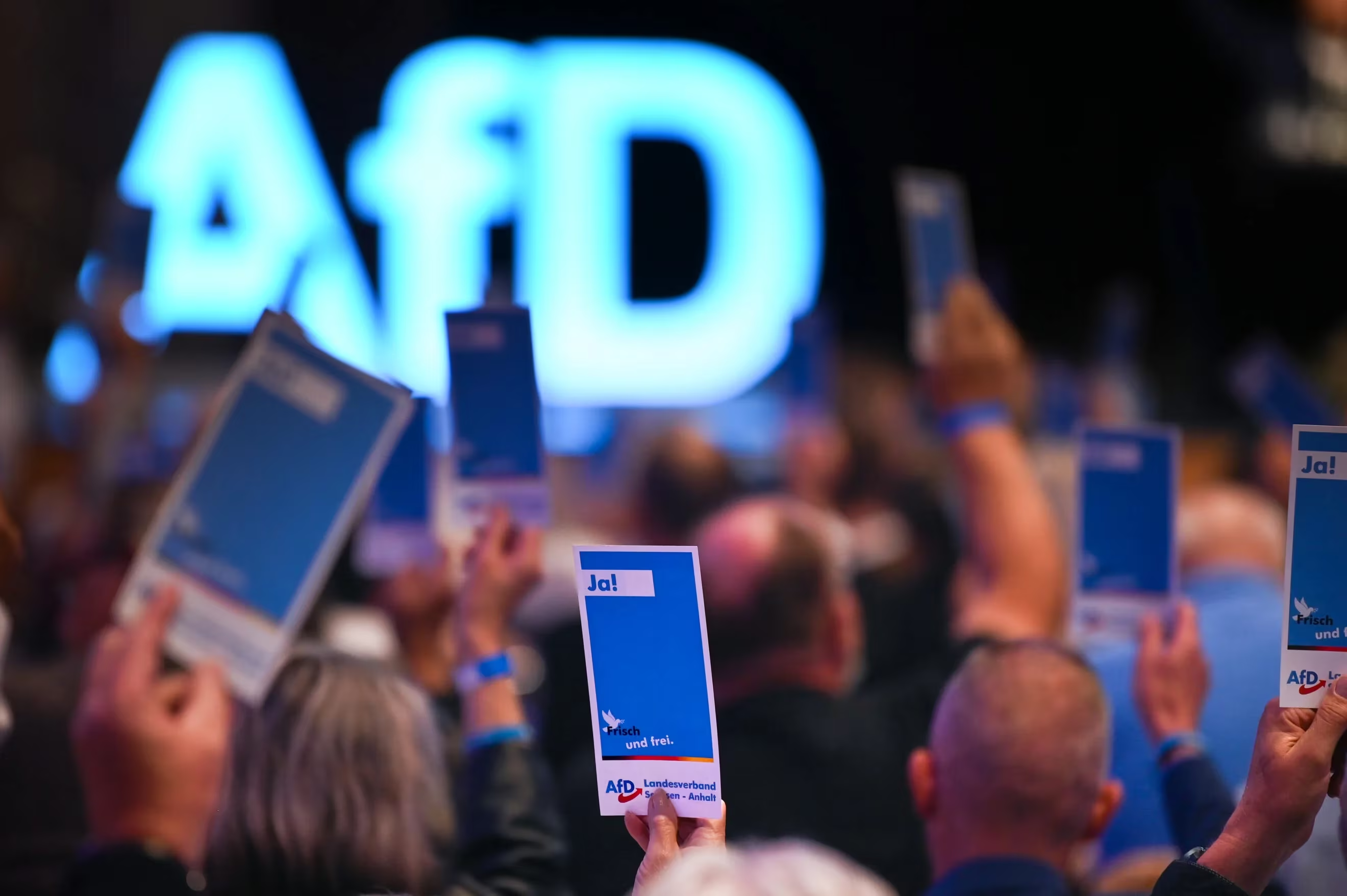
Chancellor Friedrich Merz’s conservatives have launched a high-stakes tactic in the Superwahljahr to blunt the far-right AfD’s surge in eastern Germany, notably in Saxony-Anhalt where polls show the AfD near 40%. Long-serving premier Reiner Haseloff resigned to install CDU lead candidate Sven Schulze as interim minister-president ahead of the Sept. 6 vote as a name-recognition gambit; the CDU currently polls around 26% there. A clear AfD victory or outright majority would upend Germany’s postwar political alignments, complicate coalition math, and increase political risk that could weigh on investor confidence in German regional markets and policymaking.
Market structure: A sharper AfD showing shifts risk premia toward safe assets and hits cyclicals tied to German domestic demand and exports. Winners in a near-term risk-off are Bund futures (lower yields), utilities/defense and domestic-focused retailers; losers are exporters, machinery and regional banks exposed to political fragmentation. FX: EUR weakness vs USD likely if political uncertainty persists; commodities sensitivity limited to industrial metals via lower German industrial activity.
Risk assessment: Key tail risk is an AfD-led regional breakthrough (Saxony-Anhalt >40% or AfD entering state government) triggering a sharp confidence shock—equities down 8–15% in German midcaps and bund yields compressing 30–50bp within weeks. Immediate (days) risk: headline-driven volatility around appointments; short-term (weeks–months): polling drift into September elections; long-term: structural policy shifts over years if mainstream Brandmauer breaks. Hidden dependency: ECB reaction function—persistent political fragmentation could delay German fiscal support, increasing peripheral spread volatility.
Trade implications: Position defensively into Sep 2026 elections: hedge equity exposure with 3–6 month long Bund positions (FGBL) and buy September/October 2026 puts on EWG ~10% OTM. Pair trades: long domestic-defense (RHM.DE) vs short exporters (SIE.DE or VOW3.DE) to capture relative safe-haven flows. Reduce bank exposure (DBK.DE, regional bank baskets) by 30–50% if AfD polls remain >30%.
Contrarian angles: Consensus overprices a nationwide AfD sweep; regional wins may be contained and markets could rally on clarity. Mispricings: small-cap German domestic names already hit; selective long exposure to undervalued infrastructure/defense (RHM.DE) for a 6–18 month horizon can outperform. Watch for unintended outcomes: CDU right-shift could boost corporate tax certainty or defense spending, reversing initial selloffs.
AI-powered research, real-time alerts, and portfolio analytics for institutional investors.
Request DemoOverall Sentiment
moderately negative
Sentiment Score
-0.35
