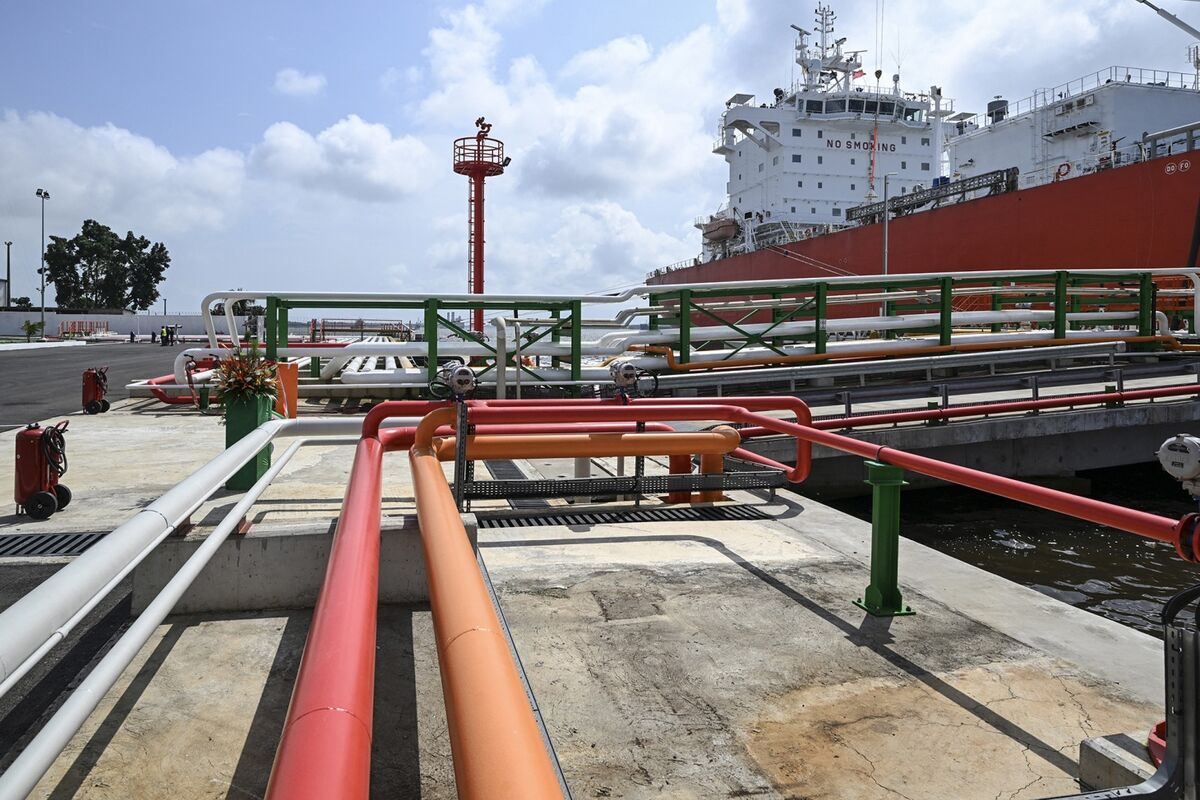
Ivory Coast expects faster economic growth over the next five years driven by expanding oil and gas activity, with Planning and Development Minister Kaba Niale forecasting oil output of at least 200,000 barrels per day by 2027-2028. The government’s production projection points to greater hydrocarbon-led GDP support and could attract upstream investment, with potential implications for West African supply and energy-focused investors assessing exposure to Ivorian developments.
Market structure: A legalized ramp to ~200k bpd in 2027–28 (≈0.2 mbd) is economically meaningful for Ivory Coast (potentially adding ~1–2 ppt GDP annually) but immaterial to global Brent (≈0.2% of supply). Direct winners are oilfield services, FPSO contractors, port/logistics operators and local banks; losers are import-dependent refiners in West Africa if crude displaces imports and any cocoa/agriculture exporters facing Dutch-disease FX effects. Pricing power will favor contractors during the multi-year build phase (2025–28) when skilled capacity is tight in West Africa.
Risk assessment: Tail risks include project delays/force majeure (piracy, civil unrest), contract renegotiation or commodity-price collapse; any single license slippage could push start by 12–24 months. Near-term (days–months) market impact will be limited; medium-term (6–24 months) impacts show in tender flows and equity of service providers; long-term (2027–2029) is when production and sovereign cash flow materialize. Hidden dependencies: majors’ capex cycles, local content/local-currency liquidity, and shipping/insurance capacity constraints.
Trade implications: Tactical winners are oilfield services (SLB/HAL/BKR) and mid-cap West-Africa E&Ps (Kosmos KOS, selective TTE/ENI exposure) via 12–24 month directional or call-spread exposure to capture project awards and FID-driven work. Cross-asset: expect modest tightening in Ivorian sovereign spreads and XOF strength vs regional peers if revenues hit targets; monitors: first-oil announcements, FID, and contractor award cadence in next 6–12 months.
Contrarian angle: The market underestimates political/operational execution risk and overestimates near-term supply impact; 200k bpd is small vs global and upside to oil prices is limited absent wider OPEC disruptions. Historical parallels (Gabon/Angola ramps) show multi-year contractor revenue flows but concentrated downside if a single FPSO/field stalls. Avoid binary exposure to Ivory Coast without contract-level confirmation.
AI-powered research, real-time alerts, and portfolio analytics for institutional investors.
Request DemoOverall Sentiment
mildly positive
Sentiment Score
0.35
