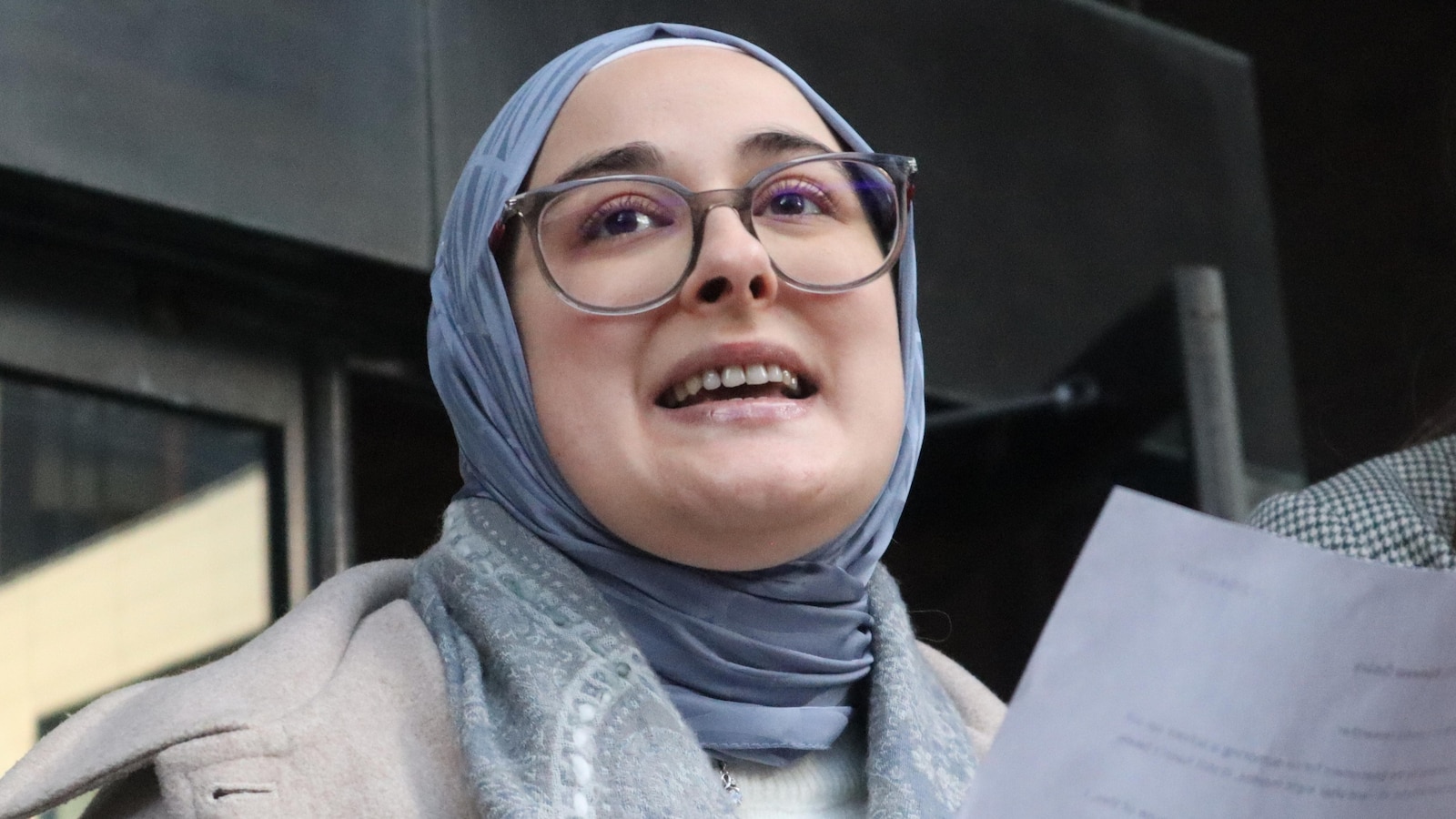
An immigration court found on Jan. 29 that the Department of Homeland Security had not proven grounds to remove Turkish Tufts PhD student Rümeysa Öztürk and terminated her removal proceedings; DHS may appeal to the Board of Immigration Appeals while the 2nd U.S. Circuit Court of Appeals continues to review related litigation. Öztürk, detained in March amid heightened enforcement targeting foreign-born students and activists after co-authoring a pro-Palestinian op-ed, was released from detention in May and has raised First Amendment, due process and health concerns; her attorneys warn the government could seek to detain her again if it appeals. The decision is primarily a legal development with limited direct market implications but signals ongoing litigation and policy risk around immigration enforcement and campus activism.
Market structure: This court ruling is a near-term legal headwind for private immigration detention providers (public tickers GEO, CXW) because reduced ability to detain translates directly into lower bed utilization and contract risk; universities and legal/compliance vendors (campus security, monitoring SaaS) see higher demand for reputational risk mitigation. Competitive dynamics favor firms with diversified government contract portfolios and legal services exposure vs. single-focus detention operators; expect pricing power to compress for specialized detention capacity if litigation trends continue over 1–3 quarters.
Risk assessment: Tail risks include rapid policy reversal (administration escalates enforcement -> 10–30% upside to GEO/CXW) or cascade of class-action suits forcing contract renegotiations (revenue hit 5–15% over 12 months). Immediate (days): volatility around appeals and DHS statements; short-term (30–90 days): BIA/2nd Circuit developments; long-term (6–18 months): regulatory precedent shaping ICE/CBP contracting and private-prison demand. Hidden dependencies: state-level legislation, DOJ contract awards, and university security spending trajectories will be the actual demand drivers, not the headlines alone.
Trade implications: Direct plays are targeted short exposure to GEO and CXW sized small (0.5–2% portfolio) and hedged via options to cap downside; simultaneous long exposure to student-housing REIT ACC (ACC) or campus security vendors as a relative-value hedge. Use 60–120 day option structures (buy 90‑day 10% OTM puts or put spreads) and cap position risk with 10–15% stop-loss thresholds; enter within 10 trading days and re-evaluate at BIA decision (expected 30–60 days).
Contrarian angle: Markets are underpricing legal cascade risk—if BIA or circuits expand due process limits, private-detention EBITDA could compress by multiple points, a move markets may only price after a 20–40% sentiment shift. Conversely, a strong DHS policy reassertion is a clear blow-up risk for shorts; size positions conservatively and prefer option-limited losses to pure short exposure.
AI-powered research, real-time alerts, and portfolio analytics for institutional investors.
Request DemoOverall Sentiment
neutral
Sentiment Score
0.00
