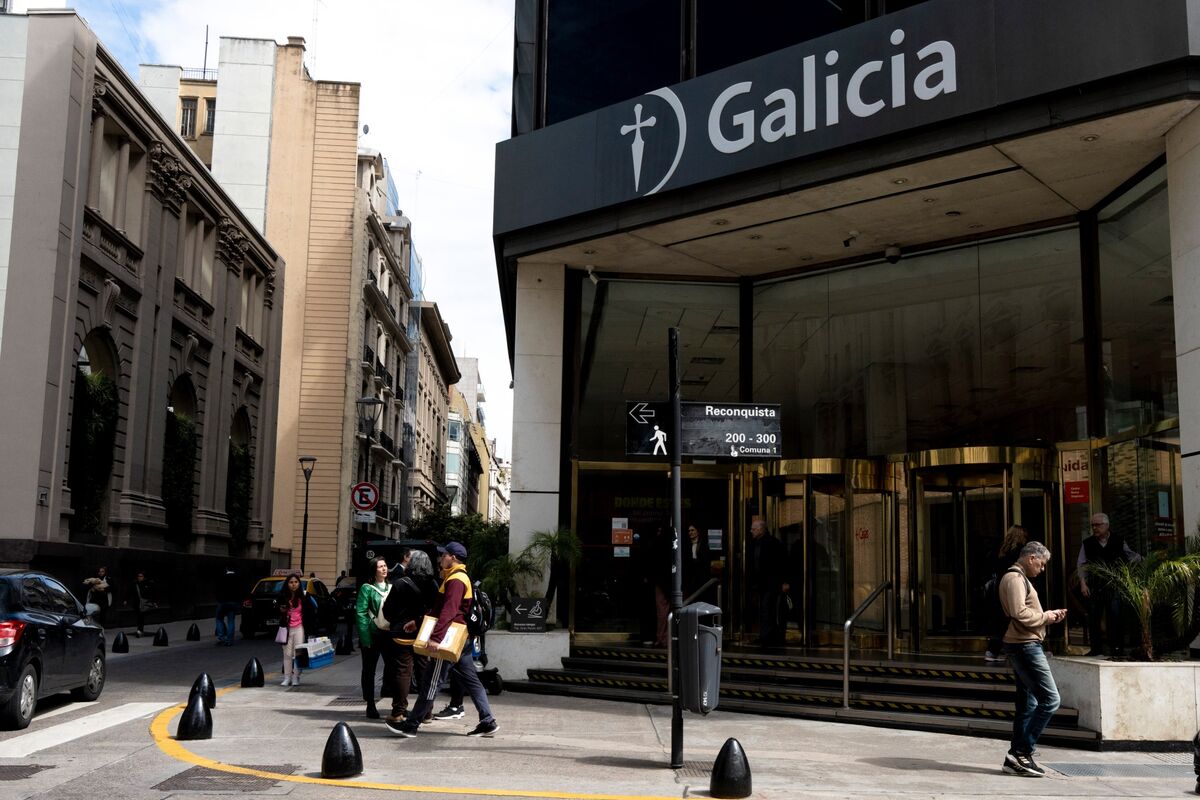
Argentine banks recorded their weakest results since the pandemic, hitting a five-year low as President Javier Milei aggressively moved to rein in the currency ahead of midterm elections. The policy push to stabilize the peso and election-driven political uncertainty have weighed on bank profitability and investor confidence, raising the prospect of higher volatility in local banking stocks and capital flows across emerging-market portfolios.
Market structure: Argentine retail and corporate banks (domestic lenders) are the clear losers as deposit flight, higher funding costs and provisioning compress NIMs; exporters, dollar-paid service firms and holders of hard currency are immediate beneficiaries if Milei’s FX-taming reduces ARS volatility. Competitive dynamics will favor institutions with large FX franchises or offshore balance sheets (cross-border banks, USD cash providers) and hurt small domestic banks that rely on peso deposits; expect market share shifts of 5–15% within 3–6 months as liquidity reallocates. Cross-asset: sovereign CDS and USD bonds should see volatility ±200–500bp, local equity ADRs (GGAL, BMA, BBAR) will underperform; commodity exporters and USD-linked assets (soy, steel pipes) should outperform; options vol on bank ADRs will spike near political events.
Risk assessment: Tail risks include sudden capital controls, bailout/forced mergers or a sharp reserve drawdown—each could wipe 30–60% off bank equity values within days. Immediate (days) risk is liquidity runs; short-term (1–3 months) is earnings hits and higher provisions; long-term (6–24 months) depends on reform credibility and reserve rebuild. Hidden dependencies: deposit composition (retail vs wholesale), FX derivatives exposure on bank books, and central bank swap lines; monitor weekly deposit reports and FX reserves—thresholds: >5% weekly deposit outflow or >10% reserve decline are red flags. Catalysts: midterm election outcomes, central bank rate announcements, IMF/creditor communications.
Trade implications: Direct plays are short Argentine bank ADRs (GGAL, BMA, BBAR) via 3–6 month put spreads sized 2–3% each, and long USD/ARS (or short ARS) via forwards sized 3–5% of FX book. Pair trade: go long soybean futures/ETF SOYB 1–2% and short GGAL/BMA 2–3% to express exporter vs domestic bank divergence through harvest season (3–6 months). Options: buy 3–6 month put spreads on GGAL/BMA (buy ATM, sell -20% strike) to cap premium; consider buying sovereign CDS protection if spreads <1,000bp widen. Rotate away from Argentine financials into US-listed commodity/industrial exporters and increase USD liquidity by 5–10% over next 30 days.
Contrarian angles: The consensus underestimates scenario where credible currency stabilization triggers rapid capital re-entry—this would cause a sharp mean-reversion rally (30–80%) in beaten-up bank ADRs within 3–9 months. Markets may be over-pricing permanent damage: many banks have low loan-to-deposit ratios and could reprice loans rapidly if confidence returns; consider staged buys on vol collapse below 40% IV. Historical parallels: 2018/2019 ARS crises showed violent sell-offs followed by multi-month recoveries once FX policy gained traction; unintended consequence of aggressively shorting banks is missing asymmetric upside if Milei’s reforms attract quick FX capital.
AI-powered research, real-time alerts, and portfolio analytics for institutional investors.
Request DemoOverall Sentiment
moderately negative
Sentiment Score
-0.50
