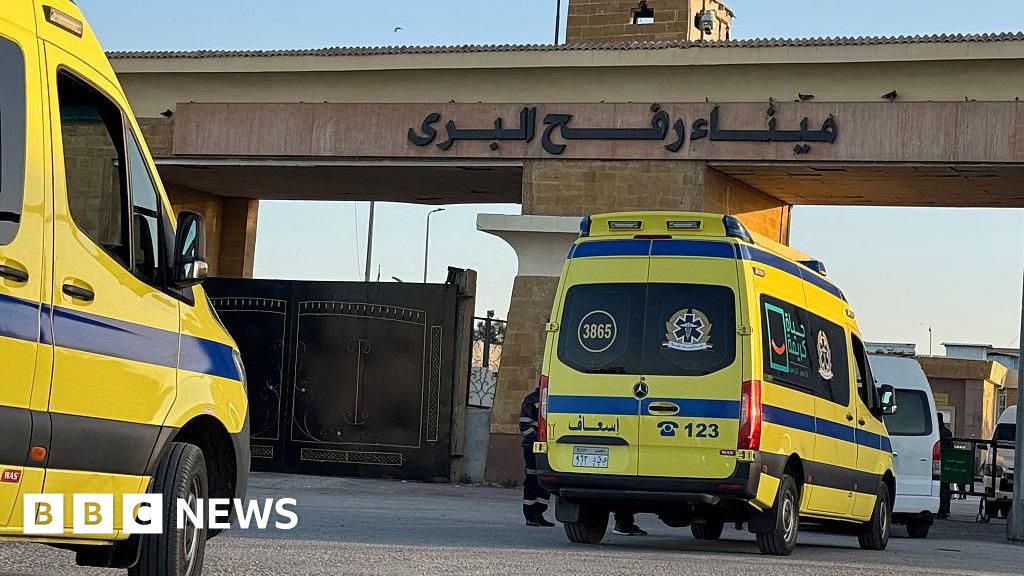
Israel has reopened the Rafah border crossing with Egypt for movement of people after it was largely closed since May 2024; the reopening was tied to the US ceasefire plan and conditioned on the return of the last Israeli hostage's remains. Movements will be tightly constrained — Israeli reports cap exits at 50 patients per day (each with one or two relatives) plus 50 people returning to Gaza — with the EU Border Assistance Mission and local Palestinian staff running the crossing and Israel performing remote security checks, while the WHO will oversee patient transfers; roughly 20,000 sick and wounded and more than 30,000 registered returnees remain pending. The limited, one-direction-light reopening eases some humanitarian pressure but leaves goods routed via Kerem Shalom and is unlikely to materially alter macro markets, though it may modestly reduce localized geopolitical tail risk.
Market structure: The limited reopening of Rafah is a tactical improvement for people movement but not for trade — winners are defense contractors (sustained security spend), EU border/security service providers, and proximal specialty hospitals; losers are Gaza-based commerce, aid logistics operators that rely on a full Rafah flow, and short-term regional trade volumes. Pricing power shifts subtly to Israeli-controlled corridors (Kerem Shalom) and private medical centers handling outbound patients, keeping freight-by-land bottlenecked and freight premiums elevated near-term.
Risk assessment: Tail risks include a renewed large-scale military escalation (low-probability but high-impact) that would spike geopolitical risk premia, freeze any normalization and drive a rapid flight-to-safety; a ceasefire breakdown in 0–90 days would widen EM sovereign spreads by 100–300bp in proximate credits. Hidden dependencies: Egyptian political tolerance, EUBAM operational scale, and Israeli domestic politics determine whether movement scales to hundreds/day versus dozens/day — thresholds that change market response materially.
Trade implications: Tactical allocation bias toward defense primes (LMT, RTX, GD) and liquid safe havens (GLD, TLT) while hedging EM risk with short-dated puts on EEM; favor 2–4% overweight in defense for 3–12 months vs 1–2% GLD hedge and a 1% portfolio tail hedge via 3-month EEM 5% OTM puts. If Rafah moves from ~50 persons/day to >500 persons/day and/or goods allowed (monitor EUBAM reports within 30 days), unwind safety hedges and trim defense exposure.
Contrarian angles: Consensus treats this as minor humanitarian relief; markets may underprice the durability of constrained trade which sustains defense and logistics premiums for quarters — not days. Conversely, if the reopening is a step toward a stable multi-week ceasefire (trigger: continuous 30-day movement with >200/day and goods allowed), defense exposure could be overbought and require reversal; historical parallels (localized corridor openings that didn’t scale) suggest patience before rotating into cyclical EM exposure.
AI-powered research, real-time alerts, and portfolio analytics for institutional investors.
Request DemoOverall Sentiment
moderately negative
Sentiment Score
-0.25
