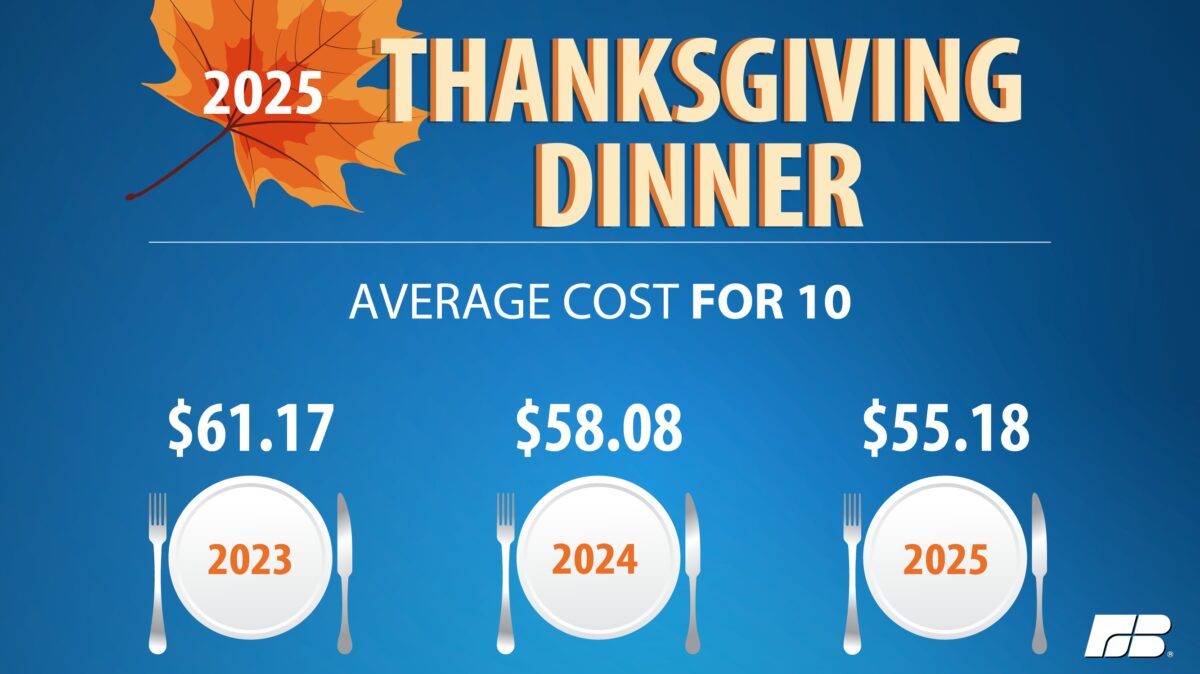
AFBF's 40th annual Thanksgiving survey finds a classic 10-person Thanksgiving dinner costing $55.18, down 5% year‑over‑year but still above levels from four years ago; the expanded basket including ham, Russet potatoes and green beans rises to $77.09 ($7.71 per person), essentially flat versus 2024. A 16‑lb turkey averages $21.50 (‑16%) and now accounts for just 39% of the meal—the lowest share since 2000—driven by falling frozen‑turkey prices and weaker year‑round demand, while produce‑heavy sides jumped (veggie tray +61%, sweet potatoes +37%) amid higher fertilizer, fuel and labor costs and weather disruptions. The study highlights regional price dispersion (West and Northeast pricier than South and Midwest) and warns that persistent input‑cost inflation, disease impacts (HPAI) and weak crop prices are squeezing farm margins, raising the prospect of policy support and implications for agricultural supply chains, input suppliers and commodity price dynamics.
AFBF's 40th annual Thanksgiving survey reports a classic 10-person Thanksgiving dinner costing $55.18, down 5% year-over-year, while an expanded basket (including ham, Russet potatoes and green beans) comes to $77.09 or $7.71 per person, essentially unchanged from 2024. A 16-pound turkey averages $21.50 (down 16%), now representing 39% of the basket—the lowest share since 2000—driven by falling frozen-turkey prices and weaker year-round turkey demand (average U.S. consumption 13 pounds per year, ~3 pounds less than six years ago).
Produce-heavy sides are the primary upside risk to retail prices: a veggie tray is up more than 61% and sweet potatoes are up 37%, while dinner rolls (-14.6%), stuffing (-9%) and cranberries (-2.8%) eased. Farmers cite rising input costs (fertilizer, fuel, machinery, labor), weather disruptions including hurricane-related sweet potato losses in North Carolina, and disease pressure (HPAI affecting fresh poultry) as drivers compressing margins and increasing supply volatility.
Regional price dispersion persists: the West ($61.75) and Northeast ($60.82) exceed the national average, while the South ($50.01) and Midwest ($54.38) are cheaper; the expanded-basket regional spread ranges from $71.20 (South) to $84.97 (West). The report highlights a deteriorating farm-economy backdrop—falling crop prices against persistently high inputs—implying potential needs for policy support and ongoing volatility in agricultural supply chains and commodity prices.
AI-powered research, real-time alerts, and portfolio analytics for institutional investors.
Request DemoOverall Sentiment
mildly negative
Sentiment Score
-0.25
