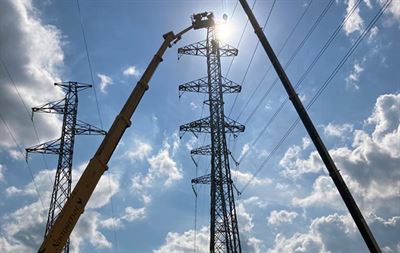
Fingrid has awarded Caverion a roughly SEK 214 million (EUR 20 million) contract to build an 83 km, 400/110 kV transmission line with 237 steel columns in Western Finland, an addition to the Kukonkylä–Ullava project and part of the broader Lakeuslinja programme that will total ~400 km of new 400 kV line and multiple substations. The project, which begins in summer 2026 and is due for completion in 2028, is intended to strengthen north–south transmission capacity, facilitate imports from Sweden, support renewable integration and Finland's climate and energy self-sufficiency goals. Assemblin Caverion Group — formed April 2024 from Assemblin and Caverion — reports combined revenue of ~SEK 41 billion (EUR 3.6 billion), implying the contract is modest relative to group scale but strategically relevant for grid infrastructure exposure.
Market structure: The contract signals incremental but meaningful demand for high‑voltage construction and steel‑column work in Nordics; the SEK 214m (EUR 20m) award (~EUR 240k/km) is small relative to global contractors but validates a larger Lakeuslinja pipeline (400 km) that creates multi‑year revenue visibility for cable/column suppliers and grid integrators. Winners: transmission equipment makers (NKT), grid integrators/engineering (ABB, Skanska) and infrastructure ETFs (IGF); losers: short‑duration merchant peaker generators and local congestion rent capture in Southern Finland. Cross‑asset: a completed 400 kV line reduces Nord Pool winter price spikes (lower power volatility), tightening spark‑spread option premia and modestly easing sovereign financing stress for Finland (lower tail‑risk on utility revenues).
Risk assessment: Tail risks include permitting/legal delays, cost overruns >20% (steel/cable price shock) and integration risk from Assemblin‑Caverion merger causing execution slippage; any >6‑12 month delay could turn expected 2028 operation into multi‑year postponement. Immediate: negligible market moves; short (months): contractors' orderbooks and margin guidance will move on subsequent contract awards; long (2–5 years): increased transfer capacity materially reduces South Finland price volatility and supports higher renewables share. Hidden dependencies: co‑timing with Sweden interconnector projects and RfS/N‑1 testing; catalysts include permit approvals, steel price moves >15%, and Finnish regulatory signals on grid tariffs.
Trade implications: Direct plays — accumulate NKT (NKT.CO) and ABB (NYSE: ABB) exposure to capture hardware + services upside; buy IGF (NYSE: IGF) for diversified infrastructure exposure. Pair trade — long NKT / short Fortum (HEL: FORTUM.HE) to express hardware wins vs generation margin compression over 12 months. Options — use 6–12 month call spreads on ABB (10–20% OTM) or buy IGF 9‑month calls to limit premium while capturing re‑rating; size 1–3% portfolio each. Timing — scale in 25–50% now (latent pipeline confirmation), add on new contract awards or if steel prices soften by >5%.
Contrarian angles: Consensus underestimates cumulative pipeline value: SEK 214m is one tranche of a ~400 km program that could translate to EUR 200–400m in addressable revenue for specialized suppliers over 3 years, implying 5–15% upside to well‑positioned small caps if multiple awards follow. Risks underpriced include margin compression from commodity spikes or merger integration failures at Assemblin‑Caverion; impose hard stops — exit/hedge if contractor margin guidance falls >200bps or steel HRC index rises >15% within 90 days. Historical parallel: 2016–2022 Nordic grid spend led to 10–30% rerates in cable/steel specialists once multi‑year backlog crystallized, suggesting asymmetric upside if pipeline continues.
AI-powered research, real-time alerts, and portfolio analytics for institutional investors.
Request DemoOverall Sentiment
mildly positive
Sentiment Score
0.35
