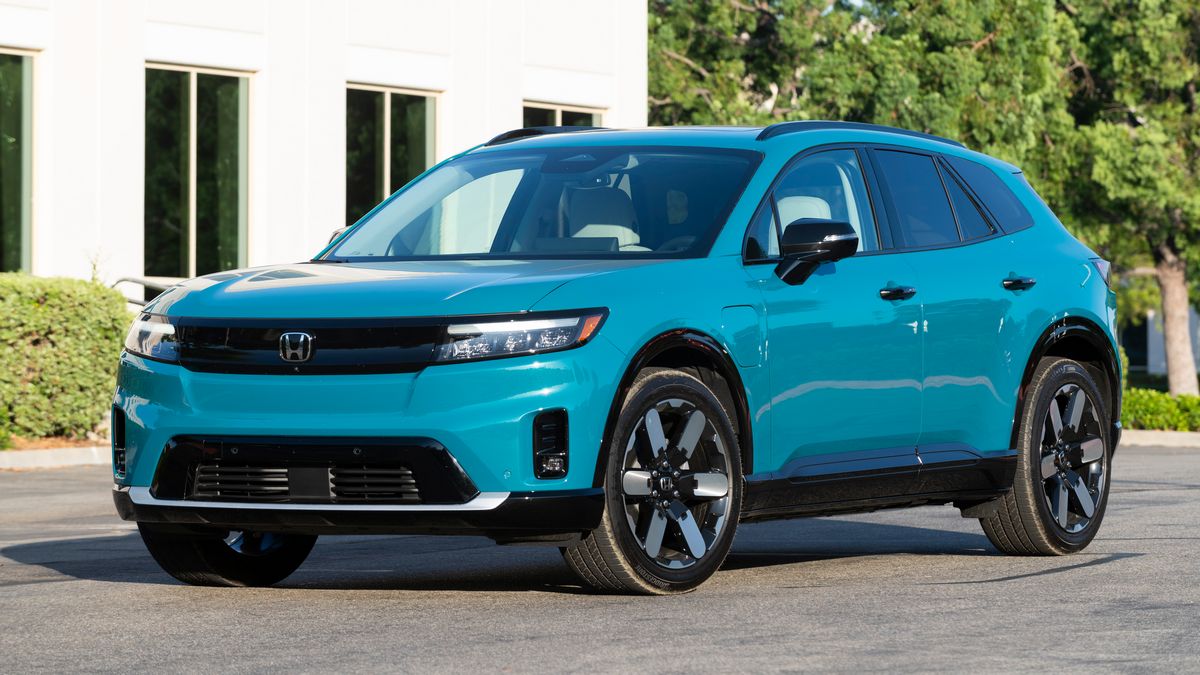
Honda cut Prologue prices by $7,500 across all trims (EX $41,395; Touring $46,695; Elite $51,895), matching the previous $7,500 federal EV tax credit and signaling weak demand. Unconfirmed reports suggest Prologue (and Acura ZDX) may be discontinued later this year, production has been significantly reduced, and other planned Honda EVs were cancelled, indicating a pullback from the U.S. BEV market tied to incentive changes.
Legacy OEMs quietly re-pricing at the retail level to replicate lost public incentives has an outsized, fast-acting effect on residual values and captive finance loss rates — a flow shock that shows up inside 6–18 months in lease returns and wholesale auction prices. Expect downward pressure on used-EV valuations to be concentrated in the mid-market SUV segment where margins were already thin; that depresses dealer economics and raises reliance on incentive spend or deeper production cuts.
On the supplier side, any OEM pullback frees modular EV capacity (cells, e-axles, software integration hours) that is binary in the near term: manufacturers either reassign volume to other nameplates or idly underutilize lines, with margin erosion appearing in supplier guidance within 1–3 quarters and in capital spending plans over 12–24 months. For partners operating under fixed-price multi-year contracts, a volume cliff quickly flips EBITDA sensitivity from positive to negative as utilization falls.
Competitively, the market is set up for share consolidation: brands with higher scale in the US EV SUV segment and direct-to-consumer distribution will capture incremental demand without being forced into discount wars, improving their realized margin profiles over the next 2–8 quarters. Meanwhile, incumbents that retreat risk longer-term brand equity loss — harder and more expensive to rebuild than the short-term cash savings from cutting EV programs.
Key catalysts to watch are (1) confirmation of program discontinuations or restart announcements (weeks), (2) monthly retail/wholesale auction trajectories and captives’ used-vehicle loss provisioning (1–3 months), and (3) any policy moves restoring point-of-sale incentives (quarterly to biannual). A reversal would most likely come from a swift policy reinstatement or a sudden large fleet/pilot order that reabsorbs idle capacity.
AI-powered research, real-time alerts, and portfolio analytics for institutional investors.
Request DemoOverall Sentiment
mildly negative
Sentiment Score
-0.35
Ticker Sentiment
