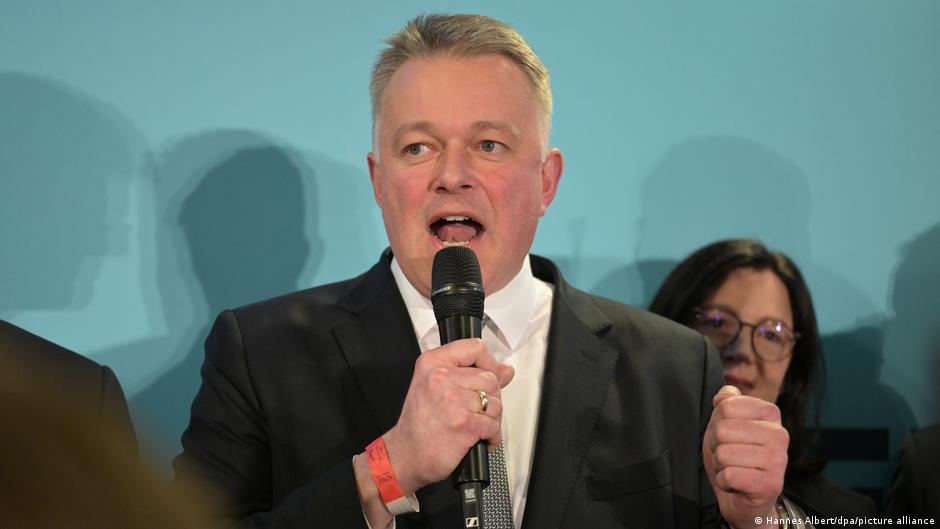
CDU leads the Rhineland-Palatinate vote with ~31% vs SPD 25.9%, and AfD surged to 19.5% (from 8.3% previously); a CDU-SPD coalition would hold >50% and likely install Gordon Schnieder as premier. AfD's doubling to ~19.5% is a political-risk signal for centrist stability while the Greens lead the Munich mayoral runoff (Dominik Krause 59.1% vs Dieter Reiter 40.9% with 495/926 precincts reporting). Chancellor Merz said he spoke with US President Trump on Iran/Israel/Ukraine and they will "remain in close contact," a geopolitical development investors should note given links to energy/commodity price dynamics.
The immediate political take is a re-centering of governing coalitions at both federal and key state levels; that reduces the probability of large, sudden regulatory shocks but increases the chance of incremental, technocratic reforms (particularly labor-market and social-security tweaks) over the next 6–12 months. For corporates this favors firms with leveraged exposure to cyclical growth and credit-sensitive balance sheets (banks, insurers, industrial equipment suppliers) because modest structural reform tends to lift GDP growth modestly rather than redistribute large swathes of capital.
A stronger AfD as a disciplined opposition is a slow-burn risk that raises legislative friction and increases the baseline political-risk premium for German assets; expect episodic volatility around court challenges, municipal protests, and media-driven scandals over the next 12–24 months. Concurrently, Green wins in major cities accelerate municipality-level regulations (building codes, urban freight restrictions, EV charging mandates) which will compress returns for urban logistics landlords while boosting capex demand for charging/energy infrastructure vendors within 12–36 months.
Geopolitical noise from closer Germany–US contact on active theaters (Iran) elevates oil/gas price tail-risk in the short run; a sustained risk-premium in energy markets for 1–3 months would mechanically widen margins for integrated and upstream producers, and raise hedging costs for energy-intensive German exporters. In sum: policy drift is toward managed, pro-growth tinkering, but asymmetric downside comes from persistent opposition-driven friction and episodic geopolitical shocks that favor convex, hedged positioning rather than outright directional bets.
AI-powered research, real-time alerts, and portfolio analytics for institutional investors.
Request DemoOverall Sentiment
mixed
Sentiment Score
0.00
