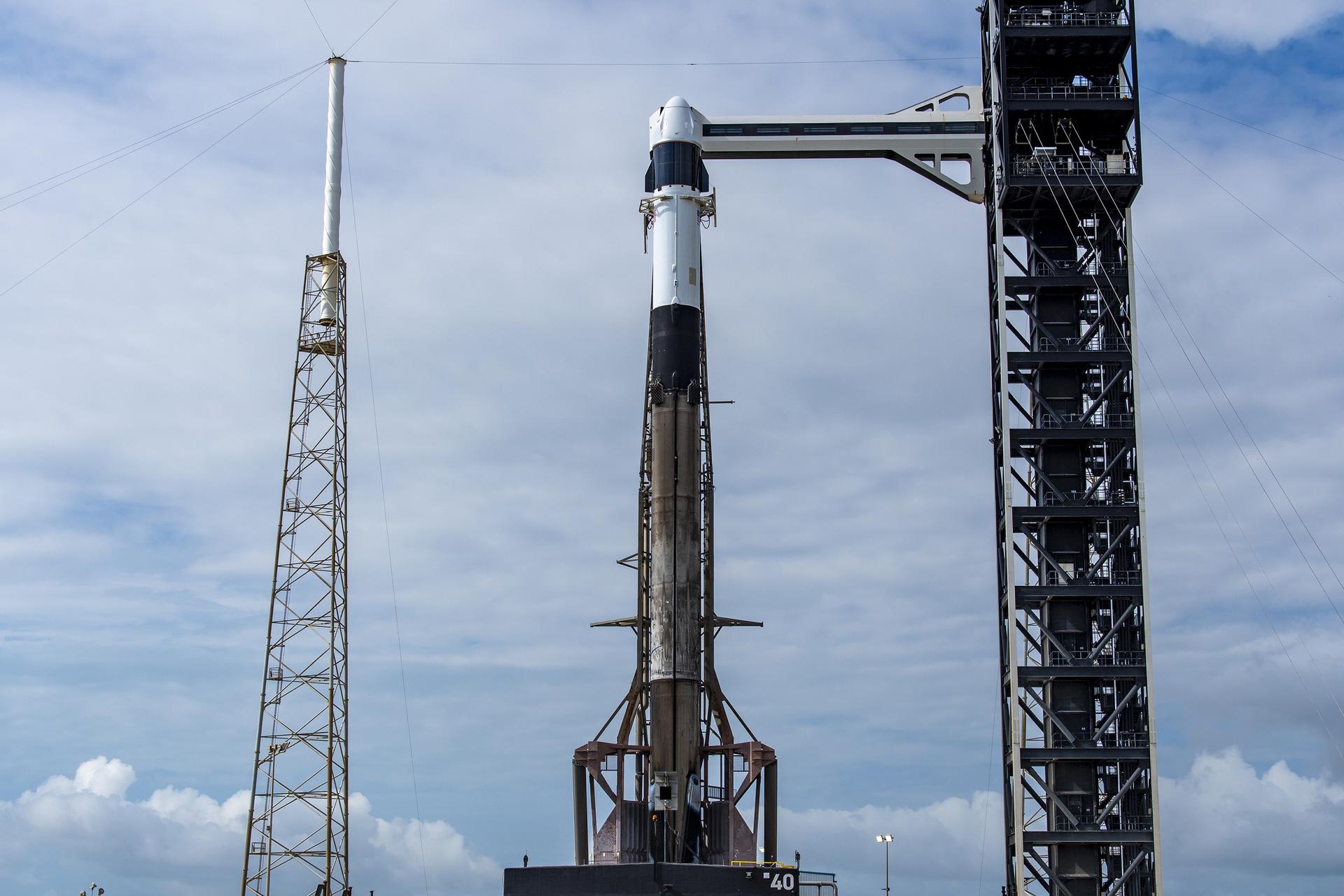
SpaceX’s Falcon 9 is set to launch an uncrewed Dragon spacecraft carrying about 6,500 pounds of science, supplies, and hardware to the ISS, with automated docking targeted for 7:05 a.m. Sunday. The article also details ongoing crew biomedical experiments, station maintenance, and spacewalk/orbital operations prep aboard Expedition 74. This is routine mission-update content with little direct market-moving significance.
This is a quiet positive for the space supply chain rather than a headline catalyst for the launch provider. The differentiated value accrues to high-reliability life-science payload integrators, microgravity experiment vendors, and station-support contractors because each successful resupply cycle validates cadence and increases the probability of follow-on ISS/LEO contracts. In the near term, the real economic signal is not the launch itself but the continued monetization of human-tended orbital infrastructure as a recurring R&D platform. The second-order beneficiary set is broader than aerospace: biomedical instrumentation firms and quantum/advanced materials researchers get a live test bed that de-risks future terrestrial commercialization. That matters because the market often underprices the option value of space-based validation; a single successful experiment can shorten development timelines by quarters and improve grant-to-commercial conversion rates. By contrast, launch interruptions or docking anomalies would most directly pressure smaller payload integrators and schedule-sensitive suppliers, not the large primes, which can absorb slippage across a portfolio of programs. Risk is mostly binary and short horizon: the next 24-72 hours are about launch/docking execution, while the medium-term catalyst is whether the mission’s cargo meaningfully advances downstream research milestones over the next 1-3 months. The contrarian view is that investors may be overestimating the near-term revenue impact of ISS logistics while underestimating the secular scarcity value of orbital lab time. If that scarcity persists as ISS utilization becomes more tightly scheduled, pricing power should migrate to specialized payload and experiment ecosystems rather than to the transportation layer. From a market construction standpoint, this is better expressed as a thematic basket than a single-name trade. The upside is modest but durable if the space economy continues to shift from transport to experimentation and data generation; the downside is that any accident would likely only create a brief sentiment shock unless it reveals systemic reliability issues. The highest-conviction angle is to own the picks-and-shovels around microgravity R&D and avoid chasing broad space-beta on a one-off mission.
AI-powered research, real-time alerts, and portfolio analytics for institutional investors.
Request DemoOverall Sentiment
neutral
Sentiment Score
0.05
