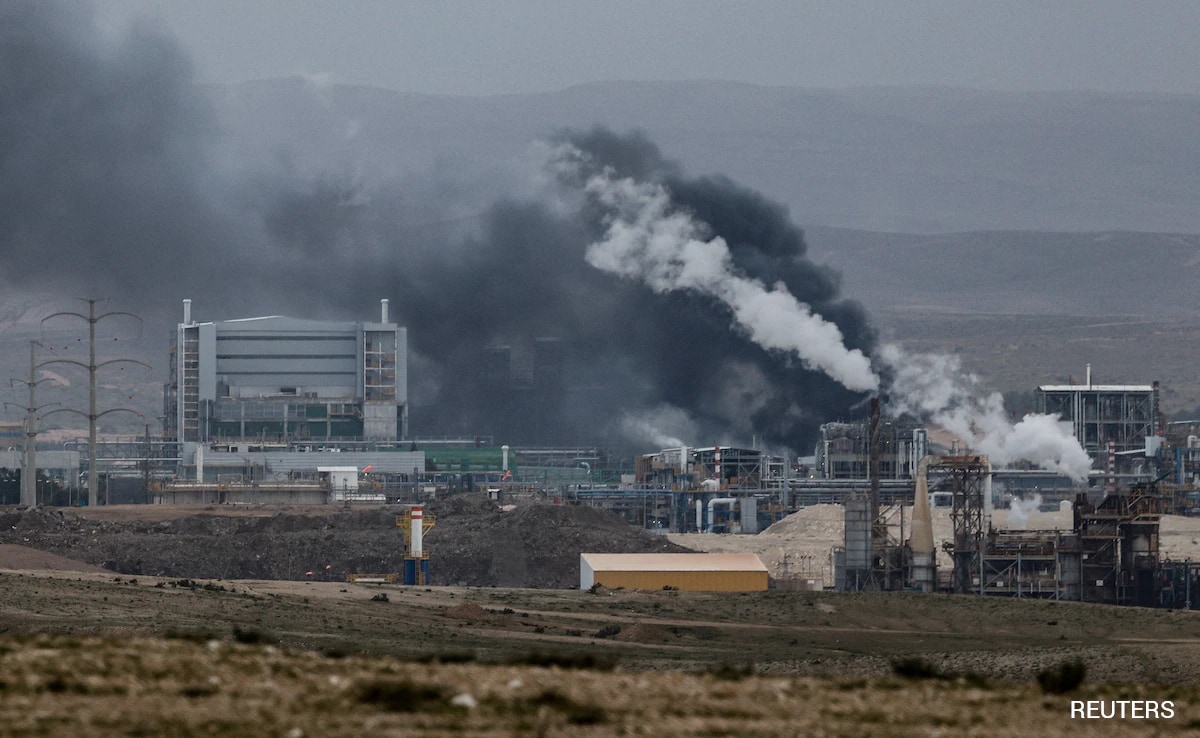
President Trump is reportedly considering a ground operation to seize ~400 kg (≈970 lb) of enriched uranium from Iran and has pushed advisers to demand Tehran surrender the material as a condition to end the war. The Pentagon is planning up to 10,000 additional ground troops to the Gulf (3,500+ already arrived, including 2,500 Marines); experts say a seizure would require sizable forces, airfields, and days-to-a-week on-site work, likely triggering Iranian retaliation and extending the conflict beyond the administration's 4–6 week target. The proposal increases escalation risk ahead of midterm elections and is likely to provoke broad risk-off market reactions if pursued.
A credible plan to seize strategic material from deep inside a rival state is a binary geopolitical shock: either it never happens (limited escalation) or it creates a weeks‑to‑months land/air campaign with durable logistics and munitions demand. The market response will therefore be dominated by an immediate risk‑off leg (flight to cash, gold, safe‑haven FX) followed by a sectoral re‑rating that benefits defense contractors, airlift/logistics providers and heavy engineering firms while pressuring travel, insurance and regional EM risk assets.
Operational complexity implies sustained procurement and sustainment revenues rather than a one‑off spike: securing, excavating, safeguarding and moving hazardous material needs specialized engineering, protection and airlift — a repeatable revenue stream if operations extend beyond a few days. That favors primes with integrated sustainment chains and classified program exposure over smaller pure‑play weapons manufacturers.
Market mechanics to watch: petro‑risk premia and war‑risk insurance (tanker/dayrates, P&I spreads) will move fastest and drive headline volatility in the first 72 hours; equities follow with a 1–6 week lag as troop deployments and contractor awards become visible. Conversely, political frictions at home could force de‑escalation — a rapid unravel would create sharp mean reversion in defense stocks and a rally in cyclicals, so size and optionality matter.
Actionable signals to monitor are formal deployment orders, announced use of local airfields/logistics hubs, and congressional funding authorizations; those convert political rhetoric into revenue visibility. Positioning should therefore be staged: cheap optionality for immediate protection and scalable directional exposure if operational milestones are hit over the next 1–3 months.
AI-powered research, real-time alerts, and portfolio analytics for institutional investors.
Request DemoOverall Sentiment
strongly negative
Sentiment Score
-0.70
