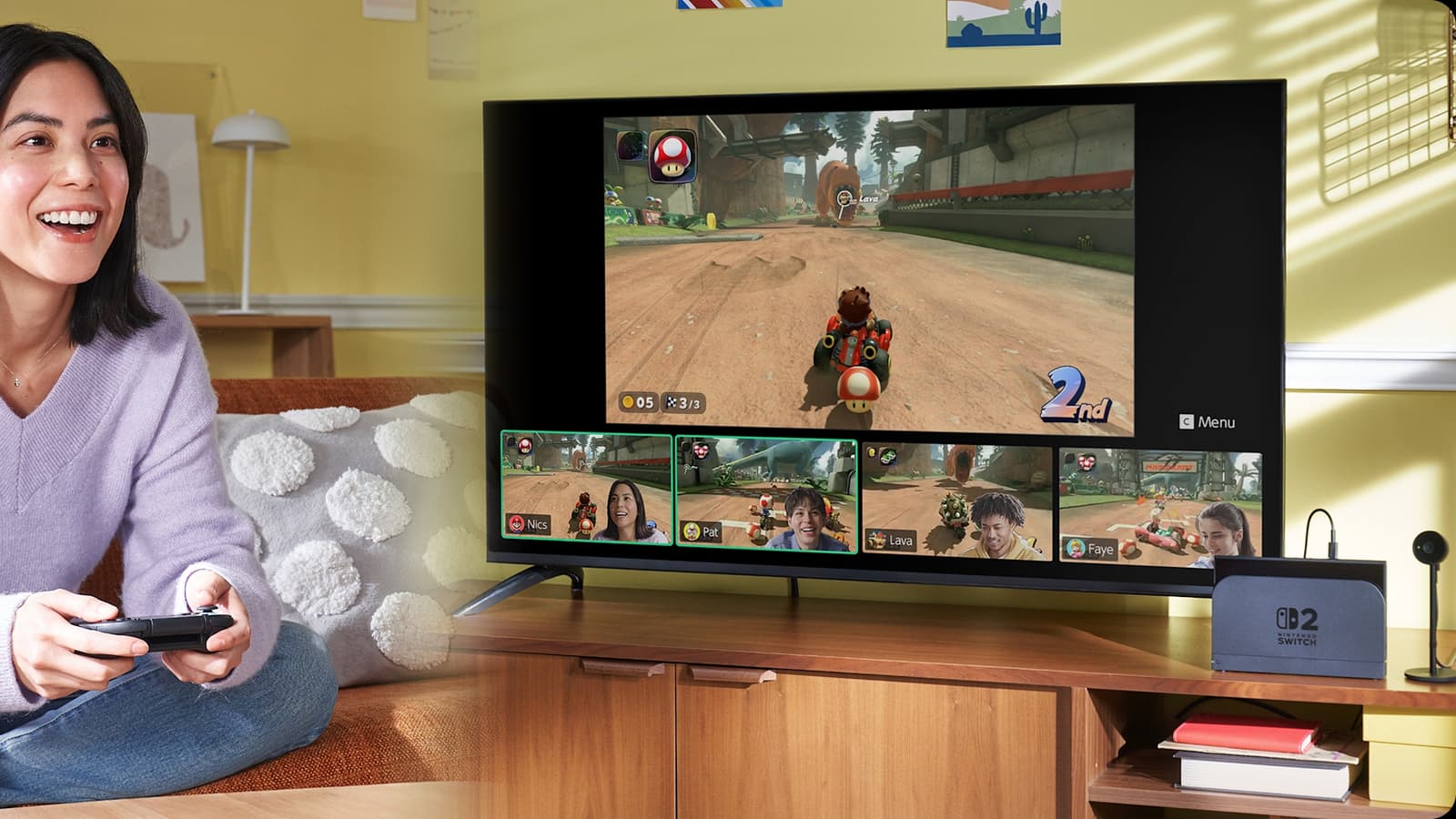
March 31 is the last day of the free "welcome offer" for Nintendo Switch 2's GameChat; from April 1 an active Nintendo Switch Online subscription will be required to use the built-in voice chat. GameChat — a built-in microphone and one-press 'C' button launch that replaces the prior mobile-app chat — is a notable product innovation and represents a modest subscription monetization opportunity for Nintendo, but the change is unlikely to have material near-term market impact.
Requiring a paid subscription for a formerly free built-in voice layer materially shifts a low-friction engagement feature into a recurring revenue lever. If even a modest share of active Switch 2 users (we’d model 5–15% in the first 3–6 months) convert to paid subs, the incremental ARPU uplift compounds across digital-store economics: subscriptions are nearly pure margin after platform costs, and higher engagement tends to lift transient digital spend and DLC attach. Expect most of the revenue impact to show up in 2–4 fiscal quarters as install-base monetization normalizes rather than immediately in hardware sales.
Second-order winners include high-margin software and first-party live-service franchises whose LTV expands with stickier communication. Component winners are MEMS microphone and low-power audio codec suppliers because per-unit content value has risen (console vendors rationalize more integrated components to own UX). Conversely, dedicated mobile-app voice middleware and low-end headset makers face secular pressure as integrated UX removes friction and shrinks the TAM for bolt-on voice solutions.
Key risks and catalysts: short-term social-media backlash or privacy complaints can spike churn and force a temporary reversal (days–weeks), while longer-term reversals would need material downward revision to subscription pricing or demonstrable DAU drops (quarters). Near-term catalysts to watch are April usage enforcement, any follow-up guidance in the next financial pre-announcement window, and third-party developer commentary on session length and monetization trends over 1–3 quarters.
Strategywise, the move is more a slow-burn monetization story than a binary hit — asymmetric upside if conversion and engagement lift ARPU >10% over a year, but asymmetric risks concentrated in 30–90 day sentiment shocks and regulatory scrutiny. Position sizing should reflect that cadence: lean into 6–18 month vehicles, hedge headline risk around immediate enforcement dates.
AI-powered research, real-time alerts, and portfolio analytics for institutional investors.
Request DemoOverall Sentiment
neutral
Sentiment Score
0.00
