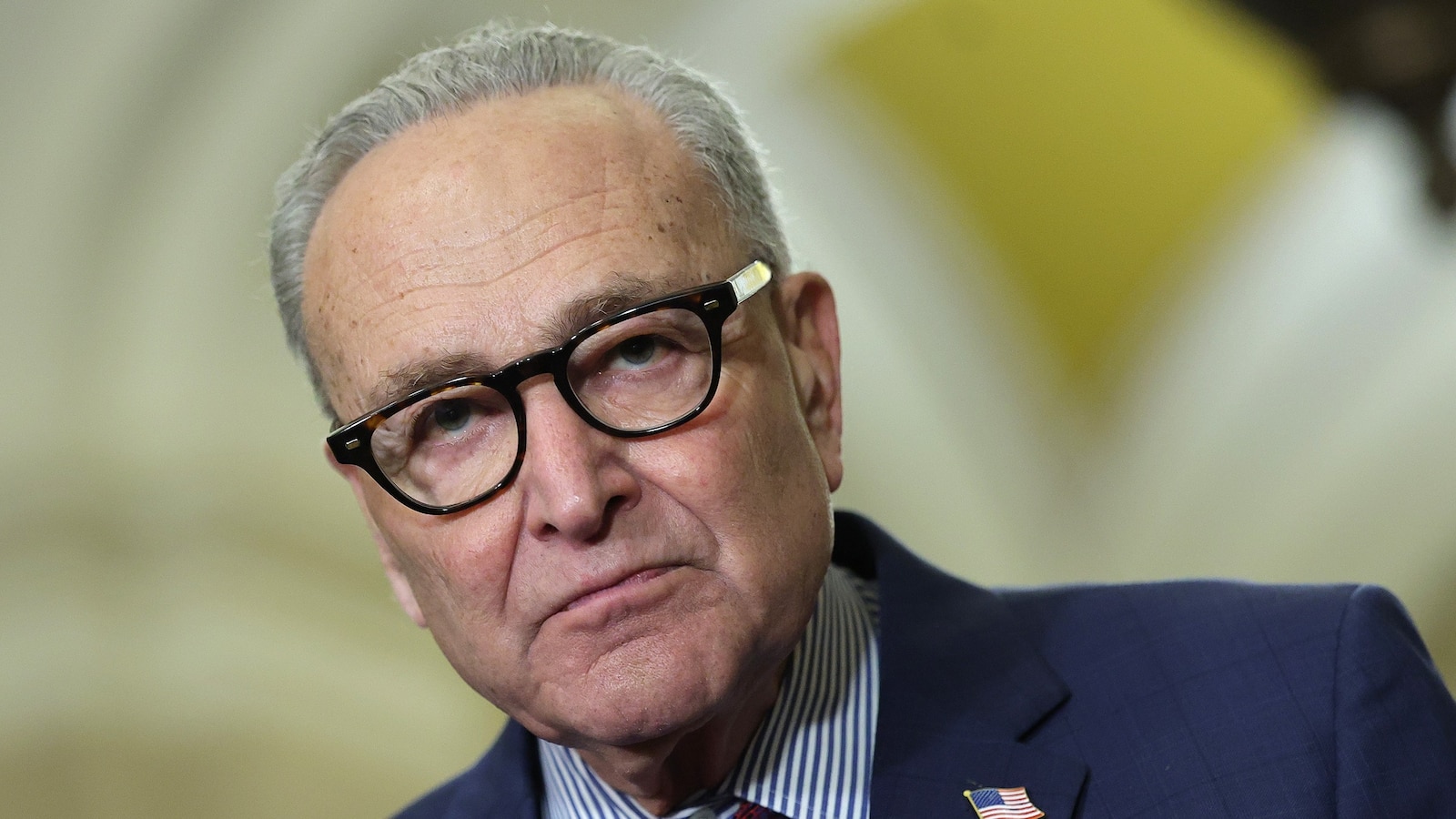
With a Jan. 30 funding deadline looming and the House in recess, Senate Democrats are demanding the Department of Homeland Security (DHS) funding bill be decoupled from a six-bill package after two fatal Minneapolis shootings linked to federal immigration enforcement, while Senate Republicans insist on moving the full package. Advancing any appropriations this week requires at least seven Democratic votes, and failure to reach agreement risks a partial shutdown that would affect TSA, Coast Guard, air traffic controllers, military pay, the IRS and USPS; ICE operations would not be immediately curtailed due to separate funding (cited as $75 billion in the 'One Big Beautiful Bill'), and the House-approved DHS bill funds ICE roughly flat through Sept. 2026.
Market structure: A Friday partial DHS lapse raises idiosyncratic operational winners/losers — airlines (AAL, DAL, UAL, LUV) and TSA-dependent airport operators face immediate disruption risk (days) while parcel carriers (UPS, FDX) could see relative share gains if mail/air passenger flows reroute. Defense primes (LMT, RTX, NOC) face near-term funding/contract timing risk if the Department of Defense appropriation stalls with the six-bill package; smaller contractors with single-program dependence are most exposed. FX and rates: expect a near-term risk-off bid into USTs and USD; 2s/10s could flatten by ~5–15bp on headline shock, raising option implied vols across sectors for 1–4 weeks.
Risk assessment: Tail risk — protracted multi-week partial shutdown (low-probability ~10–25% given need for 7 Dem votes and House recess) would cause operational stoppages for TSA/FEMA/Coast Guard, creating multi-week cashflow and scheduling stress for airlines and logistics. Immediate (0–7 days): operational delays, elevated equity IV; short-term (1–3 months): earnings volatility and order/timing risk for defense suppliers; long-term (>3 months): little structural change unless legislation alters DHS/ICE funding. Hidden dependency: ICE has separate funds, so political headlines may overstate functional disruption to immigration enforcement while still catalyzing legislative/regulatory risk.
Trade implications: Tactical plays should be size-limited and time-boxed around Jan 30. Buy short-term flight-disruption protection on large airlines (30-day put spreads) and simultaneously increase cash/T-bill allocation (1–3% portfolio) via BIL/SHV for flight-to-quality; hedge defense exposure with 3-month OTM puts (LMT/RTX) at 0.5–1% notional. Relative value: long UPS (1–2%) vs short AAL (1–2%) for 2–6 weeks to capture parcel upside vs passenger risk; unwind within 7 days after funding resolution.
Contrarian: Consensus will spike volatility in airlines and defense; that overstates protracted risk because House recess + need for 7 Democratic votes makes a short-term continuing resolution (CR) the path of least resistance (probability >60%). That implies buying short-dated airline/defense volatility (30–60 days) rather than longer-dated structural shorts; if Senate signals <7 Dem defections within 48 hours, flip and sell short-dated protection to harvest premium compression.
AI-powered research, real-time alerts, and portfolio analytics for institutional investors.
Request DemoOverall Sentiment
moderately negative
Sentiment Score
-0.45
