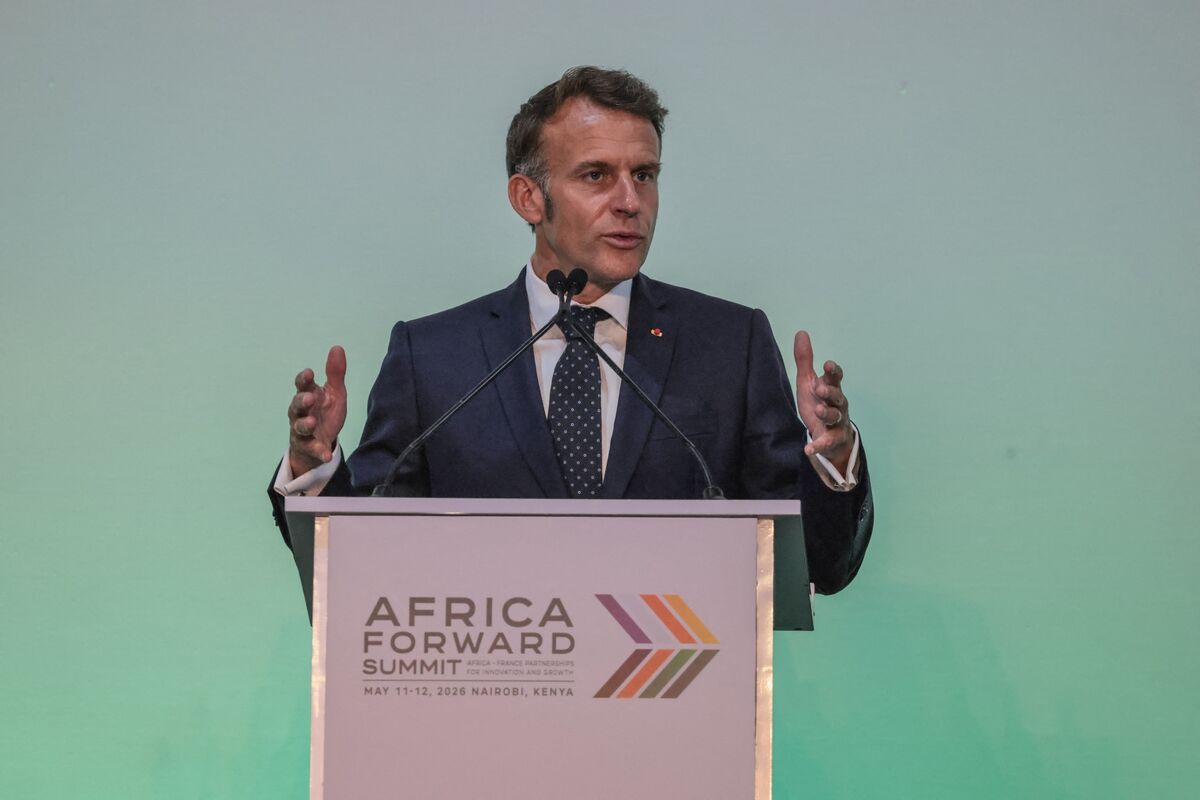
President Emmanuel Macron said the France-Africa summit mobilized €23 billion ($27 billion) in investment deals, including €14 billion from French companies and €9 billion from African entrepreneurs and investors. The announcement signals constructive capital formation and cross-border investment interest in Africa, but it is mostly a broad policy/economic headline rather than a direct market-moving event.
The immediate market read-through is not the headline size of the commitments, but the signal that capital is being routed through a political platform into bankable project pipelines. That matters most for infrastructure-adjacent contractors, EPCs, logistics, telecom, and power developers with execution capacity, because these deals tend to translate into milestone payments and follow-on mandates over 6-24 months rather than instant revenue. The secondary beneficiary set is private capital: sovereigns and family offices in Africa often co-invest once a credible anchor sponsor appears, so the marginal dollar can crowd in several more. The more interesting second-order effect is competitive displacement. French corporates may gain share versus Chinese state-backed financing in francophone and selected East African corridors if European capital is packaged with governance, export-credit support, and political cover. That can pressure local incumbents that rely on cheaper but slower Chinese or regional funding, while helping European defense, energy transition, and digital infrastructure vendors win procurement tied to strategic autonomy narratives. The main risk is conversion: summit announcements have high headline-to-cash leakage, especially where FX scarcity, election risk, permitting, or debt sustainability constrain project closing. Over the next 1-3 months the catalyst is follow-through on specific SPVs, guarantees, and ECA-backed financing; over 6-12 months the litmus test is whether disclosed deal values turn into spend. If funding is mostly non-dilutive grants or soft commitments, the rally in Africa-exposed assets could fade quickly. Consensus may be underestimating how selective this is. Broad Africa beta is still a poor trade; the better expression is on named intermediaries and suppliers with hard-currency revenues or contractual protection, not on local equities that remain hostage to balance-of-payments risk. If anything, the bigger opportunity is relative: French and European infrastructure enablers versus generic EM proxies, with the added optionality of defense and cybersecurity where geopolitical alignment is a feature rather than a bug.
AI-powered research, real-time alerts, and portfolio analytics for institutional investors.
Request DemoOverall Sentiment
mildly positive
Sentiment Score
0.25
