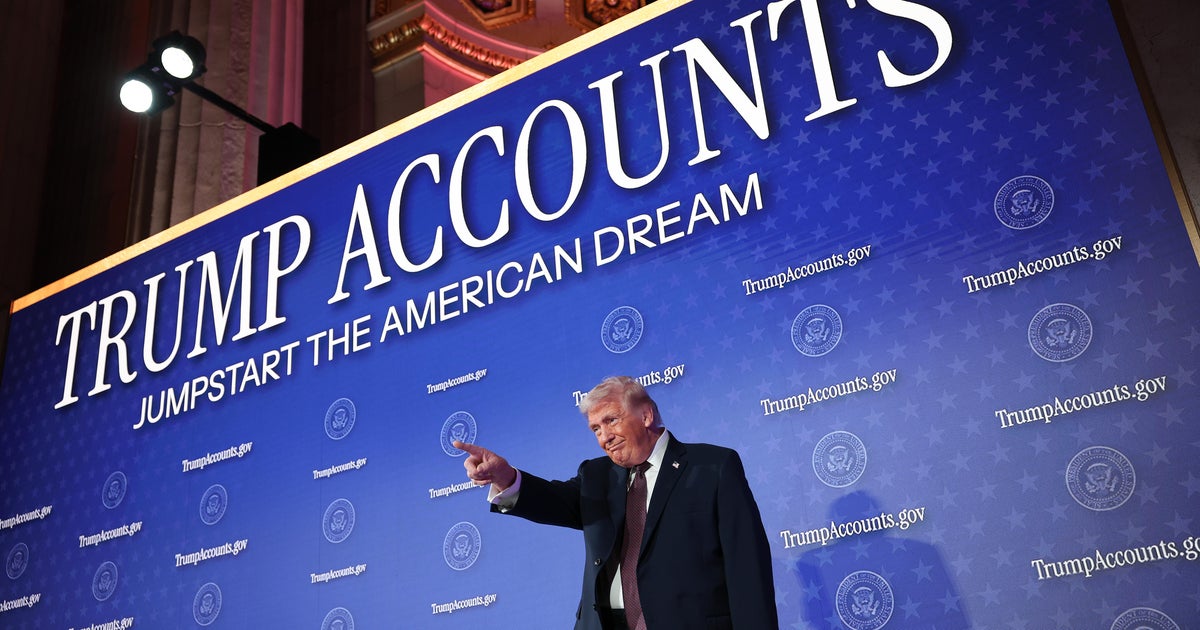
Bank of America and JPMorgan Chase will each match the federal government's $1,000 seed for employees who open a Trump Account for children born between Jan. 1, 2025 and Dec. 31, 2028; Bank of America will also permit pre-tax employee contributions. Families can begin contributing on July 4, with non-government contributions capped at $5,000 per child annually and employers able to contribute up to $2,500 tax-free toward that limit; withdrawals are generally restricted until age 18. Multiple other firms and donors—including Intel, Charles Schwab and Michael Dell (pledging $250 to 25 million accounts, a $6.25 billion commitment)—have made similar pledges, expanding employer and private support for the program.
Market structure: Large retail banks (BAC, JPM) and custody/retail brokers (SCHW) are direct winners — employer matching and payroll integration create predictable, sticky inflows (government $1k + up to $5k/yr cap per child implies potential annual new contributions of $25B if 5M eligible kids participate each year). Active managers (BLK) may see fee pressure as flows skew to low-cost index products; small community banks and niche fintechs that don’t integrate payroll may lose share. Equity demand is concentrated in passive equity ETFs/index funds for children’s long horizons, slightly boosting large-cap US equity bid over years rather than days.
Risk assessment: Tail risks include a change in administration or litigation that reverses tax-preferred status (low-probability but high-impact), operational onboarding failures across payroll systems, and unexpected fiscal accounting that reduces employer incentives. Immediate (days) effect = sentiment bump to BAC/JPM; short-term (1–6 months) = corporate participation announcements; long-term (3–7 years) = AUM accumulation and custody fee revenue. Hidden dependencies: IRS/Treasury guidance, employer payroll system rollout pace, and consumer withdrawal rules at age 18; catalysts are large employer rollouts (Intel, Dell-sized donations) and Q2 earnings commentary.
Trade implications: Tactical long exposure to BAC/JPM and SCHW is warranted on 3–12 month horizons: these names capture matching flows and custody/processing revenue. Prefer pair trades (long SCHW vs short BLK) to express retail custody win vs institutional fee pressure; size modestly (1–2% portfolio) and use options to cap downside (3–6 month call spreads). Rotate modestly overweight Financials (+200–300 bps) and underweight Consumer Discretionary (−100–200 bps) to reflect potential incremental savings replacing near-term consumption.
Contrarian angles: Consensus overstates near-term macro impact — aggregate initial seed ($25–50B range) is small vs $50T equity market, so any equity rally should be idiosyncratic to beneficiaries, not broad. The market may underprice operational/regulatory risk and overprice deposit stickiness for banks (deposits could be swept into custody platforms). Historical parallels: 529/401(k) rollouts show multi-year earnings ramps, not immediate margin expansion; unintended consequence = slightly lower short-term retail spending hurting small-cap consumer names.
AI-powered research, real-time alerts, and portfolio analytics for institutional investors.
Request DemoOverall Sentiment
mildly positive
Sentiment Score
0.25
Ticker Sentiment
