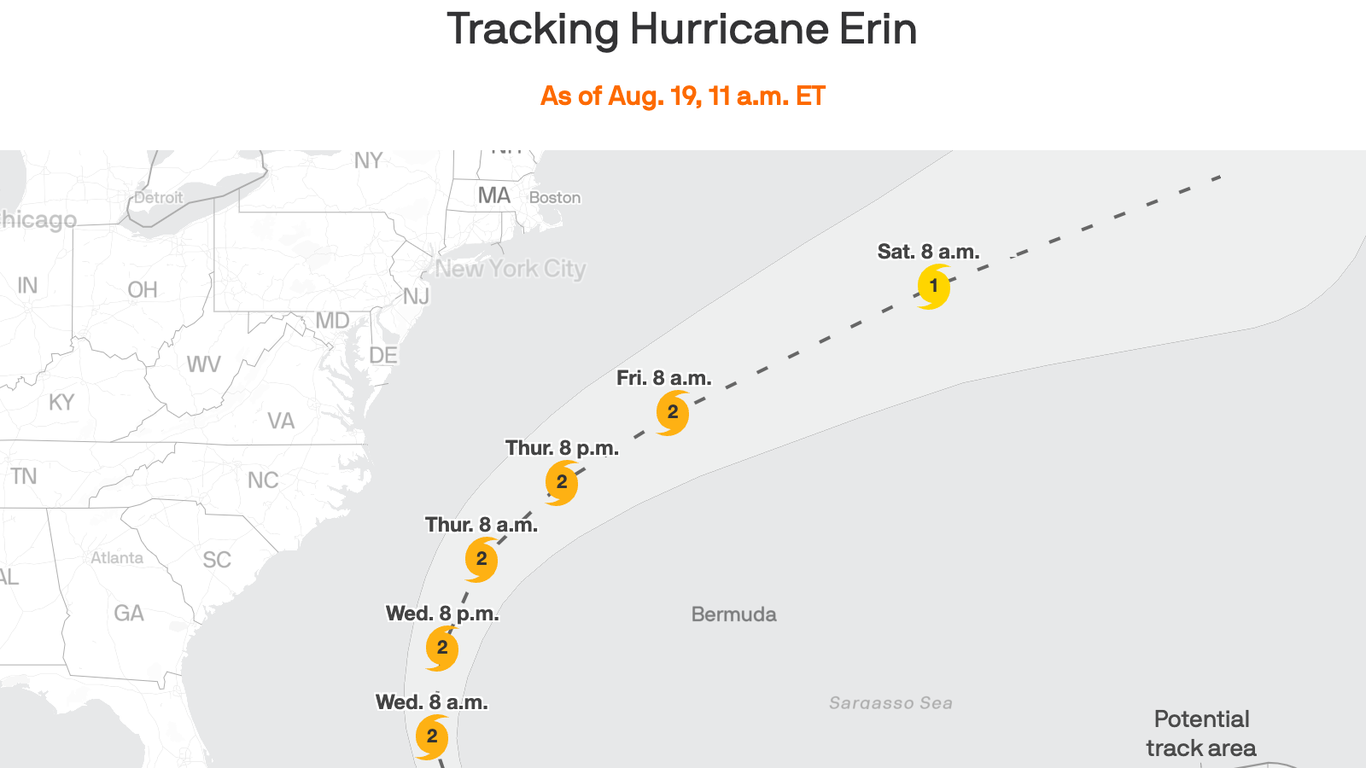
Hurricane Erin, a powerful Category 2 storm, is poised to impact the U.S. East Coast with significant coastal threats despite not making landfall. North Carolina's Outer Banks face mandatory evacuations, potential infrastructure damage like Highway 12 washouts, and storm surges up to four feet, while broader East Coast regions from Florida to New England are bracing for life-threatening flooding, coastal overwash, and beach closures. This event underscores immediate operational disruptions and property risks, with its rapid intensification linked to climate-driven ocean warming suggesting escalating future coastal vulnerabilities.
Hurricane Erin represents a significant economic threat to the U.S. East Coast, primarily through coastal disruption rather than a direct landfall. The issuance of mandatory evacuation orders for North Carolina's Dare and Hyde counties, coupled with the potential for Highway 12 to be washed out for several days, points to material, albeit localized, infrastructure damage and supply chain interruption. Economically, the broad swimming bans and beach closures from North Carolina to New York will negatively impact regional tourism and hospitality sectors. The storm's classification as a large Category 2 hurricane with tropical storm-force winds extending 230 miles from its center underscores the wide-reaching potential for property damage from storm surges, which are forecast to reach up to four feet in parts of North Carolina. Furthermore, the article's linkage of the storm's rapid intensification to unusually warm ocean waters, attributed to climate change, highlights a systemic, long-term risk factor, suggesting that the frequency and severity of such disruptive weather events may increase, with lasting implications for insurance, real estate, and municipal finance in coastal regions.
AI-powered research, real-time alerts, and portfolio analytics for institutional investors.
Request DemoOverall Sentiment
strongly negative
Sentiment Score
-0.80
