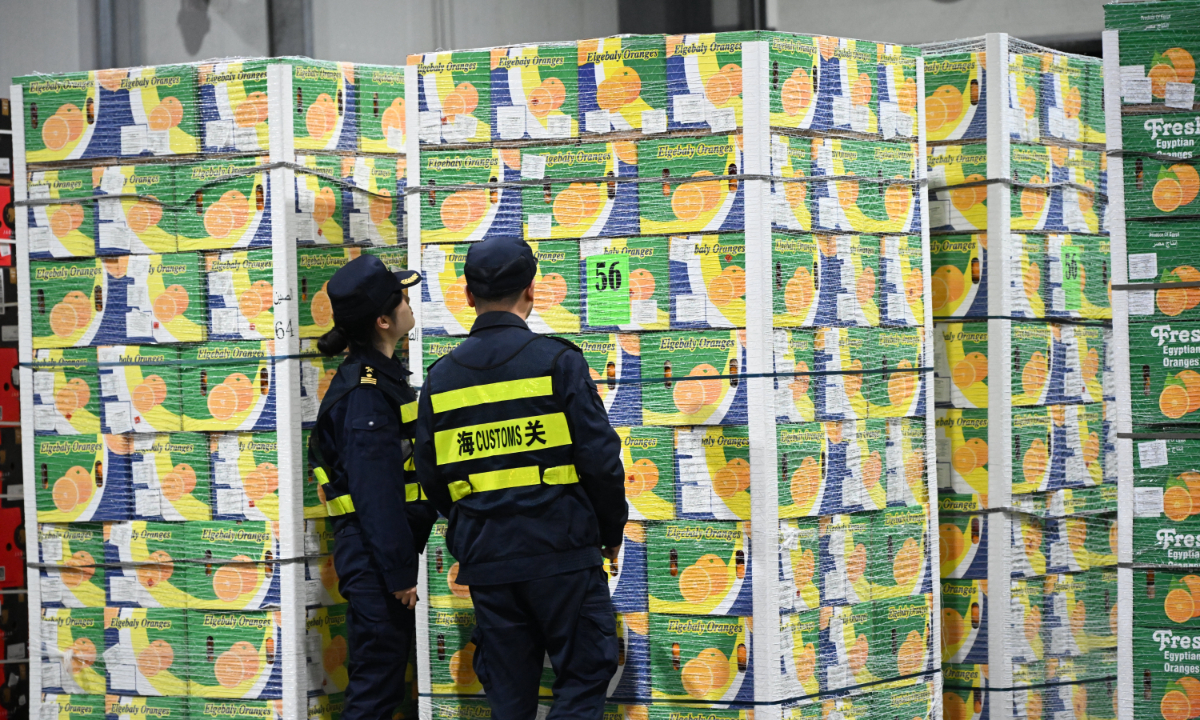
China has extended zero-tariff treatment to all African countries with diplomatic ties, becoming the first major economy to unilaterally grant tariff-free access across the continent. The policy is already operational, with 24 tonnes of South African apples and Egyptian oranges among the first imports to clear customs under the new regime. The move is likely to boost African agricultural, mining and value-added exports, while supporting China-Africa trade diversification and investment.
The immediate market read is less about a direct tradable tariff shock and more about a marginal shift in global industrial policy: China is using market access as a geopolitical lever while the U.S. is using barriers. That widens the probability that African commodity and agricultural exporters gradually re-route incremental volumes toward China, but the bigger second-order effect is on capital allocation: Chinese SOEs, trading houses, and logistics/platform businesses should see earlier funneling of deal flow into processing, warehousing, cold chain, and port capacity across Africa. The underappreciated winner is not the raw exporter but the intermediate layer that monetizes compliance and throughput. Zero-tariff access reduces landed-cost friction, so the binding constraint becomes certification, origin documentation, and inland logistics; that tends to improve pricing power for ports, rail, freight forwarders, and agricultural processing firms with existing China relationships. For minerals, the policy should slightly tighten the strategic metal supply chain into China and could modestly cheapen feedstock for Chinese battery and industrial supply chains, but only over a months-to-years horizon because capacity, not tariff, is the bottleneck. The biggest risk to the bullish narrative is execution latency. Most African exporters are still constrained by phytosanitary standards, working capital, and fragmented logistics, so the near-term trade flow uplift may be modest despite the headline. If certification bottlenecks persist, the policy becomes more symbolic than economically material, which would cap rerating in exporters and shift benefits to incumbents already embedded in the China trade corridor. Contrarian view: the move may be more inflationary for intra-African competition than disinflationary for Chinese consumers. By privileging countries able to meet Chinese standards quickly, it could accelerate share loss for weaker regional competitors and concentrate benefits in a few investable winners. That makes the cleaner expression a relative-value trade on enablement rather than a broad long basket of African commodity producers.
AI-powered research, real-time alerts, and portfolio analytics for institutional investors.
Request DemoOverall Sentiment
mildly positive
Sentiment Score
0.35
