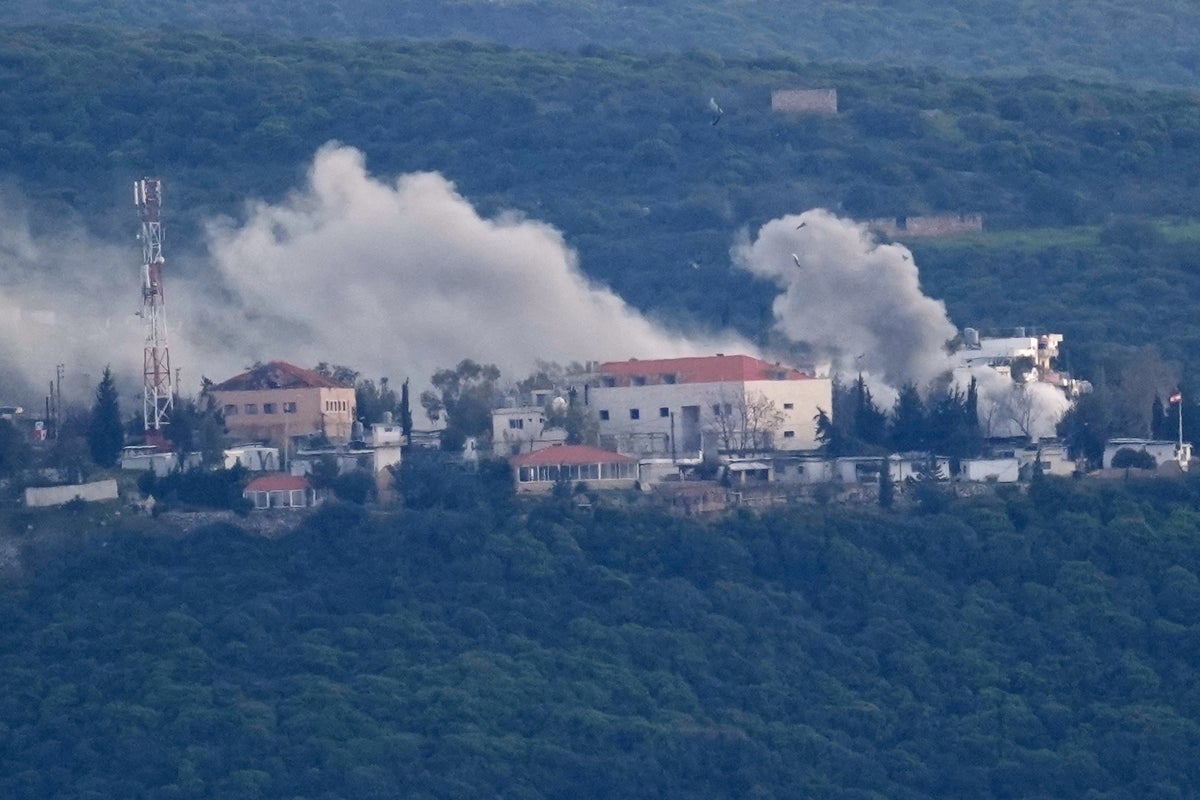
Nearly 1,100 people killed and over 1 million displaced in Lebanon as Israel expands a northern ‘buffer zone’ and conducts intensive bombardment; Hezbollah has fired ~5,000 rockets, missiles and drones since the conflict escalated. Attacks have hit healthcare facilities (64 reported attacks; 40+ health workers killed) and critical infrastructure, raising legal war-crimes concerns and prompting calls to scale up humanitarian aid — developments that heighten regional geopolitical risk and may drive risk-off flows, pressure defense suppliers and create episodic energy/commodity volatility.
This conflict’s most investible second-order effect is a bifurcation between large, diversified defense primes that can capture incremental government spending versus small, specialized subcontractors whose revenue is both concentration- and export-control‑sensitive. Expect procurement budgets to re‑rate higher on a 6–18 month view even if headline escalation is contained; conversely, politically exposed suppliers of sensitive components face idiosyncratic legal and order‑flow volatility that can wipe out 30–50% of value quickly if export licences are paused.
Market micro impacts are front‑loaded: risk assets will see jumps in realized and implied volatility within days (spikes in VIX/EUR credit spreads), while commodity and shipping risk premia reprice over weeks if supply routes or insurance costs rise. Reinsurers and specialty underwriters are the first to show losses in their quarterly filings if hostilities broaden; their balance sheets embed low‑probability tail exposures that markets historically punish by 15–30% in short windows.
Catalysts that would reverse current risk premia include a rapid, verifiable de‑escalation or a high‑profile diplomatic package within 30–90 days; conversely, ICC investigations or coordinated export curbs from major suppliers could crystallize multi‑year revenue disruption for niche aerospace vendors. The consensus underestimates dispersion: large primes are arguably already priced for modest upside, while small-cap subsystem names and short-dated insurance paper offer asymmetric downside or defensive hedge opportunities.
AI-powered research, real-time alerts, and portfolio analytics for institutional investors.
Request DemoOverall Sentiment
strongly negative
Sentiment Score
-0.85
