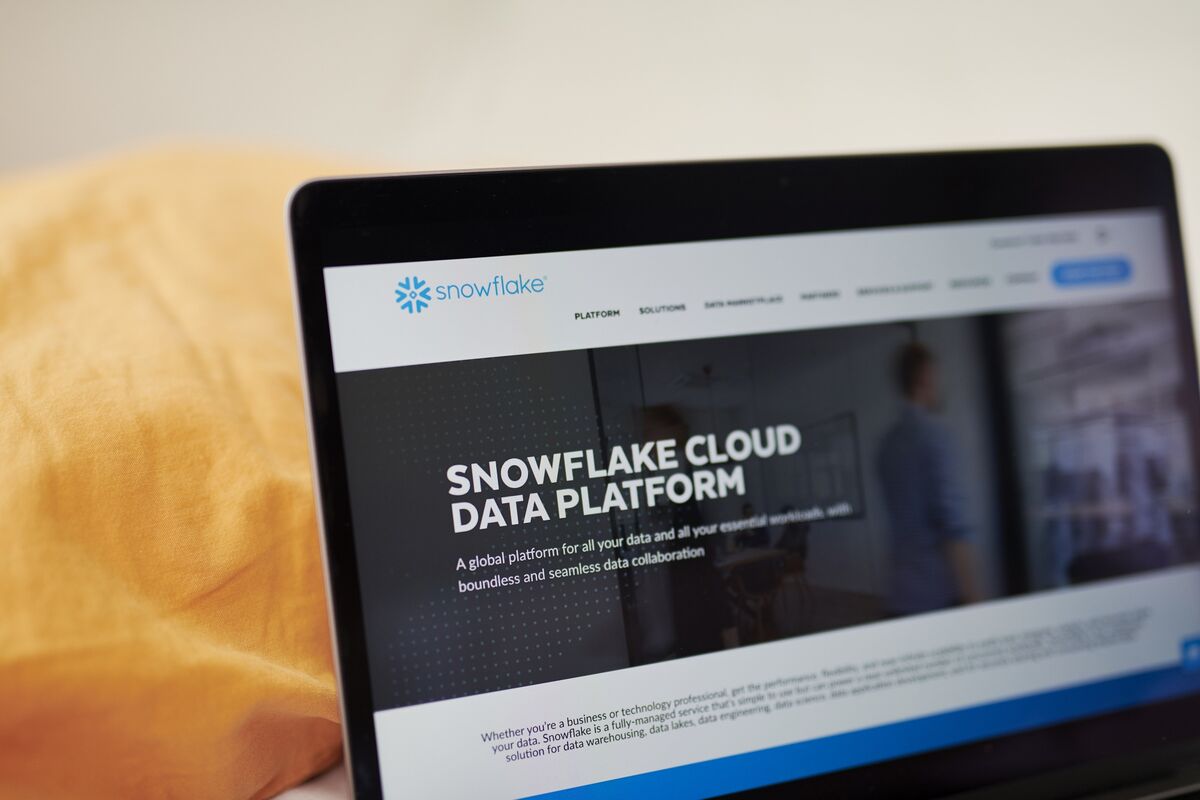
Snowflake guided adjusted operating income margin of about 7% for the period ending January, below the Bloomberg-consensus analyst estimate of 8.5%, signaling margin pressure potentially from investments in AI-based tools. Product revenue was guided to roughly $1.2 billion versus an average estimate of $1.19 billion, but the weaker margin outlook has raised investor concern about the profitability of new AI offerings.
Market structure: Snowflake’s miss on operating-margin (7% guide vs 8.5% consensus) signals margin pressure from AI compute costs rather than demand — product rev roughly in line ($1.2B vs $1.19B). Winners are hyperscalers (AMZN, MSFT) and semiconductor GPU suppliers (NVDA, AMD) who capture infrastructure economics; losers are consumption-based pure-play data SaaS (SNOW, MDB) facing pricing/leverage pain. Expect pricing power bifurcation: hyperscalers can bundle and undercut, forcing Snowflake to either take margin hits or raise usage prices and risk churn.
Risk assessment: Near-term (days–weeks) equity downside and IV spike; short-term (1–3 quarters) risk of sustained margin compression if GPU pricing or cloud egress costs remain elevated; long-term (2–4 quarters+) upside if Snowflake embeds higher-margin AI services. Tail risks include a sharp GPU shortage or hyperscaler price war (high impact), regulatory restrictions on data usage (medium), or billing disputes from large customers (operational). Hidden dependency: Snowflake’s margin is sensitive to customer mix (managed vs BYOC) and cloud-reseller fee pass-throughs — small shifts in mix can move margin several hundred basis points.
Trade implications: Tactical: establish defined-risk bearish exposure to SNOW via put spreads (3-month) while rotating weight toward AMZN/MSFT and NVDA call spreads to play AI infra demand. Pair trade: short SNOW vs long MSFT to capture relative margin capture; target relative outperformance of 10–15% over 3–9 months. Size positions modestly (1–3% portfolio each) and use catalyst-based exits (next two earnings, NVDA supply updates, Databricks IPO).
Contrarian view: The market may be over-focusing on margin guide while underweighting underlying demand (product rev beat). If Snowflake is deliberately investing up-front in AI to lock customers, margins could re-expand as ARR scales — historical analogy: AWS-era investments compressed peers’ margins before re-rating. Consider small asymmetric long exposure on >15% post-guide drawdown or on 12-month LEAP call spreads as a volatility-stretch hedge to the bearish base case.
AI-powered research, real-time alerts, and portfolio analytics for institutional investors.
Request DemoOverall Sentiment
moderately negative
Sentiment Score
-0.40
Ticker Sentiment
