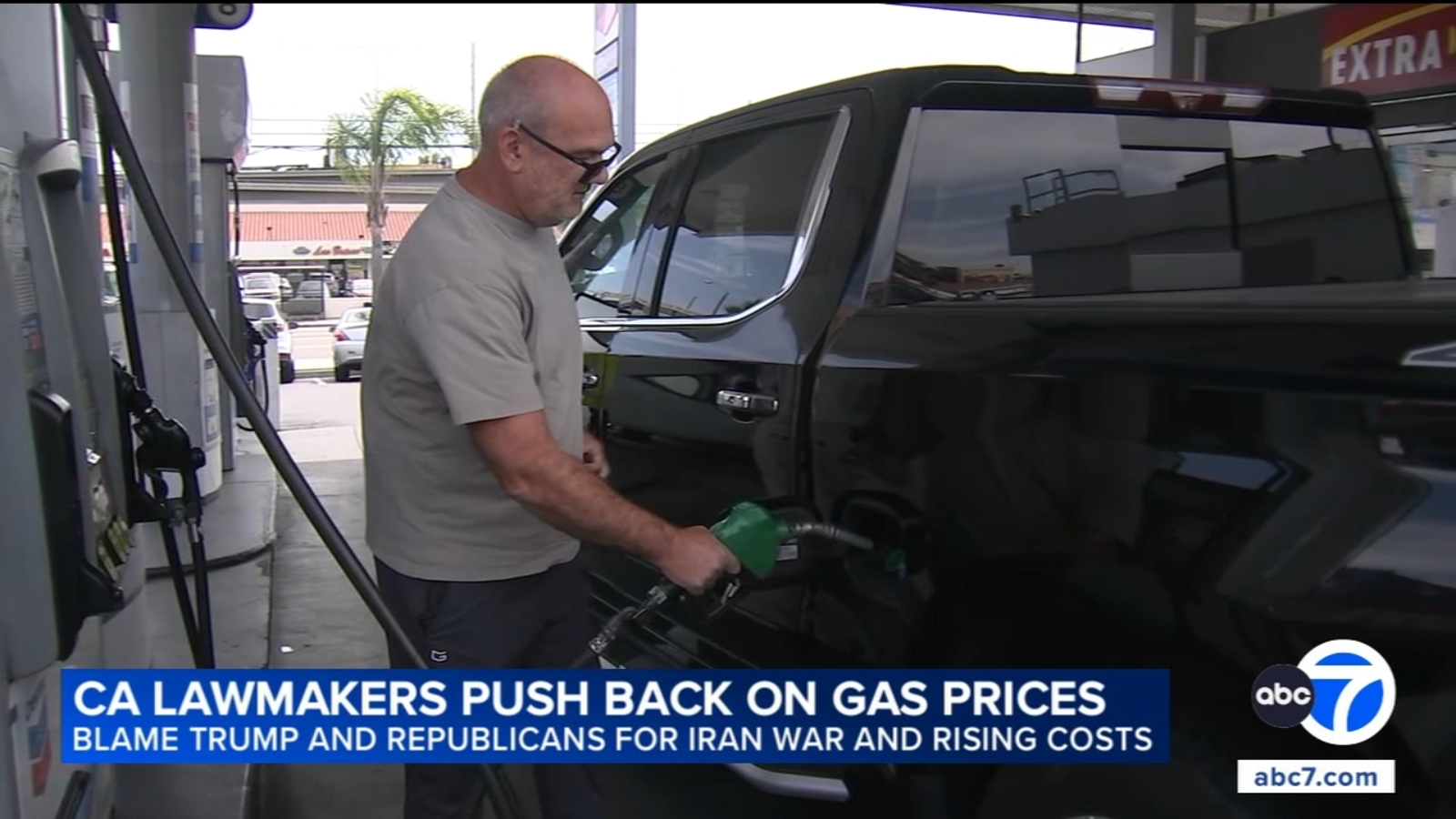
$6.00/gal average in Los Angeles County with California gas up nearly $1/gal year-over-year, squeezing consumers who are cutting trips and carpooling. Local auto shops report higher input costs (motor oil reportedly up ~$6 per quart) and are passing prices to low-income and retired customers. Rising fuel costs are linked to geopolitical tensions with Iran and coincide with the anniversary of Trump administration tariffs, drawing criticism from local representatives while the White House highlights trade and manufacturing gains.
Regional fuel-price shocks on the U.S. West Coast amplify value transfer from wage-sensitive consumers to energy producers and downstream refiners that can capture asymmetric upside in gasoline cracks; the same geography also concentrates regulatory/specification risk that can keep spreads elevated even if global crude backs off. Small auto shops and independent service providers face margin squeeze from higher lubricant and spare-parts costs and demand elasticity from low-income customers — that creates a multi-quarter erosion of local service volumes and a likely wave of consolidations or closures among mom-and-pop operators.
Key near-term catalysts are headline-driven and fast: diplomatic de-escalation, SPR releases, or a Saudi/OPEC incremental output announcement can compress prices within days-to-weeks; structural balancing factors — refinery utilization on the West Coast, product import logistics, and higher regulatory fuel specs — play out over months and sustain price differentials. A policy shift on tariffs or trade frictions could also raise replacement-capex and spare-parts costs for refiners and repair shops, tightening margins in unexpected places.
The market consensus centers on consumer pain, underweighting two second-order effects: (1) large national retailers and delivery platforms will capture share as price-sensitive consumers substitute away from discretionary spend and longer trips; (2) the short-term crude rally is susceptible to tactical reversal, so asymmetric option structures favor limited-cost ways to express a bullish energy vs consumer-depression view rather than outright long equities. Position sizing should reflect a high headline-volatility regime with clear stop rules tied to crack-spread and headline fixes.
AI-powered research, real-time alerts, and portfolio analytics for institutional investors.
Request DemoOverall Sentiment
moderately negative
Sentiment Score
-0.30
