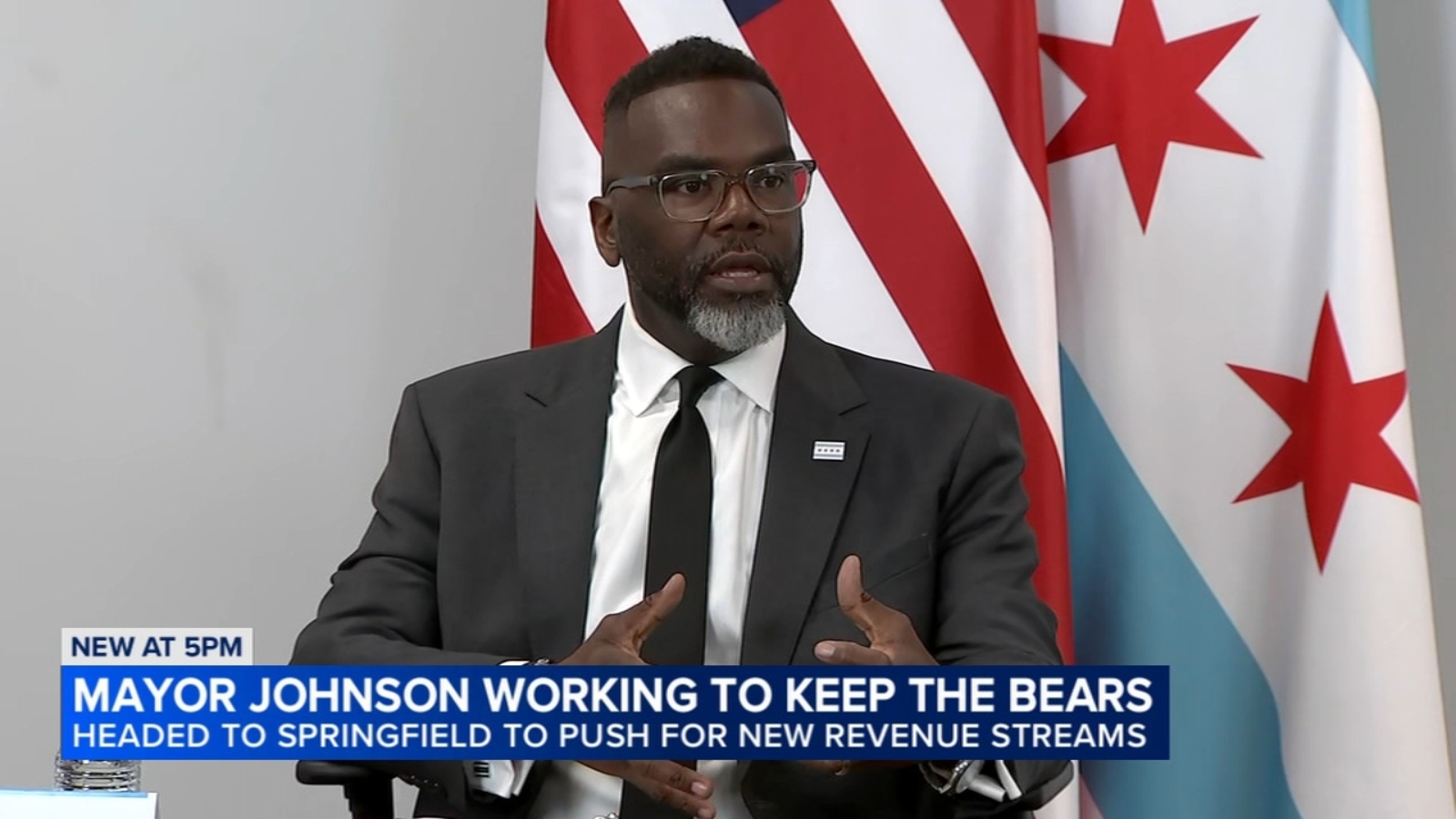
Chicago Mayor Brandon Johnson is lobbying Illinois lawmakers for new revenue sources and to preserve city funding, including defending more than $12 million in potential local government distributive fund losses under the governor's budget. He is also opposing a Senate bill that could aid the Bears' Arlington Heights stadium plans through property-tax freezes, while pushing to keep the team at Soldier Field. The issue is politically important for Chicago and Illinois, but the article describes policy negotiations rather than an immediate market-moving event.
The market implication is less about the stadium headline itself and more about the probability distribution for Illinois municipal finance. The mayor’s push signals that Springfield is still in a bargaining phase, which raises the odds of a stopgap budget/rental-revenue compromise but not enough to materially change the state’s structural fiscal pressure. The immediate beneficiaries are not the Bears; they are stakeholders that profit from prolonged policy uncertainty around Chicago-area real estate and public funding allocation, while the losers are any asset prices that were already discounting a clean, near-term incentive package.
The second-order effect is on the relative attractiveness of alternative stadium locations and adjacent commercial land. If Chicago extracts concessions, Arlington Heights loses some of its option value, but if negotiations fail, the land’s embedded redevelopment optionality remains alive and could support local REITs, infrastructure contractors, and landowners tied to a longer-term mixed-use plan. The real timing risk sits in the next 4-8 weeks: legislative session deadlines can create binary headlines, but actual capital allocation decisions for the team are more likely to shift on a months-long horizon, not days.
The contrarian view is that the market may be overestimating how much political theater can alter the eventual outcome. A public push to keep the team in the city can slow down the process, but it may also harden the case for a separate, privately financed outcome outside Chicago by increasing uncertainty around tax treatment and local approvals. If that happens, the upside accrues to local suburban redevelopment names and construction exposure rather than to any “keep-it-in-the-city” narrative.
Bottom line: this is a low-direct-impact, medium-optionality policy event. The tradable edge is in expressing the widening gap between headline volatility and long-dated capital spending certainty, rather than betting on the final location decision today.
AI-powered research, real-time alerts, and portfolio analytics for institutional investors.
Request DemoOverall Sentiment
neutral
Sentiment Score
-0.05
