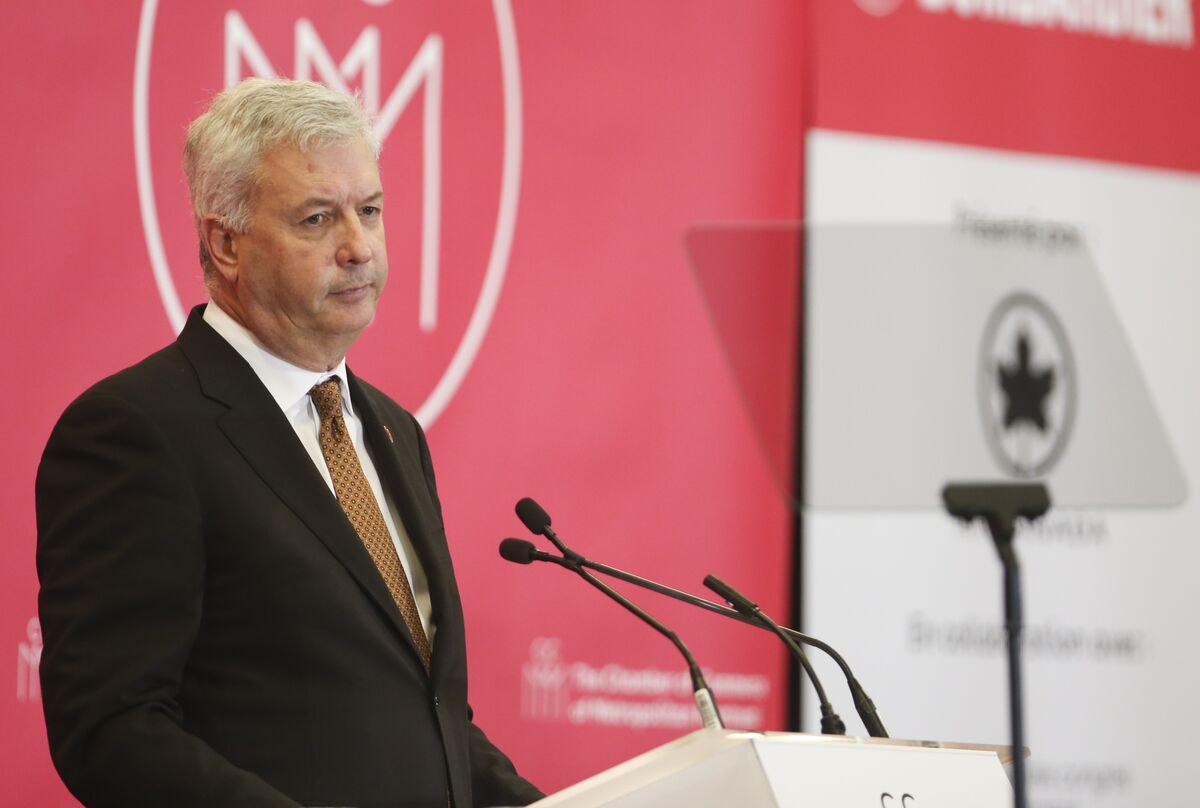
Air Canada CEO Michael Rousseau — who took more than 300 hours of French lessons after becoming CEO — spoke only the words 'bonjour' and 'merci' in a video statement after a fatal ground collision, saying he avoided speaking French to not risk offending anyone. The communications choice has drawn criticism in Quebec, amplifying regional sensitivities and creating reputational and potential political risk for Air Canada; near-term market impact is likely limited but could affect consumer sentiment in Quebec.
The immediate market lever is reputational and political exposure concentrated in Quebec: perception-driven demand shifts (consumer avoidance, corporate account re-evaluations, and provincial procurement optics) can compress near-term yields on routes that feed Montreal by a few percentage points over 1–3 months. That kind of top-line pressure is asymmetric — a short-lived boycott or corporate re-routing that trims load factors by 2–4% can produce outsized EPS volatility because unit costs are largely fixed in the short run.
Management miscues also raise governance tail risks that are not linear: repeated communication failures raise the probability (weeks → months) of formal provincial inquiries, employee-relations flare-ups in Quebec, or targeted regulatory scrutiny that drags booking momentum beyond an initial PR window. Each of those catalysts materially lengthens the time to reputational repair, converting a headline shock into a multi-quarter revenue drag and pushing implied volatility in Canadian airline equities higher.
Second-order competitive effects are local and fast: regional or leisure carriers with lighter Montreal exposure can profitably run temporary promotions and capture share on short-haul leisure routes; loyalty-program churn among frequent flyers (corporate and premium leisure) is sticky and could shift yield mix for several quarters. Operationally, diminished morale or increased staffing friction in Quebec can raise cancellation risk and costs, turning a brand problem into an operational one that amplifies short-term losses.
Net: expect a 2–6 week sentiment window where downside is amplified, followed by a 3–12 month fundamental test as management, unions and provincial politics determine recovery. Trades should therefore hedge near-term headline risk while preserving optionality to buy any fundamentals-driven weakness beyond a double-digit share decline.
AI-powered research, real-time alerts, and portfolio analytics for institutional investors.
Request DemoOverall Sentiment
mildly negative
Sentiment Score
-0.25
Ticker Sentiment
