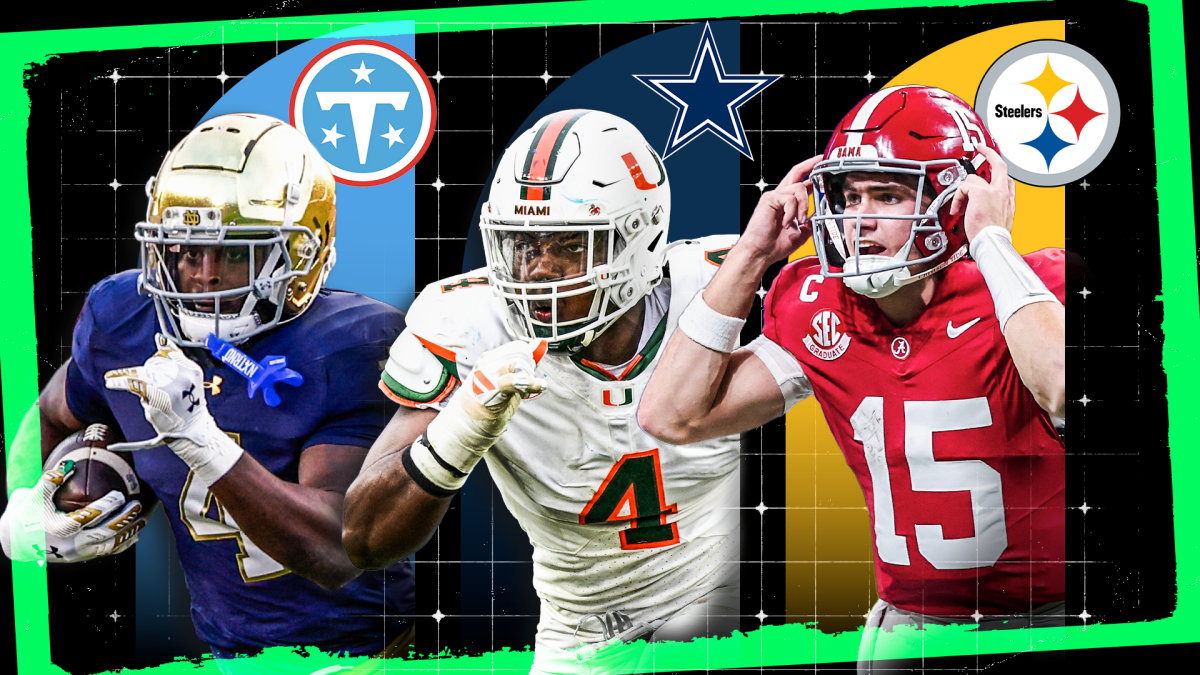
This is a 2026 NFL mock draft, projecting Fernando Mendoza to the Raiders at No. 1 and multiple trades across the first round, including the Cowboys moving down and the Giants moving up for a defensive tackle. The piece is commentary rather than market-moving news, with no financial results, guidance, or macro implications. It may be relevant mainly to media/sports content rather than investable fundamentals.
This draft is a live signal on roster-building priorities, not just player evaluation. The edge/tackle/run-defense clustering implies a league-wide premium on trench scarcity is still rising, which should keep demand elevated for premium OL/DL prospects and compress the market for mid-tier veterans at those positions once the draft is over. The biggest second-order effect is on teams that trade back: they may look like “losers” on draft-night optics, but if they convert top-10 equity into multiple starters, that tends to improve win-rate over the next 12-24 months more than chasing a single blue-chip skill player.
The more interesting angle is quarterback insulation. Several of these mocks imply decision-makers are willing to spend first-round capital on support infrastructure around young passers rather than forcing immediate upgrades at QB2. That is bullish for teams with recent QB investments because it lowers near-term volatility in sack rate, EPA dropback, and late-season fatigue; it is bearish for expensive veteran pass-rushing markets if the top of the draft soaks up elite edge supply and pushes the rest of the class into replacement-level territory.
From a contrarian standpoint, the consensus may be overestimating how cleanly these fit-based projections translate to draft capital. Once one or two surprise trades happen, positional runs can invert quickly, and the marginal value of selecting the “best available” lineman or defender often falls once the first tier is gone. The key catalyst window is draft night through the following 48 hours: if multiple teams trade up for trenches and defense, it reinforces scarcity; if the board tilts toward skill positions, the market may need to reprices expectations for offensive line and edge pricing in both rookie contracts and veteran extensions.
AI-powered research, real-time alerts, and portfolio analytics for institutional investors.
Request TrialOverall Sentiment
neutral
Sentiment Score
0.05
