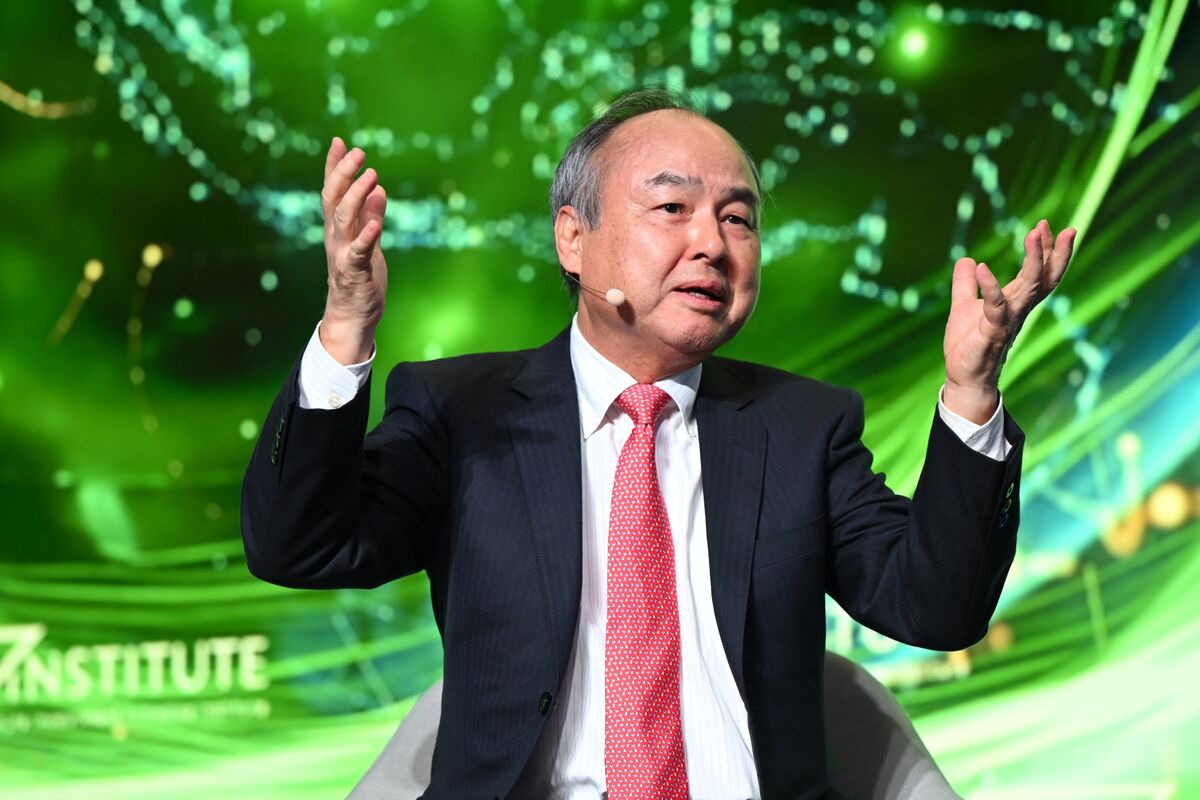
SoftBank founder Masayoshi Son said he regretted selling the company’s entire stake in Nvidia, explaining the November divestment was driven by a need to raise cash to fund major AI investments—including a large bet on OpenAI—and data-center construction. Son defended the capital-raising move and pushed back against talk of an AI investment bubble, framing the sale as a strategic liquidity decision rather than a loss of conviction in AI exposure.
Market structure: SoftBank’s forced liquidation is a liquidity event that temporarily increases supply of a marquee large-cap (NVDA) while redirecting capital into private AI (OpenAI, data centers). Winners are hyperscalers and data‑center real estate (EQIX, DLR) and late‑stage private AI funds that get funded; short‑term losers are momentum chasers and highly levered NVDA holders. Nvidia’s structural pricing power on datacenter GPUs remains intact due to constrained wafer/packaging capacity, so any price weakness is likely transient unless demand growth decelerates materially.
Risk assessment: Tail risks include regulatory curbs on high‑end GPU exports, a SoftBank funding shortfall forcing further public sales, or an NVDA supply shock; any of these could trigger 20%+ moves. Immediate (days) impact = elevated volatility and potential 5–15% repricing; short term (weeks/months) = institutional rebalancing and IV normalization; long term (quarters/years) = secular GPU demand likely supports double‑digit revenue growth unless macro stalls. Hidden dependencies: TSMC/TSMC capacity and OpenAI contract economics; catalysts are NVDA earnings (next 30–90 days), OpenAI funding announcements, and Fed rate moves.
Trade implications: Tactical: buy NVDA on meaningful dips but hedge—establish a 1–2% long with a 3‑6 month horizon and buy a 3‑month 10% OTM put spread as a tail hedge. Pair: long data‑center REITs (EQIX/DLR) vs short a cyclical semiconductor supplier (e.g., INTC or smaller fabless names) for 3–12 months to capture capex reallocation. Options: sell short‑dated calls only if 30‑day IV >60% and collect premium, otherwise prefer buying protection.
Contrarian angles: Consensus treats Son’s sale as a signal of NVDA peak — that’s liquidity‑driven not valuation‑driven; if NVDA falls >10% it likely reflects forced selling rather than demand destruction and may be a buy window. Historical parallels (large strategic holders selling stakes) show temporary outsized moves followed by mean reversion as end‑demand persists. Unintended consequence: large block creates incremental ETF/index buying support at rebalancing levels, setting technical floors—watch 50/200‑day MA cross and ETF flows over next 2–6 weeks.
AI-powered research, real-time alerts, and portfolio analytics for institutional investors.
Request DemoOverall Sentiment
neutral
Sentiment Score
0.00
Ticker Sentiment
