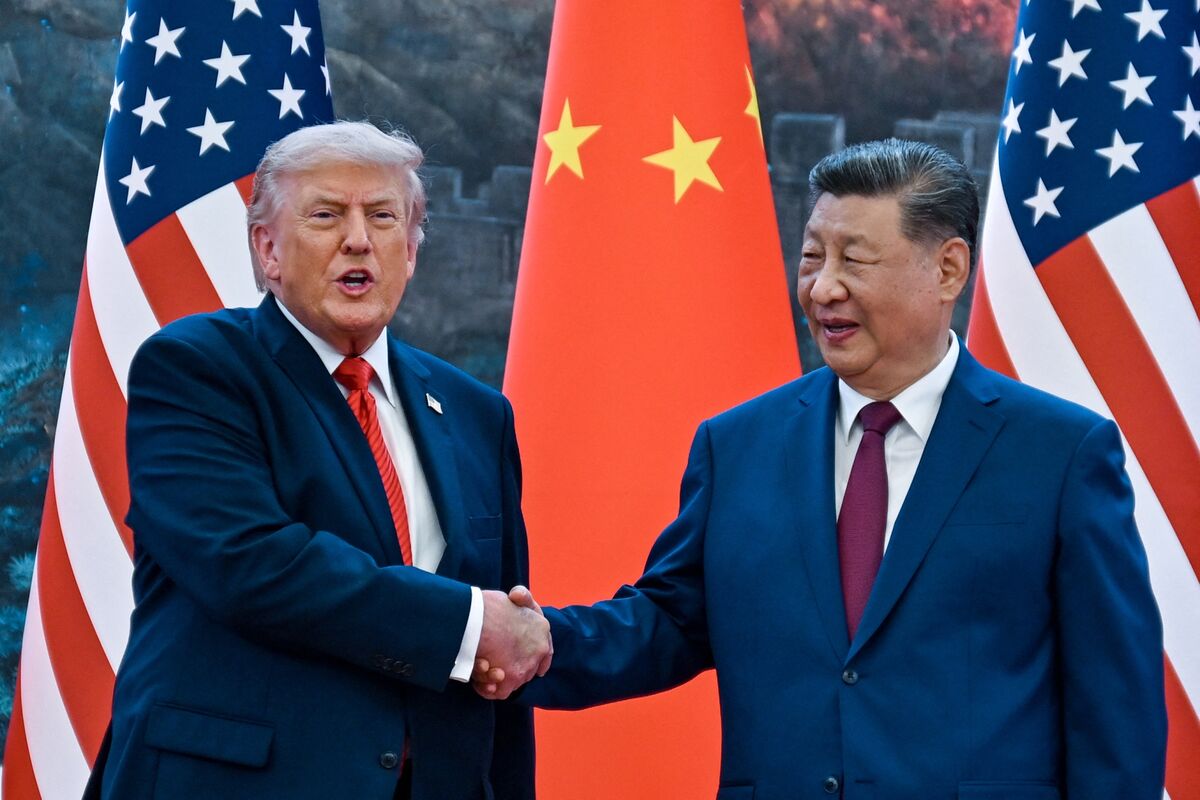
Xi warned Trump that the US and China could enter conflict if the Taiwan issue is mishandled, underscoring elevated geopolitical risk ahead of the summit. The article frames the meeting as cautious and implies potential implications for trade, supply chains, and defense-related assets. Market impact is high because any escalation in US–China tensions could ripple across global equities, semiconductors, and broader risk sentiment.
The market is likely underpricing the sequencing risk here: the immediate issue is not a full-blown decoupling shock, but a higher probability of policy noise that widens risk premia across semiconductors, hardware, and China-exposed industrial supply chains. The first-order beneficiaries are domestic defense, cyber, and select onshore manufacturing names, but the bigger second-order winner is any company with pricing power and low Taiwan concentration in its BOM — investors should favor firms that can reroute assembly or dual-source within one quarter, not one year. The most fragile part of the tape is the AI/compute complex, because the value chain is unusually Taiwan-dependent and positioned for perfection. Even a modest increase in tariff or export-control rhetoric can compress multiples before it hits fundamentals, especially for names where Taiwan fabrication is the hidden single point of failure. Over the next few days, expect volatility expansion rather than a clean directional trend; over 3-6 months, supply-chain insurance, inventory buffers, and alternate-node qualification become the real earnings story. The contrarian read is that headline risk may be more important than actual trade disruption. Markets often overreact to summit rhetoric and then fade once implementation proves slow; that creates opportunities to buy high-quality semis on drawdowns if physical flows remain intact. The real tail risk is not a tariff announcement, but a policy mistake that triggers export licensing, shipping insurance dislocations, or customer pre-buying — those effects can hit margins and working capital within one to two quarters even if revenue holds up.
AI-powered research, real-time alerts, and portfolio analytics for institutional investors.
Request DemoOverall Sentiment
mildly negative
Sentiment Score
-0.25
