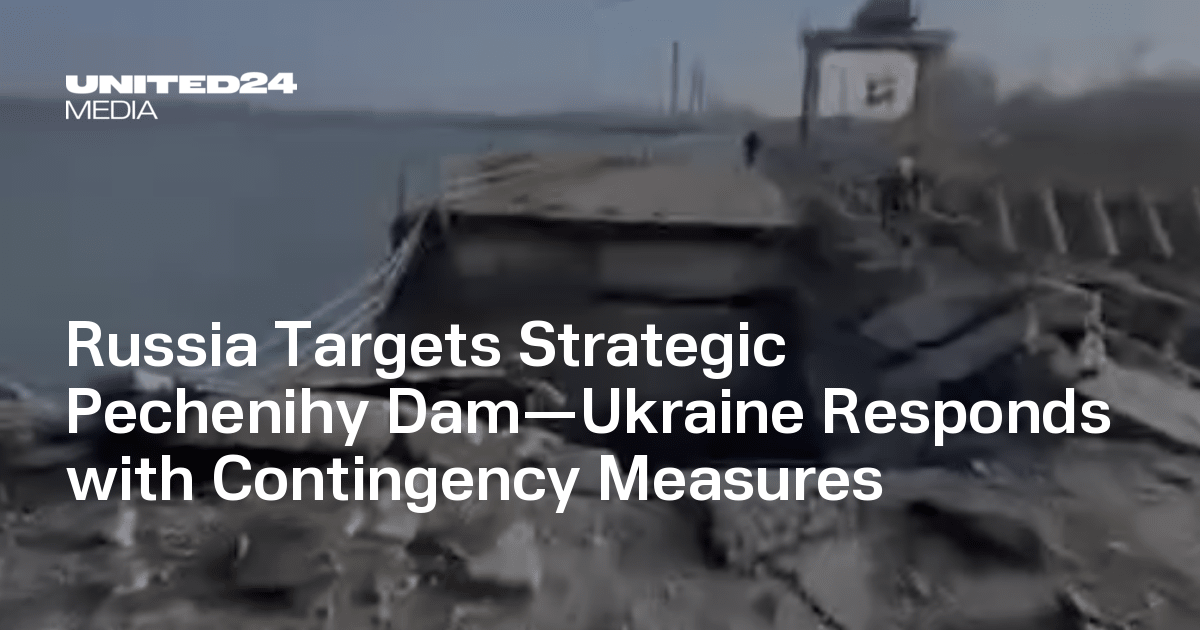
Russian forces struck the Pechenihy dam in Kharkiv on Dec. 7, damaging the reservoir structure, suspending traffic and prompting specialists to assess the damage; no casualties were reported. Ukraine’s 16th Army Corps said contingency plans, including alternative logistics routes and pre-positioned supplies, mitigate immediate operational disruption, though the dam has faced sustained multi-platform attacks. Separately, the IAEA reported that February damage degraded the New Safe Confinement at Chernobyl, eroding key safety functions and raising additional environmental risk exposure. Investors should view this as a negative geopolitical development that elevates regional operational and environmental risk premia, while immediate market disruption appears containable given reported contingency measures.
Market structure: Damage to Pechenihy dam amplifies premium on tactical ISR, C-UAS, and logistics-resilience suppliers while raising short-term operational costs for Ukrainian ground logistics and insurers underwriting conflict damage. Expect defense primes with full-spectrum ISR and munitions (RTX, LMT, NOC, GD) to see a 3–7% revenue tailwind in next 12 months from incremental procurement; agricultural export routes tension lifts wheat/freight volatility by +15–30% in stressed weeks. Cross-asset: safe-haven flows should support USD, JPY and gold; Ukrainian sovereign credit spreads and regional EM FX will widen near-term by 200–500bp in an escalation scenario.
Risk assessment: Tail risks include broad escalation that halts Black Sea grain corridors or triggers state-level sanctions contagion—each could push CBOT wheat +20–40% and European gas spikes >30% within 1–3 months. Immediate (days) effects are volatility spikes in FX/credit; short-term (weeks) re-routing costs and insurance-rate repricing; long-term (quarters–years) sustained defense and reconstruction spending. Hidden dependencies include reinsurance capacity limits and Western political will for arms funding; catalysts include winter offensives, major port attacks, or a high-profile NATO escalation that would materially re-rate defense equities and commodity curves.
Trade implications: Favor high-quality defense primes and space/ISR names: establish tactical 2–3% portfolio longs in RTX (6–12M), LMT (6–12M), and MAXR (3–9M) using 3–6 month call spreads to cap cost; hedge with 1% position in GLD for tail protection. Agricommodity exposure: consider a 0.5–1% position in WEAT ETF or short-dated wheat futures if Black Sea exports drop >25% QoQ; add freight/logistics picks (UNP overweight 1–2%) for modal-shift beneficiaries. For credit, buy 3–6M protection via iTraxx Europe or wideners if European IG spreads tighten <–10bp—protective given jump risk.
Contrarian angles: Consensus bids defense broadly, but market is under-pricing small-cap C-UAS specialists and satellite imagery firms that can compound revenues (discrete contracts) — look for sub-2% positions in AVAV-equivalents or MAXR where prospectuses show backlog growth >15%. The knee-jerk sell-off in Ukrainian exposure can overshoot; a 6–12M distressed-entry into selective Ukraine recovery equity/debt (size 0.5–1%) can pay off if Western reconstruction funding >$10bn materializes. Watch for overbaked commodity rallies; if wheat rises >30% in 2 weeks, layering short-dated put spreads into WEAT to monetize mean reversion is a viable contrarian hedge.
AI-powered research, real-time alerts, and portfolio analytics for institutional investors.
Request DemoOverall Sentiment
moderately negative
Sentiment Score
-0.45
