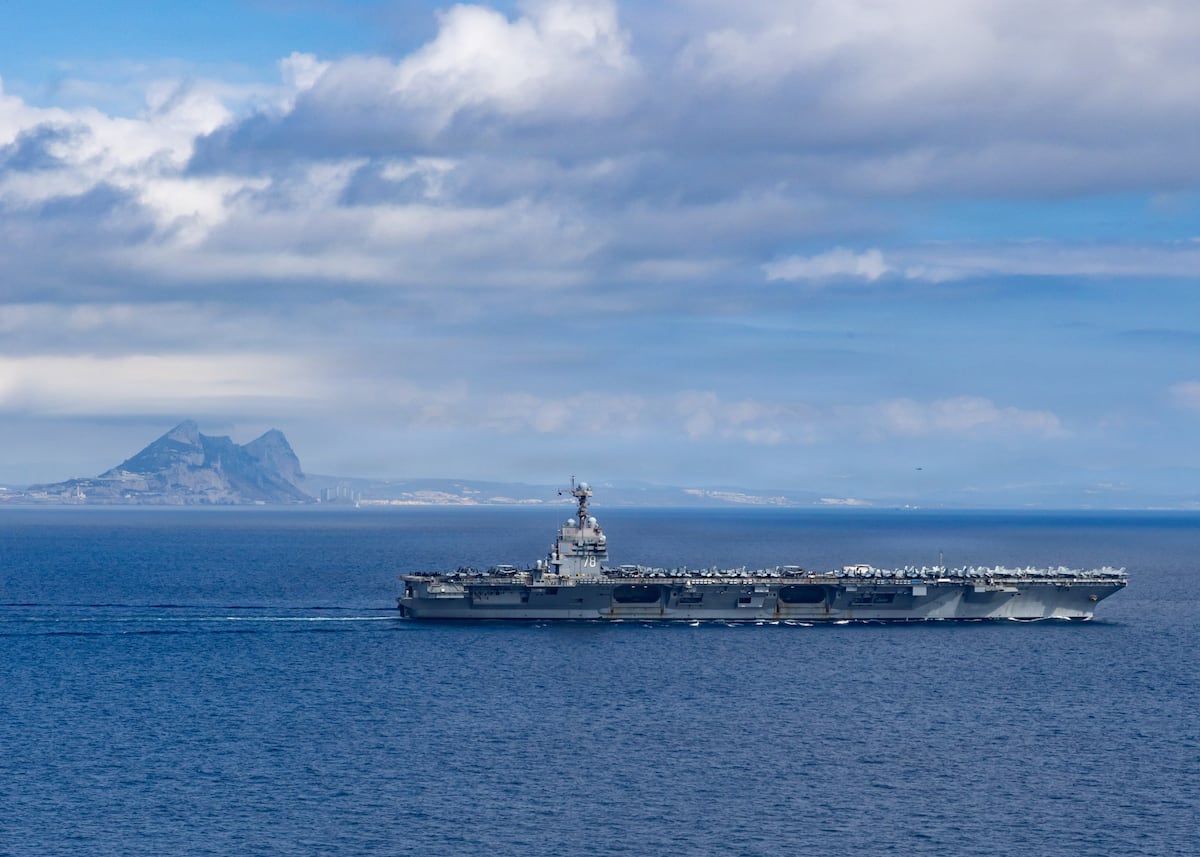
The U.S. is dispatching the nuclear-powered USS Gerald R. Ford to the Middle East to join the USS Abraham Lincoln and their escorts, increasing American carrier presence as the Trump administration presses Iran on its nuclear program. The rapid redeployment follows recent indirect talks and escalatory rhetoric from the U.S. president, while Iran faces internal unrest and 40-day mourning ceremonies after a deadly crackdown; the move raises regional military risk and could amplify geopolitical premium on risk assets and commodity markets if tensions escalate.
Market structure: A two-carrier US posture raises the premium on defense, energy, and insurance exposures — beneficiaries are US defense primes (Lockheed/LMT, Northrop/NOC, RTX) and integrated oil majors (XOM, CVX) via a near-term commodity shock; losers include Gulf regional equities, EM FX (TRY, IRR-linked assets), airlines and shipping (AAL, ZIM-like names) if Strait of Hormuz risks rise. Expect a 3–8% near-term Brent risk premium and a 25–75bp compression in 10yr UST yields on safe-haven flows if headlines escalate within 1–14 days.
Risk assessment: Tail risks include a >1mbd crude disruption (high-impact, <10% prob in 3 months) or asymmetric escalation leading to a 5–12% S&P draw; political catalysts (Iran retaliation, attacks on tankers or bases) could materialize in 2–8 weeks. Hidden dependencies: US domestic election timelines and OPEC+ policy can rapidly mute or amplify price moves; monetary policy reaction (Fed tightening vs. pause) is a key second-order channel.
Trade implications: Tactical trades: long defense equities and energy, hedge realized volatility with options; short EM beta and commercial aviation. Use 4–12 week horizons for headline-driven trades and 6–12 month holds for defense contractors tied to FY26 budget visibility. Immediate actions should be sized small (1–3% positions) with clear stop-losses tied to Brent moving back below $75 or credible diplomatic breakthroughs.
Contrarian angles: Consensus assumes escalation; history (2019 tanker incidents, 2011 MENA shocks) shows spikes often mean-revert in 2–8 weeks absent supply disruption. Defense names may already price some of this — prefer options/structured exposure rather than naked long equity. If Iran domestic unrest intensifies, it could reduce Tehran’s foreign adventurism, which would be bearish for oil and bullish for risk assets on a 3–6 month view.
AI-powered research, real-time alerts, and portfolio analytics for institutional investors.
Request DemoOverall Sentiment
moderately negative
Sentiment Score
-0.45
Ticker Sentiment
