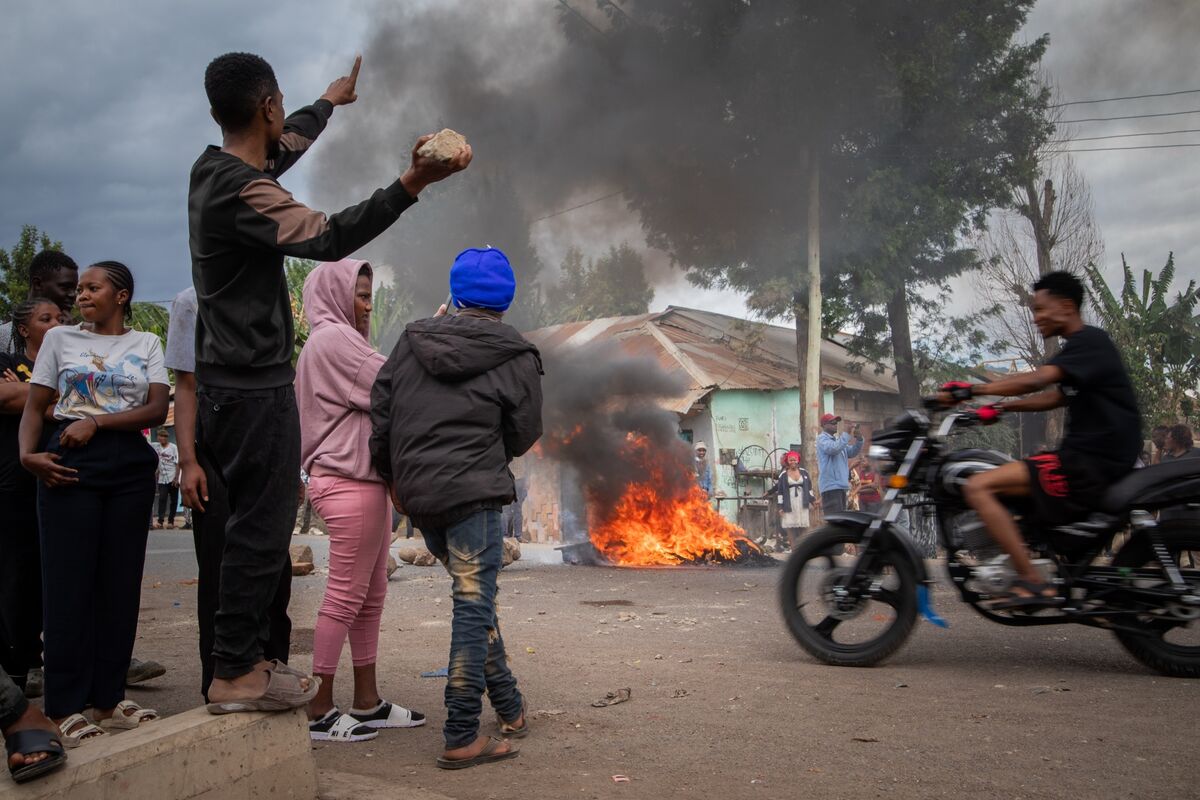
Tanzanian authorities have banned anti-government protests planned for Dec. 9 and urged residents to remain at home except for emergencies, while activists have urged turnout. The government cancelled this year’s Independence Day commemoration and said funds allocated for celebrations will be redirected to repair public infrastructure damaged during protests that followed the disputed Oct. 29 reelection of President Samia Suluhu Hassan. The moves increase political risk and signal a fiscal reallocation toward reconstruction, likely weighing on investor sentiment toward Tanzanian and regional assets.
Market structure: Short-term winners are domestic security contractors and firms supplying bulk construction inputs (cement/steel) as the state reallocates celebration funds to repairs; losers are tourism, retail, local SMEs, and frontier-focused funds that price political stability into valuations. Competitive dynamics shift marginal share to incumbent infrastructure suppliers and state-linked contractors given expedited public procurement; private investment and FDI pipelines face higher risk premia, compressing pricing power for local retailers and banks. Cross-asset: expect pressure on TZS (local currency), widening of Tanzania sovereign CDS and local-currency EM bond spreads, modest outflows from frontier ETFs and uptick in volatility in EEM/VWO in the next 7–30 days.
Risk assessment: Tail risks include escalation to prolonged unrest with capital controls or sovereign rating downgrade (low probability, high impact) — monitor for a >50bp move in sovereign CDS or a >5% one-week TZS depreciation as early warnings. Immediate timeline (days): crowd-control and localized disruption; short-term (weeks–months): tourism revenue shock, tighter external financing; long-term (quarters–years): persistent investment chill and higher sovereign borrowing costs. Hidden dependencies include regional trade via Dar es Salaam port and IMF/Donor conditionality that could tip financing availability. Catalysts: further protests, international sanctions, IMF program reviews, or clear procurement announcements.
Trade implications: Reduce frontier tail-risk and hedge EM local-currency exposure now (7–14 days) while using option protection to cap downside through the next 1–3 months. Tactical longs in global building-materials names that supply East Africa may pay off on a 3–9 month horizon if procurement follows (selective 1–2% positions). Use FX/credit triggers to scale exposure back in: buy back only after USD/TZS stabilizes within ±2% over two consecutive weeks or sovereign CDS narrows by >30bps.
Contrarian angles: Market consensus will likely overprice systemic contagion — Tanzania is a small weight in EM indices so broad EM sell-offs would be an overreaction; this creates a re-entry opportunity if dislocations exceed fundamentals. Conversely, don’t underweight potential for protracted political risk; a repeat of localized East African unrest historically reduces FDI for 12+ months. Unintended consequence: accelerated state procurement could benefit a narrow set of suppliers and entrench state-favored incumbents, creating concentrated winners rather than broad cyclical recovery.
AI-powered research, real-time alerts, and portfolio analytics for institutional investors.
Request DemoOverall Sentiment
moderately negative
Sentiment Score
-0.45
