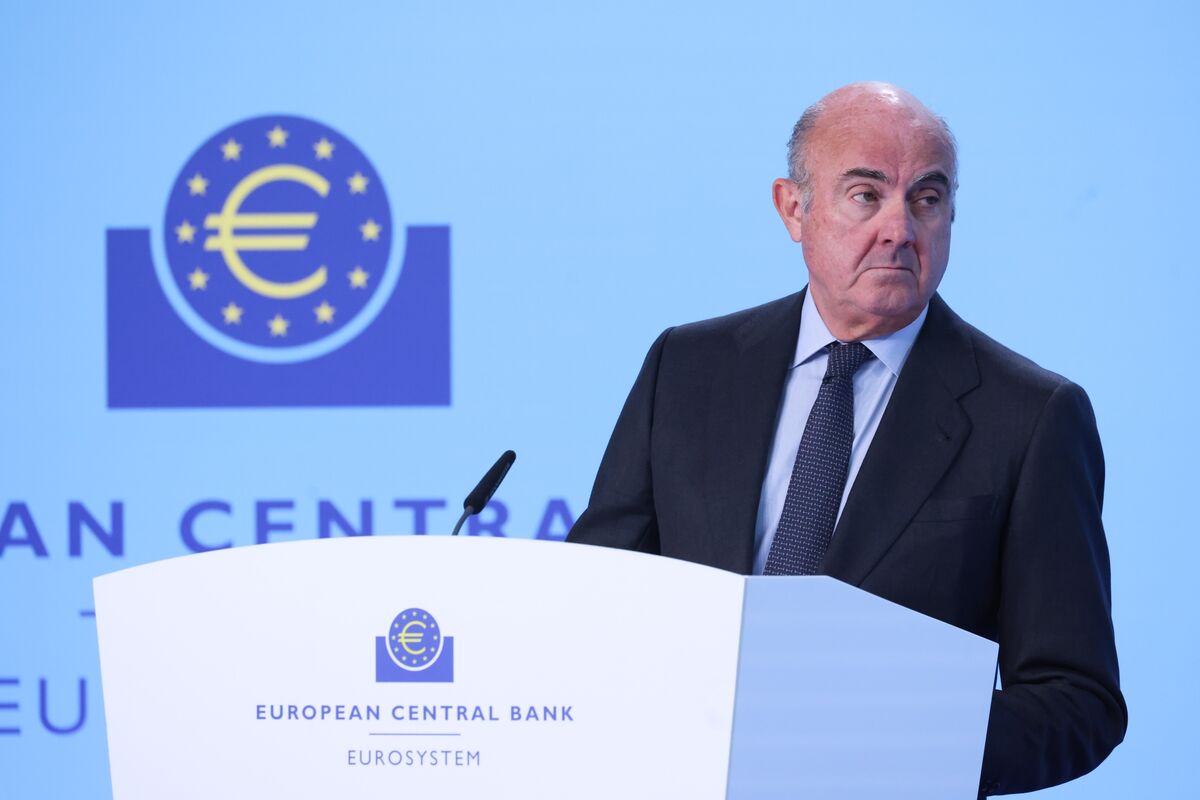
ECB Vice‑President Luis de Guindos warned that regulators have 'red lines' on bank capital and resilience while officials consider requests to ease regulatory burdens. His remarks signal limited willingness at the ECB to dilute capital requirements, reinforcing a firm supervisory stance that could pressure European bank equities and shape banks' capital planning and investor expectations.
Market structure: ECB’s “red lines” signal regulators will prioritize CET1/resilience over short‑term relief, favoring large, well‑capitalized universal banks and creditors while compressing ROE for smaller, regional lenders that depend on lighter capital (thresholds to watch: CET1 moving floor ≈10.5–12%). Expect issuers to either retain earnings or raise equity; equity issuance/AT1 supply will pressure bank multiples by ~5–15% relative to broader indices over 3–12 months.
Risk assessment: Tail risks include a regulatory shock (hard cap on dividend/bonus/takeup) that forces immediate capital raises or sovereign‑bank feedback if sovereign spreads widen >50bp; short horizon (days–weeks) volatility spike in bank equities and iTraxx Financials, medium (3–6 months) credit repricing, long term (≥12 months) structural margin drag. Hidden dependency: tighter capital => credit supply contraction that amplifies cyclical slowdown and raises NPL risk in weaker jurisdictions.
Trade implications: Cross‑asset: expect bank spread widening and safe‑haven bid into 10y German Bunds (bund yields down 10–30bp if stress), EUR downside pressure vs USD on risk aversion. Tactical: favor large-cap, high‑CET1 banks and credit protection on weaker names; use index options (SX7E) and CDS to express views while capping capital at portfolio level.
Contrarian angles: Consensus may overprice blanket weakness in all banks — quality dispersion will increase; equity issuance could handcuff some names but create buying windows when CET1 shortfalls are transparently fixed. Historical parallel: post‑2016 EU bank regulatory tightening created 6–18 month underperformance followed by consolidation and selective outperformance among survivors.
AI-powered research, real-time alerts, and portfolio analytics for institutional investors.
Request DemoOverall Sentiment
moderately negative
Sentiment Score
-0.30
