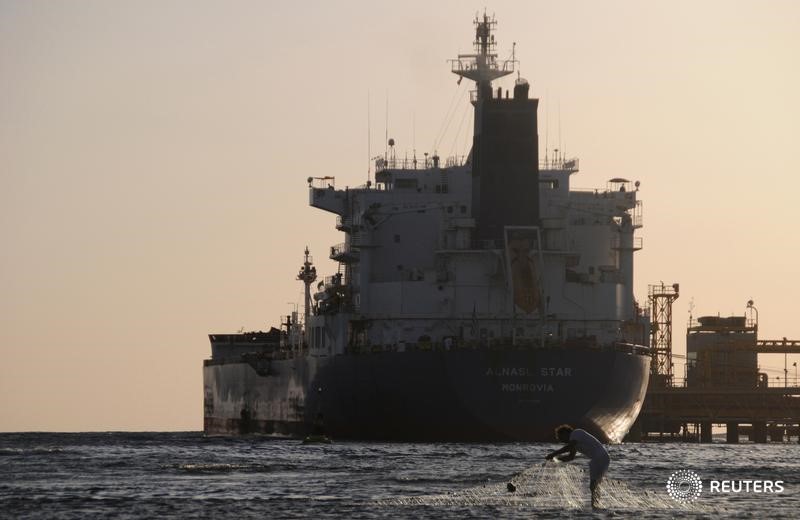
President Trump said Iran delivered an unspecified oil-and-gas concession related to the Strait of Hormuz amid a 25-day Middle East conflict, signalling possible relief to disrupted oil transit routes. U.S. envoys (Witkoff, Kushner), Vice President Vance and Secretary Rubio are reportedly negotiating a deal, with Pakistan offering to host talks and the U.S. deploying additional troops. Implication: if confirmed, the concession could reduce oil risk premia and ease sector-level volatility, but lack of details keeps outcome uncertain and market moves likely to remain choppy.
A tactical de-risking of Strait-of-Hormuz exposures will primarily compress the ‘war-risk’ premium priced into freight, insurance and front-month Brent within days. Expect tanker time-charter (VLCC/Suezmax) rate indices to reprice lower by 30-60% intramonth if AIS data and fixture flow confirm sustained transits, which would mechanically remove $3–8/bbl of spot risk premium from crude markets in the short run.
Second-order winners are physical refiners and trading houses: lower insurance and freight reduces landed crude costs and makes knock-on arbitrage economics (Med/USGC/Asia) more profitable, potentially adding 100–300bps to refinery EBITDA/margin per barrel of throughput for coastal refiners over the next 1–3 months. Losers include tanker equity owners and war-risk underwriters, whose revenue pools are concentrated in elevated-rate environments; defense-equipment equities could be insulated from a single concession because deployed forces and post-conflict spending trajectories are sticky for 6–24 months.
The trade hinges on durability: this is a binary, negotiation-dependent signal with high tail risk. Key catalysts to watch in the next 0–90 days are confirmed AIS movements and charter fixtures, insurance (war-risk) premium announcements, and any public signals of oil volume commitments versus mere transit assurances. Re-escalation, misreporting, or a tactical reversal would produce rapid repricing—prepare for 20–40% volatility spikes in affected names on adverse news.
AI-powered research, real-time alerts, and portfolio analytics for institutional investors.
Overall Sentiment
mixed
Sentiment Score
0.00
