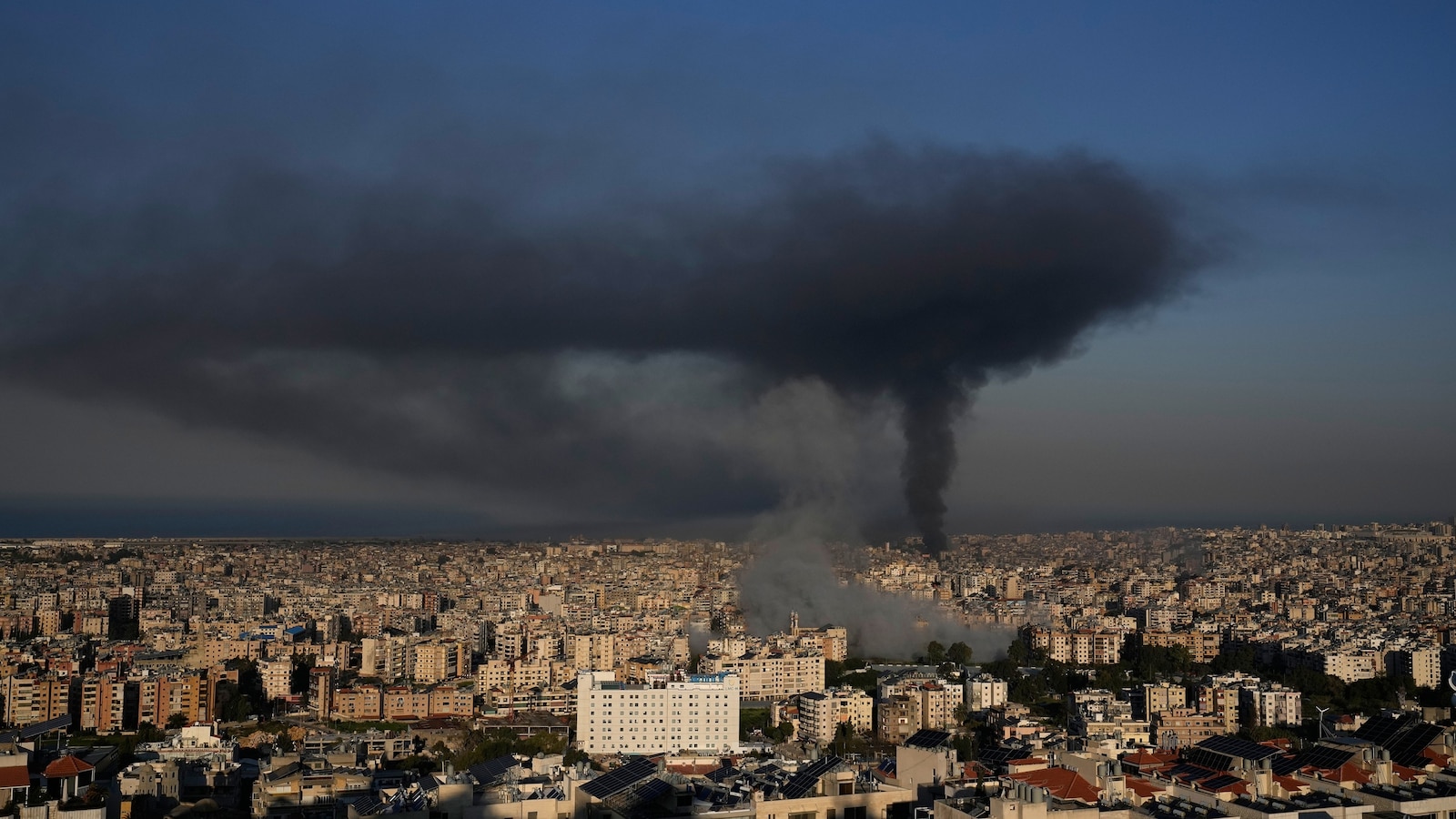
Israeli forces expanded strikes on Beirut and southern Lebanon after rocket fire from Iran-backed Hezbollah, killing at least 77 and wounding 527 since Monday while prompting mass evacuations of more than 300,000 people; the IDF warned residents to abandon areas south of the Litani River and says it has mobilized close to 100,000 troops. Israel says it struck underground weapons storage, command centers and senior Hezbollah figures, signaling a widening Israel–Iran confrontation that raises the risk of broader regional escalation and potential disruptions to energy markets, emerging-market assets and safe-haven flows.
Market-structure: Near-term winners are defense primes (Lockheed LMT, Raytheon RTX, Northrop NOC, ETF ITA) and energy producers/servicers (XOM, CVX, XLE, OIH) as risk premia for Middle East conflict and Strait-of-Hormuz disruption rise; losers include regional equities/FX, airlines (AAL, DAL), and tourism/leisure names. Expect 3–7% directional moves in Brent/WTI within days if exchanges of strikes continue; defense contract reallocation and surge orders could lift FY+1 revenue by low-double-digits for primes in a sustained escalation scenario.
Risk assessment: Tail risks include a broader Iran-Israel war (5–10% probability) that could remove 2–4 mbpd of oil (2–4% global supply) and trigger 10–20% equity drawdowns in EM/energy-intensive sectors; cyberattacks on energy/infrastructure are a 10–15% conditional tail. Immediate (days) is volatility spike and safe-haven flows; short-term (weeks/months) is commodity repricing and sector rotation; long-term (quarters/years) is structurally higher defense budgets and elevated shipping insurance costs.
Trade implications: Tactical plays should be skewed to volatility capture and geopolitical convexity — long defense equities/ETFs and energy, short airline and EM exposure, plus option structures to size risk. Use thresholds to scale: add energy exposure if Brent > $90/bbl sustained for 5 trading days; trim defense longs if headline-driven IV compresses >30% from peak over 2–4 weeks.
Contrarian angles: Consensus assumes persistent escalation; markets often overshoot in first 2–6 weeks — if no US ground involvement and Iranian state restraint holds, oil and defense can mean-revert 10–25%. A 3–6 month horizon favors picking up beaten EM assets on two-way ceasefire-driven rallies; alternatively, sell volatility after the first wave (4–6 weeks) when realized vol exceeds pricing by >20%.
AI-powered research, real-time alerts, and portfolio analytics for institutional investors.
Request TrialOverall Sentiment
strongly negative
Sentiment Score
-0.70
