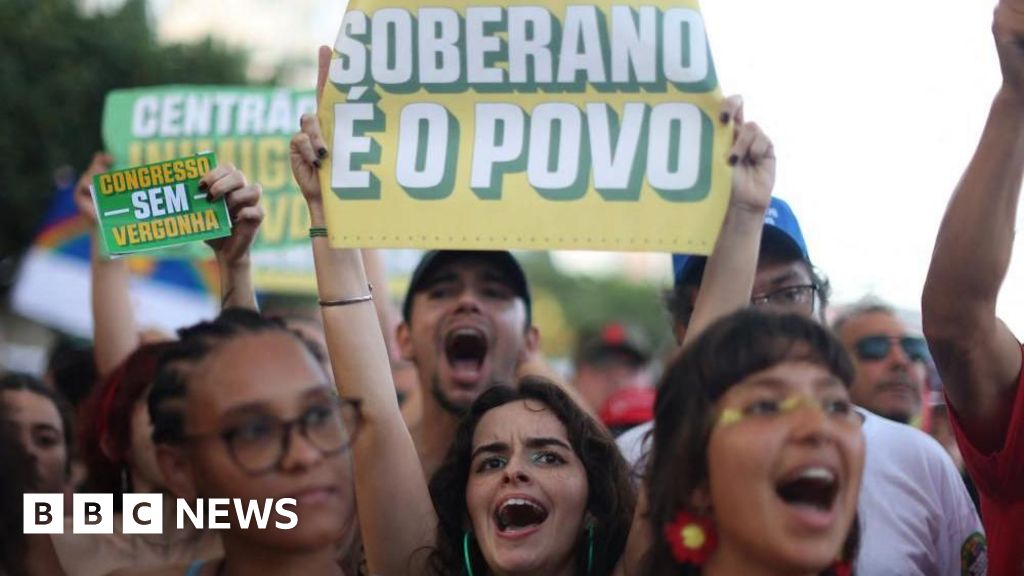
Tens of thousands protested across Brazil against a proposed bill that could grant amnesty to ex-President Jair Bolsonaro, recently sentenced to 27 years for plotting a coup, and a constitutional amendment making it harder to prosecute lawmakers. Bolsonaro's allies are fast-tracking the amnesty bill, while the controversial amendment has passed the lower house and moves to the Senate. President Lula supports the protests and has vowed to veto the amnesty bill, underscoring significant political divisions and potential legislative-executive conflict that could impact governance stability in Brazil.
Brazil is experiencing heightened political and institutional risk, stemming from significant legislative-executive conflict and deep societal polarization. Large-scale public protests, backed by President Lula, have emerged against a bill fast-tracked by the lower house that could grant amnesty to former President Jair Bolsonaro, who was recently sentenced to 27 years for plotting a coup. This legislative push is concurrent with the lower house's approval of a constitutional amendment designed to shield lawmakers from criminal proceedings, a move critics label the "Banditry Bill." The stark division in the country is underscored by a recent Datafolha poll indicating a near-even split on Bolsonaro's imprisonment (50% for, 43% against) and by rival protest marches. President Lula's explicit threat to veto the amnesty bill sets the stage for a direct confrontation with Congress, signaling potential for legislative gridlock and a distraction from economic policy. The situation points to an elevated risk of governance instability and a potential weakening of judicial authority, which could negatively impact the predictability of Brazil's legal and regulatory environment.
AI-powered research, real-time alerts, and portfolio analytics for institutional investors.
Request DemoOverall Sentiment
moderately negative
Sentiment Score
-0.35
