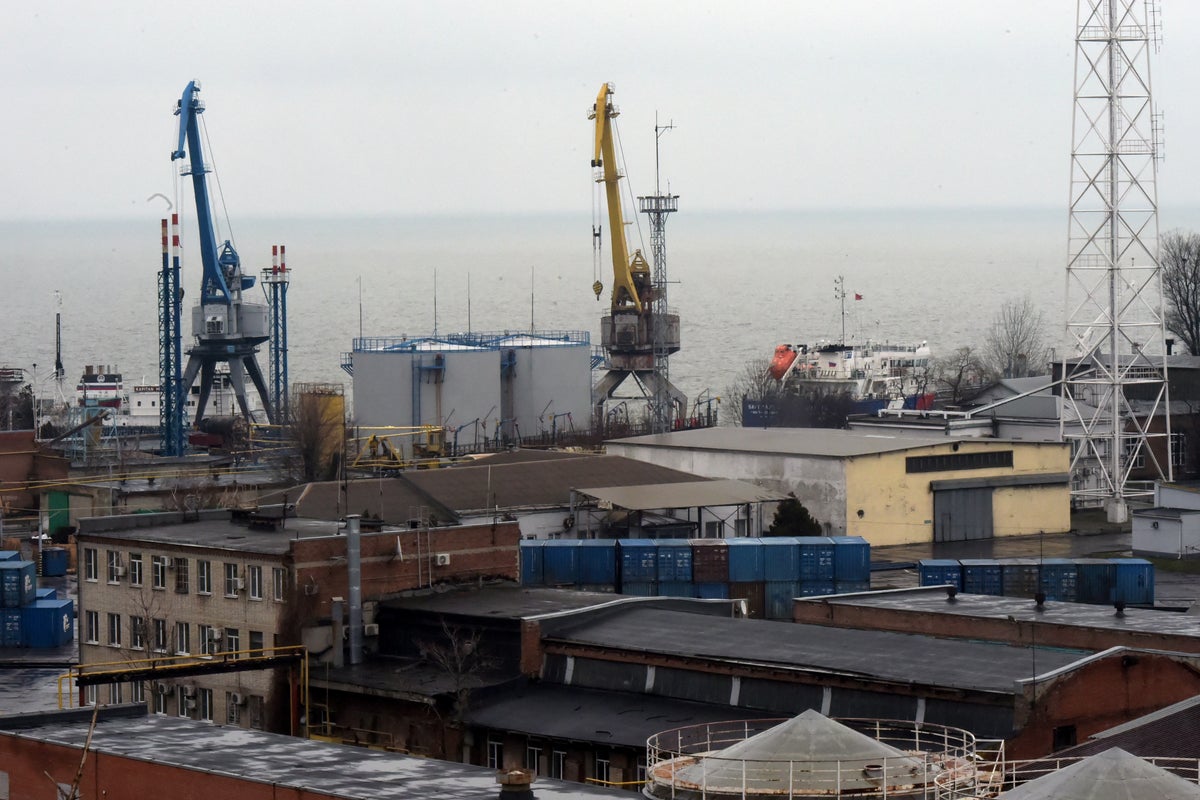
Russian and Ukrainian drone attacks escalated, including strikes on an oil depot in Armavir, a tanker at Taganrog port, and reported casualties in Belgorod, while Ukraine warned of a possible major Russian counterstrike. The article also highlights the strain of Russia’s war spending, with an estimated $28bn budget overrun this year and planned spending cuts. NATO’s warning to defend "every inch" of territory after the Romania drone incident underscores rising regional security risk.
The market is still underpricing the compounding effect of Ukraine’s shift from battlefield attrition to industrial disruption. Sustained drone pressure on Russian refining, storage, and port logistics does not need to destroy large volumes to matter; it only has to raise the frequency of unplanned outages, force more defensive inventory buffers, and push domestic trucking/freight costs higher. That creates a slow-burn squeeze on Russia’s internal fuel market and a second-order tax on military logistics that becomes more meaningful if strikes stay near daily cadence for several weeks.
The more interesting read-through is fiscal, not tactical. If Moscow is already being forced to trim non-war spending, each incremental hit to oil handling infrastructure raises the probability of a harder trade-off between war spending, social spending, and macro stabilization. That matters because the regime can absorb headline losses, but it is more vulnerable to a persistent squeeze on rail, port, and fuel distribution than to isolated battlefield setbacks.
NATO risk premium is also underappreciated. Romania/Poland/Baltics incidents move this from a bilateral war story toward an alliance credibility test, which increases the probability of incremental air-defense deployments, readiness spending, and procurement urgency. The most important market implication is that defense order visibility improves even if headline de-escalation rhetoric continues, because border states will buy for insurance rather than only for current need.
The contrarian view is that this is not automatically bullish for crude. A persistent disruption campaign can eventually suppress Russian export optionality and loosen seaborne supply enough to offset some geopolitical premium, especially if buyers have time to reroute. The better trade is not a naked energy-long; it is to own assets with immediate budgetary beneficiaries while fading the idea that the broader commodity complex gets a durable inflation impulse from every strike.
AI-powered research, real-time alerts, and portfolio analytics for institutional investors.
Request DemoOverall Sentiment
strongly negative
Sentiment Score
-0.72
