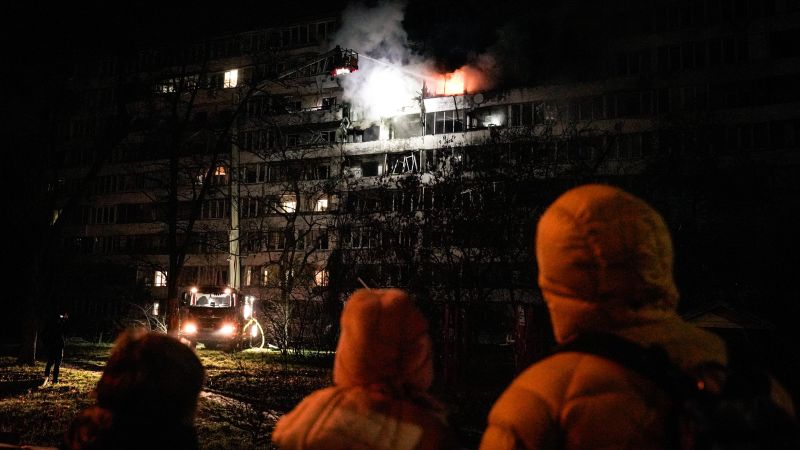
President Trump is pushing a revised peace initiative for the Russia-Ukraine war—trimming an initial 28-point plan (widely criticized as pro-Russian) toward roughly 19 points—while sending special envoy Steve Witkoff to Moscow and preparing a Zelensky-Trump meeting. U.S. officials signal cautious optimism, but European leaders and Kyiv resist concessions that would cede contested territory or bar NATO ambitions, and Russia shows no clear willingness to accept a ceasefire or meaningful limits; secondary U.S. sanctions on Russian oil remain in place. The outcome creates sustained geopolitical uncertainty with potential implications for defense spending, European security guarantees and energy markets, posing moderate downside risk to risk assets if talks falter or real concessions favor Moscow.
Market structure: A negotiated pause that preserves Russian territorial gains would boost near-term demand for reconstruction and political risk insurance but also sustain long-term defense spending in NATO — a structural win for large-cap US defense primes (LMT, RTX, GD). Energy suppliers (Brent/TTF) and commodity exporters remain binary: a collapse of talks => >$100/barrel risk within 3 months; a Russia-favorable deal => 10–20% downside in oil/gas prices as risk premia unwind. FX and rates will trade on risk-on/risk-off: a failed deal pushes USD safe-haven inflows and lowers EUR by 3–6% in weeks while lifting 10y UST yields by 10–30bp on inflation fears.
Risk assessment: Tail risks include a major Russian offensive (high-impact, <30% probability) that spikes Brent >$120 and defense equities +20% in 1–3 months, or a rapid Trump-mediated deal (20–30% probability) that causes a 15–25% hit to defense names within weeks. Hidden dependencies: US election cadence, enforcement of secondary sanctions on Russian oil, and Chinese mediation capacity materially change outcomes. Key catalysts in next 30–90 days: Zelensky-Trump meeting, Witkoff-Putin contact, and EU security guarantee vote.
Trade implications: Tactical winners are large-cap defense and cybersecurity; positioning should be time-boxed to 3–12 months. Hedging energy upside via limited-cost call spreads is prudent; FX hedges (EUR/USD puts) protect against a Euro shock. Implied vol will remain elevated in energy and FX — favor debit spreads and long-dated calls rather than naked longs.
Contrarian angle: Consensus assumes either protracted war or a clean peace; missing is a frozen conflict scenario that sustains multi-year European rearmament and arms procurement cycles — this would support defense primes even if headlines briefly lower prices. Reaction may be overdone in small-cap defense and Euro banks; short-lived euphoria on any headline ceasefire is an opportunity to buy LMT/RTX on dips rather than rotate out entirely.
AI-powered research, real-time alerts, and portfolio analytics for institutional investors.
Request DemoOverall Sentiment
moderately negative
Sentiment Score
-0.35
