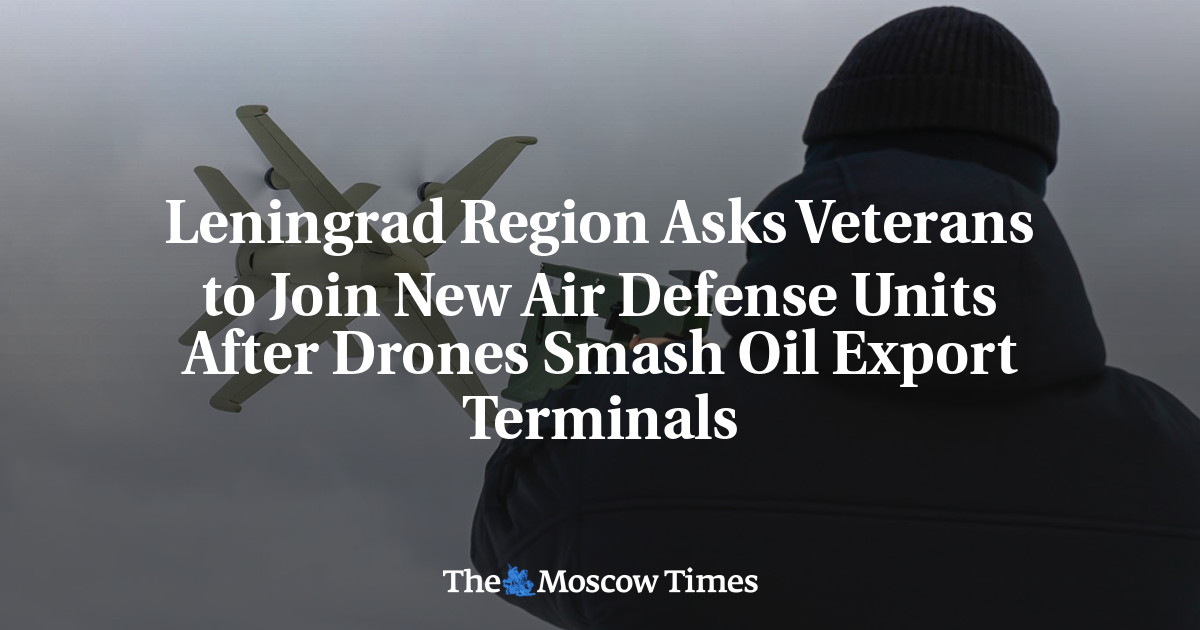
Leningrad region officials are recruiting reservists to create 54 additional mobile fire groups by June 1, expanding the current 80-unit air defense network after repeated Ukrainian drone strikes on oil export infrastructure. The attacks have been linked to an estimated 40% reduction in Russia’s oil export capacity, and the region says 243 drones have been intercepted since the start of the year. The move underscores escalating wartime pressure on Russian energy infrastructure and export flows.
This is less a one-off security response than evidence of a widening operational tax on Russian export logistics. The market implication is that even when physical destruction is limited, the need to disperse defenses, staff mobile units, and harden peripheral infrastructure raises throughput friction, insurance costs, and turnaround times across the oil export complex. That tends to compress realized export volumes before it shows up in headline production data, which is why the second-order effect is usually more persistent than the initial strike shock.
The key winner is any non-Russian exporter with flexible marginal supply: Middle East crude, seaborne US barrels, and refined product exporters in Europe/Asia if Russian product flows become less reliable. The loser is not just Russian oil revenue, but also the shadow logistics ecosystem around it — tankers, storage, port handling, and traders who depend on predictable loading windows. A slower, more contested export corridor also raises the value of optionality in shipping and storage, which supports rate volatility even if outright volumes do not collapse further.
The near-term catalyst window is days to weeks, but the more important horizon is 1-3 months: if attacks continue into summer, Russia will likely have to choose between diverting more air-defense assets to the northwest or tolerating higher leakage at export nodes elsewhere. That creates asymmetric tail risk because the response is capital- and manpower-intensive while the attacker’s cost base remains low. The main reversal would be an abrupt improvement in interception rates or a temporary pause in drone activity; otherwise the baseline is a rolling degradation of export reliability rather than a single step-down event.
Consensus may be underestimating how quickly this feeds into pricing of refined products versus crude. Even modest disruption to northern Russian export logistics can tighten diesel and fuel oil balances more than Brent, because replacement barrels are not perfectly fungible and seasonal demand is favorable. The trade is therefore better expressed through product crack exposure and shipping optionality than by chasing broad oil beta alone.
AI-powered research, real-time alerts, and portfolio analytics for institutional investors.
Request TrialOverall Sentiment
moderately negative
Sentiment Score
-0.45
