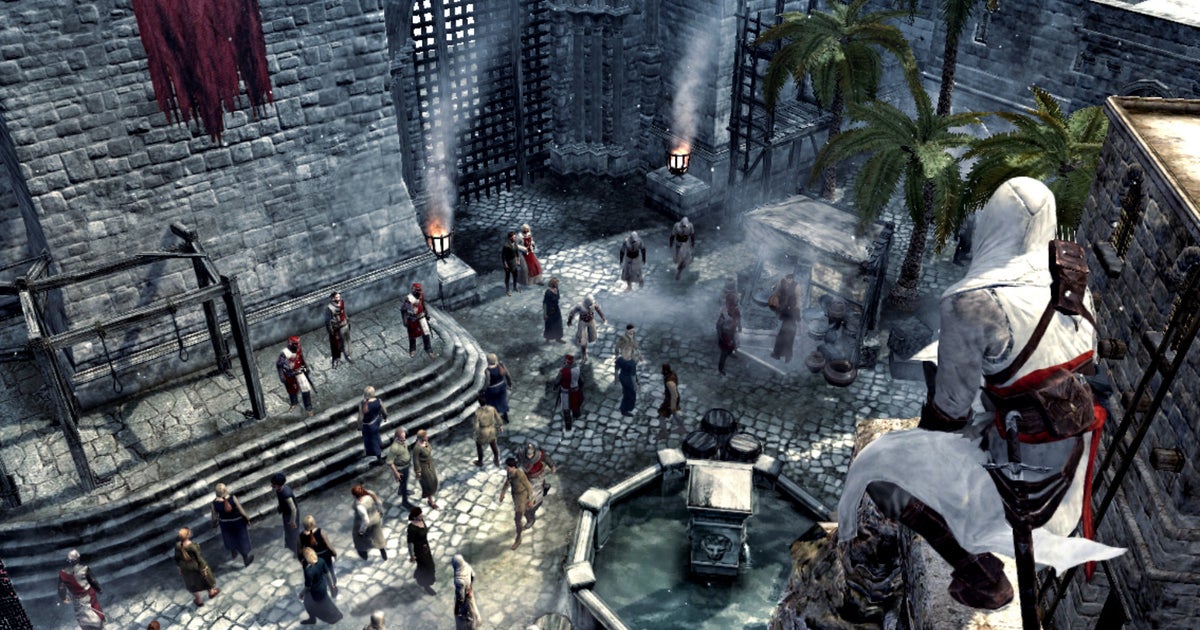
Ubisoft reportedly moved about 50 Assassin's Creed Hexe developers off the project and onto an interproject team, where they may need to secure another assignment within three months or face redundancy. The report also says Hexe has had scope changes, with some more 'magical' elements cut, while Ubisoft says team mobility is a standard part of operations. The game remains undated, with Insider Gaming claiming a possible June 2027 release target that could slip later in the year.
This is less about a single game headline than about Ubisoft telegraphing an operating model under stress: shifting bodies between projects to preserve near-term delivery while quietly trimming optionality. The second-order effect is that franchise-specific execution risk rises precisely when the company is trying to stabilize a pipeline that investors already view as lumpy; for a publisher, losing embedded teams mid-cycle usually shows up 12-24 months later as feature cuts, QA compression, or delayed monetization rather than an immediate P&L hit.
The market implication is that Ubisoft is trying to protect cash burn at the cost of long-duration IP development, which can be rational if management sees a softer demand curve and wants to avoid overstaffing ahead of uncertain launches. But that also increases the probability of a negative feedback loop: weaker internal morale, more voluntary attrition, and slower ramp on replacement talent. For peers, this is subtly bullish for companies with better visible roadmaps and stronger retention, because capital and talent tend to migrate toward publishers that look more predictable.
For Netflix, the direct read-through is limited, but the broader media-and-entertainment signal is relevant: franchise owners are increasingly leaning on cross-media IP monetization when game economics get messy. That supports the strategic value of adaptation pipelines and could make premium IP rights more valuable over time, even if near-term game development execution looks shakier. The contrarian view is that the current reaction may overstate project-specific risk and understate Ubisoft’s willingness to reallocate efficiently; if Hexe remains on a 2027 window, this may be more about portfolio optimization than cancellation risk.
AI-powered research, real-time alerts, and portfolio analytics for institutional investors.
Request DemoOverall Sentiment
mildly negative
Sentiment Score
-0.35
Ticker Sentiment
