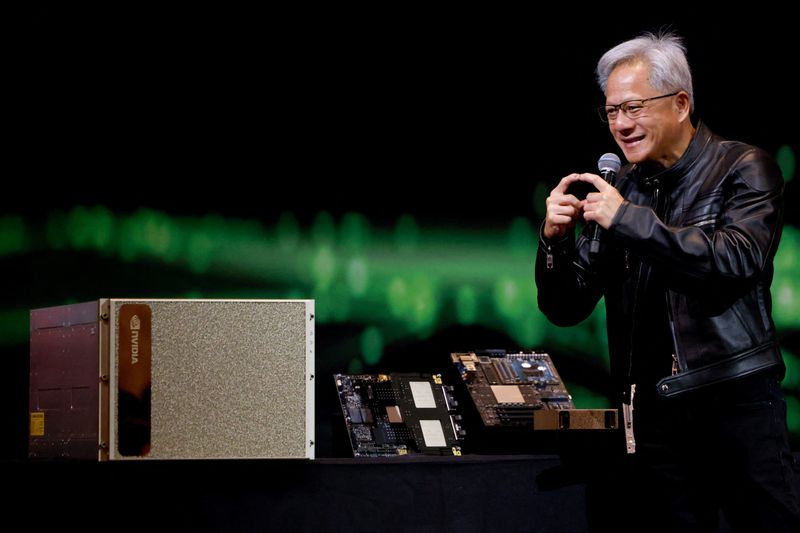
LG shares hit fresh record highs amid speculation tied to Nvidia’s new AI-focused processor and broader Windows PC chip push. Nvidia unveiled the RTX Spark for Windows laptops and desktops, along with the Vera AI agent chip and Vera Rubin platform entering full production, signaling continued momentum in AI hardware. The news is supportive for AI-related equities, though the article is largely about product announcements and market reaction rather than a direct LG business update.
This is less a one-day product headline than a signal that Nvidia is trying to become the default control point for the AI PC stack. If it can push compute from cloud to endpoint, it changes the cadence of upgrades: buyers won’t just refresh for thinner chassis or better battery life, but for local inference and agent latency, which can pull forward replacement cycles over the next 2-4 quarters. The second-order winner is not just OEM share, but ecosystem lock-in through software and developer tooling, which should keep gross margin pressure manageable even if unit pricing gets more competitive.
The most vulnerable names are Intel and AMD, but the real risk is margin compression across the PC supply chain as OEMs use Nvidia’s halo to reprice premium configurations. That likely benefits HPQ and DELL near term if they gain share in premium AI notebooks, but it could also shift mix toward higher ASP systems without meaningfully lifting volumes. Apple is more exposed on positioning than direct share loss: the threat is not immediate churn, but a reframing of what consumers expect from a premium laptop, which could cap multiple expansion if “local AI” becomes table stakes by holiday 2025.
The bullish setup in NVDA remains intact, but the move is increasingly sentiment-sensitive after a large rerating. The key catalyst window is the next 1-3 months: channel checks on design wins, preorder commentary, and whether Microsoft actually creates a coherent software layer for agents on-device. If software adoption lags hardware launches, this becomes a narrative trade rather than an earnings reacceleration story, and the stock could digest gains even if the product cycle is real.
The contrarian angle is that the market may be overestimating near-term TAM and underestimating thermal, battery, and cost constraints on AI PCs. Local inference is compelling for demos, but the enterprise buyer will still benchmark against cloud-assisted workflows unless the productivity gain is obvious and measurable, so monetization may skew to premium niches first. That argues for a relative-value expression rather than outright chasing the hardware winners at any price.
AI-powered research, real-time alerts, and portfolio analytics for institutional investors.
Request DemoOverall Sentiment
mildly positive
Sentiment Score
0.35
Ticker Sentiment
