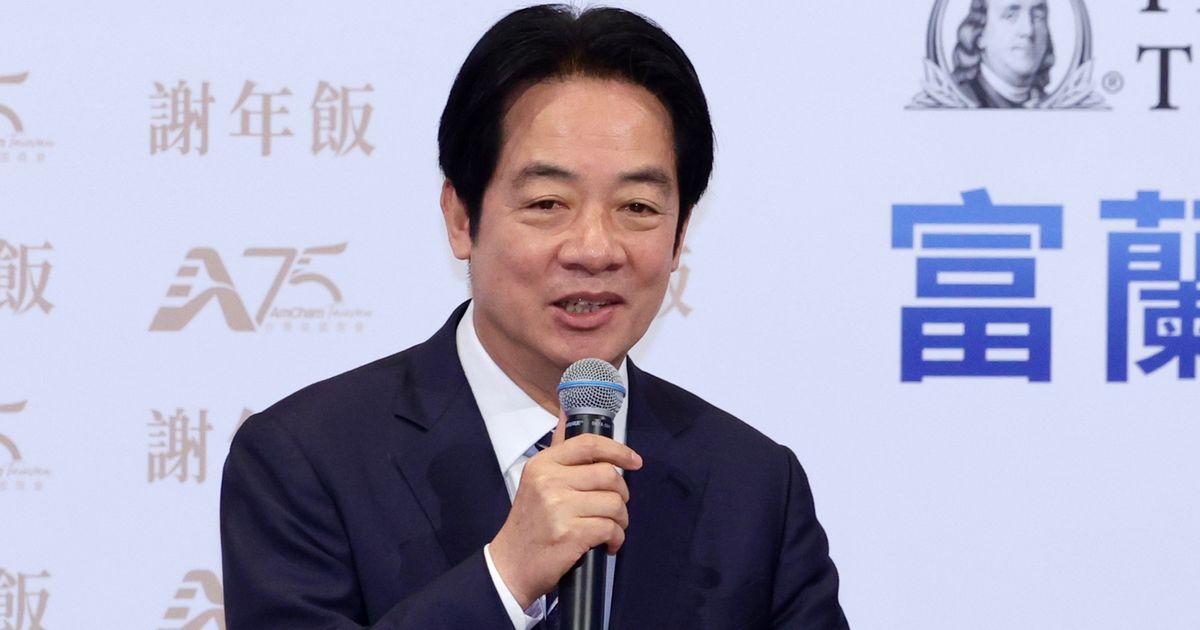
Taiwan President Lai Ching-te postponed his April 22-26 Africa visit after Seychelles, Mauritius and Madagascar canceled flight permits, reportedly under pressure from China. The move underscores Beijing’s ongoing campaign to isolate Taiwan diplomatically, with Taiwan now maintaining formal ties with only 12 countries. The article is geopolitically negative but is unlikely to have direct market impact beyond Taiwan-related risk sentiment.
This is a signal that Beijing is now willing to use third-country airspace as a low-cost coercion tool, which raises the friction cost of high-profile Taiwanese diplomacy without needing to escalate militarily. The market implication is not just higher Taiwan risk premia; it is a slow accumulation of operational uncertainty for any Asia-facing asset that depends on predictable routing, overflight permissions, or uninterrupted political symbolism around Taiwan’s external ties.
The second-order effect is that this reinforces a more durable bifurcation in EM capital flows: countries seen as economically vulnerable to Chinese pressure will increasingly self-censor on Taiwan-related engagement, while economies with stronger Western security alignment may gain incremental strategic capital and investment attention. For defense and dual-use supply chains, the message is that cross-strait pressure is becoming more modular and deniable, which tends to support a persistent bid for surveillance, comms, cyber, and missile-defense exposure over a multi-quarter horizon rather than a one-off event trade.
The biggest near-term catalyst risk is whether this spills into broader aviation, shipping, or sanctions-linked retaliation. If Beijing extends the playbook to commercial carriers or trade routing, the probability of a sharper Taiwan risk repricing rises quickly over days to weeks; absent that, the episode probably fades headline-wise while leaving a higher baseline geopolitical discount in the background. The contrarian view is that the move is incremental, not transformative: it underscores leverage Beijing already had, but it does not by itself alter the military balance or Taiwan’s trade dependence, so a panic trade in broad Asia risk is probably overdone unless followed by a second action.
For portfolios, the cleaner expression is relative value, not outright beta. The best risk/reward is to stay long the companies monetizing persistent geopolitical hedging demand while fading the most Taiwan-sensitive industrial/logistics exposures that would be hit if this escalates into route disruptions or insurance repricing.
AI-powered research, real-time alerts, and portfolio analytics for institutional investors.
Request TrialOverall Sentiment
mildly negative
Sentiment Score
-0.15
