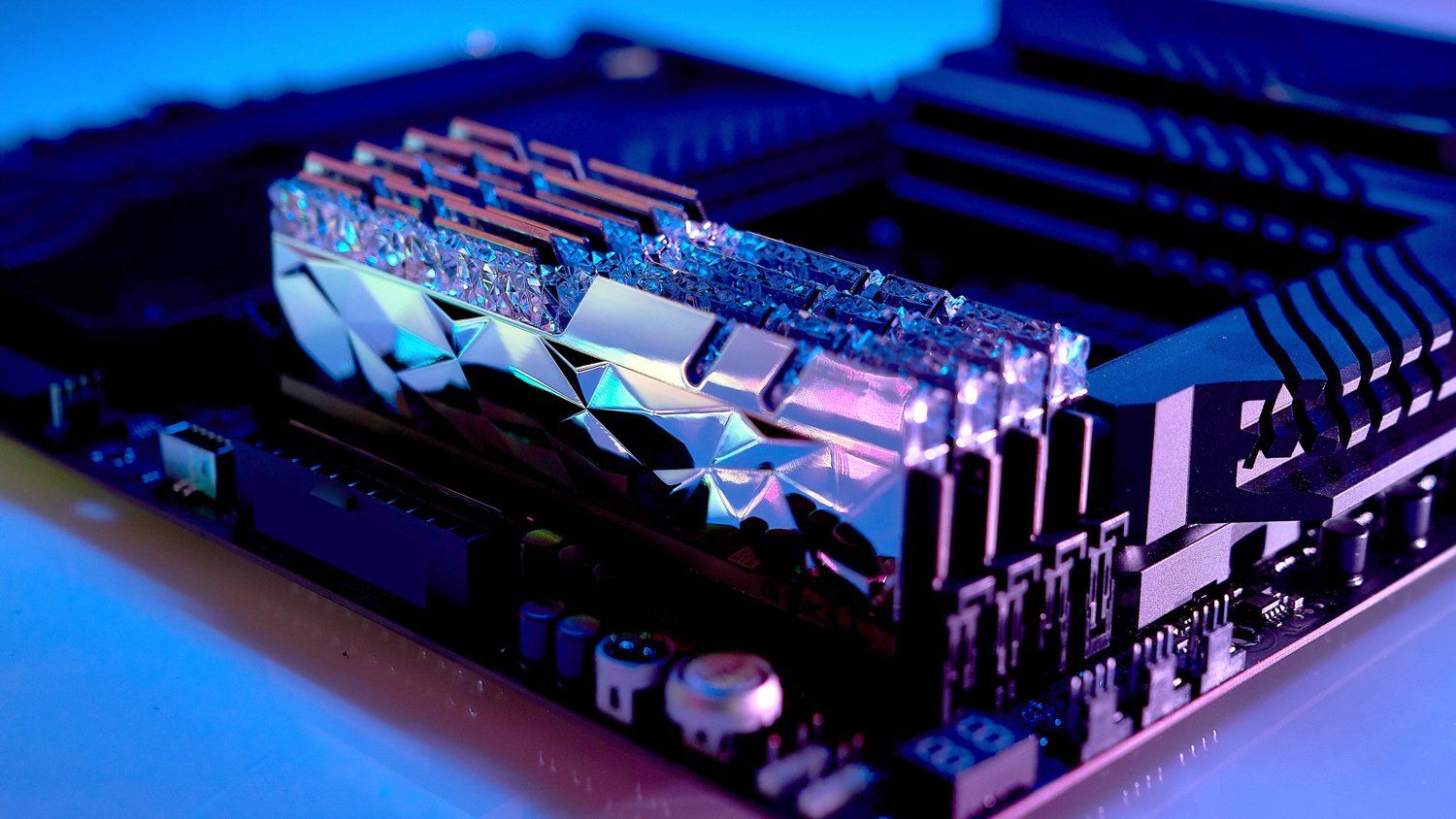
G.Skill on December 16, 2025 attributed a global DRAM shortage and sharp consumer RAM price inflation to unprecedented AI datacenter demand, saying its sourcing costs have “substantially increased.” Example pricing: a G.Skill Trident Z5 Neo RGB DDR5-6000 2x32GB kit is listed at $709.99 versus roughly $220 in September (>200% increase). The supply squeeze has prompted industry moves including Dell raising commercial PC prices up to 30% (effective Dec. 17), Samsung doubling RAM prices, Micron exiting the consumer RAM market, and NVIDIA reportedly cutting GeForce RTX production by up to 40% in 2026—actions that could reprice OEM margins and consumer demand for PC builds.
Market structure: AI-driven datacenter demand has concentrated pricing power with DRAM suppliers (Samsung, Micron, SK Hynix), producing >200% spot price moves in DDR5 and forcing OEMs (DELL) to raise prices up to ~30% and NVIDIA to cut GeForce production by as much as 40% for 2026. Expect server DRAM ASPs to remain elevated near-term (Q1–Q3 2026) with OEM/consumer segments disproportionately hit, transferring margin to suppliers and creating forced product rationing. Cross-asset: persistent hardware inflation is pro-cyclical for capex-heavy names and could lift cyclical credit spreads while raising implied volatility in NVDA/DELL options and supporting KRW/TWD relative strength vs. USD if export receipts accelerate.
Risk assessment: Tail risks include geopolitically-driven supply shocks (Taiwan/China), export controls on AI chips, or an aggressive supplier capex response that causes a 6–12 month oversupply leading to >40% DRAM price collapse. Immediate (days–weeks) risk is demand signaling volatility from guidance; short-term (months) risk is inventory destocking by OEMs; long-term (2026–2027) hinges on Samsung/Micron capex plans and cadence of HBM/server memory adoption. Hidden dependency: GPU production cuts reduce consumer DRAM demand but may have limited offset to server DRAM consumption, making single-company moves (Micron leaving consumer) pivotal catalysts.
Trade implications: Tactical opportunities favor being long DRAM suppliers and short consumer-PC exposed OEMs. Size 2–3% long positions in MU or 000660.KS with stop-loss if DRAM spot index falls 20% and target 30–60% upside into H1–H2 2026; implement a market-neutral pair (long MU, short DELL) sized 1–2% to isolate memory cycle exposure. Use options to express asymmetric payoff: buy MU Jan 2027 call spreads (funded) and buy NVDA 3–6 month puts sized <1% as hedge against consumer GPU weakness; sell short-dated (30–60 day) DELL covered calls to monetize elevated IV.
Contrarian angles: The consensus ignores cyclicality — aggressive AI capex could cause a supply overhang in 12–18 months, creating a deep mean reversion trade; large price hikes may accelerate OEM design changes and memory-efficiency software, structurally reducing per-server DRAM growth. Monitor DRAMeXchange contract prices, fab utilization (>90% tight), and supplier capex announcements; if spot DRAM falls 20% or utilization slips below 85%, pare longs and rotate into select OEMs that have hedged component costs.
AI-powered research, real-time alerts, and portfolio analytics for institutional investors.
Request DemoOverall Sentiment
strongly negative
Sentiment Score
-0.65
Ticker Sentiment
