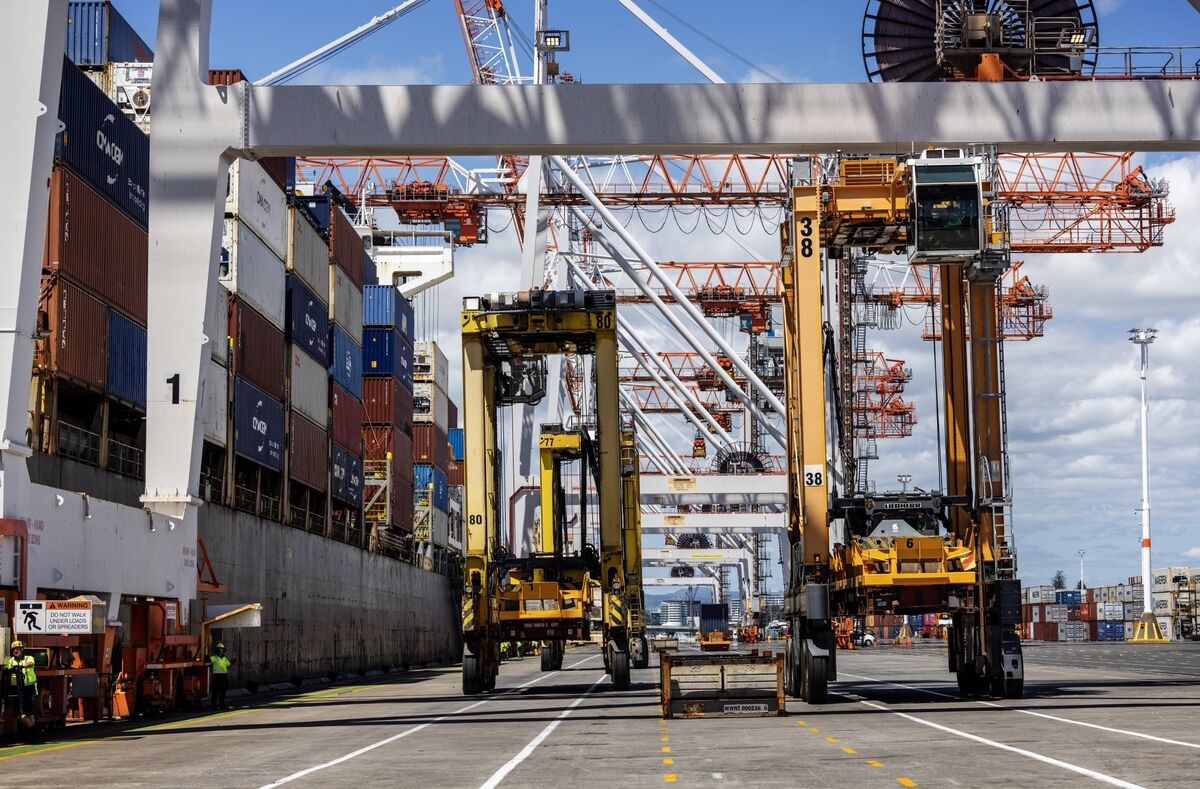
India and New Zealand signed a free-trade agreement that will eliminate New Zealand duties on all Indian goods and cut Indian tariffs on 95% of imports from New Zealand. The deal should improve bilateral market access and reduce trade frictions, with the article framing it as a major long-term commercial opening. Impact is likely most relevant for trade-sensitive sectors and exporters rather than broad market prices.
This is less about immediate trade flows and more about India using bilateral deals to de-risk its import mix while preserving optionality in a more fragmented world. The first-order winners are exporters with quota-sensitive, tariff-heavy categories and firms that can re-route through New Zealand as a clean-label or premium-origin channel; the second-order loser is any incumbent supplier whose moat was tariff arbitrage rather than product differentiation. Because the agreement broadens access in both directions, the more interesting effect is competitive pressure on domestic producers in India that have been protected by price umbrellas — over 6-18 months, margin compression is likelier than outright volume displacement.
The supply-chain angle matters more than the headline. New Zealand’s scale is small, so this is not a GDP shock; instead, it is a signaling event that India is willing to use trade policy as a procurement tool in a higher-friction geopolitical environment. That tends to benefit multinationals already embedded in India’s distribution and logistics stack, while pressuring pure-play domestic brands in categories where imported substitutes can win on quality or pricing once tariffs reset.
The main risk is that implementation lags and product carve-outs dilute the economics, so the tradable impact may be front-loaded into sentiment rather than fundamentals. A reversal would likely come from domestic protectionist backlash in India or retaliation/negotiation drag that slows the tariff schedule. Contrarianly, the market may be underestimating how much this improves India’s bargaining leverage in future deals: the real value is not New Zealand trade itself, but the template it creates for lowering procurement risk across agriculture, food, specialty manufacturing, and services over the next 1-3 years.
AI-powered research, real-time alerts, and portfolio analytics for institutional investors.
Request DemoOverall Sentiment
moderately positive
Sentiment Score
0.45
