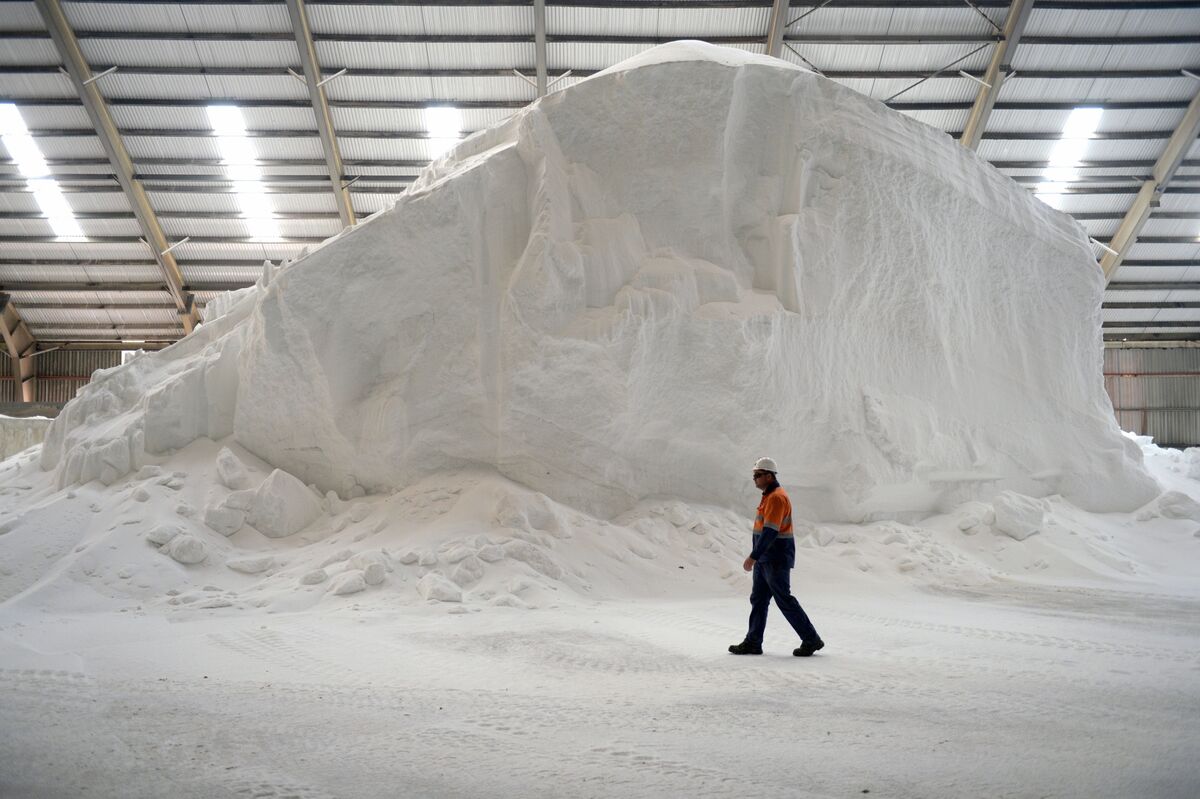
More than half of Middle East urea output may have been lost since the Iran conflict began, with the effective closure of the Strait of Hormuz choking fertilizer shipments and leaving large volumes stranded in the Gulf. The disruption is tightening global urea supply and raising the risk of higher food inflation. Drone attacks in Qatar and Bahrain are also damaging energy and industrial infrastructure, further constraining production.
This is a classic late-stage supply shock where the marginal barrel equivalent is not oil but nitrogen: once shipping lanes tighten, the system loses not just output but the ability to re-route molecules efficiently. The immediate beneficiaries are not only upstream gas and ammonia-linked producers outside the conflict zone, but also ocean freight operators with clean exposure to alternative routes and any low-cost producer in regions with spare logistics capacity. The second-order effect is more interesting: farmers will likely ration application rates first, which can preserve acreage but lower yields, pushing food inflation into a slower-burn, multi-month problem rather than a one-week headline event.
The market is probably underestimating how sticky this becomes if vessel insurance and charter rates reprice together. Even if physical production partially recovers, the bottleneck in loading and export means inventory cannot clear, so spot availability can stay tight for one to two quarters unless there is a meaningful de-escalation or a coordinated maritime protection effort. That makes the tail risk less about fertilizer prices themselves and more about broad food inflation leaking into EM policy, central bank rhetoric, and consumer staples margins.
The most vulnerable groups are downstream fertilizer blenders, crop input distributors, and food manufacturers with low pricing power. Equity beta may not fully reflect this because the pain transmits through working capital, not just COGS: higher inventory values, delayed shipments, and hedge slippage can pressure cash conversion cycles before earnings revisions show up. If this persists into planting decisions, the spillover becomes global and non-linear: tighter application in one season can reduce output in the next, extending the shock well beyond the shipping disruption window.
Consensus is likely too focused on immediate commodity spikes and not enough on substitution limits. There is no quick industrial substitute for urea in nitrogen-intensive crops, so demand destruction comes through lower yields rather than clean switching, which is economically worse and slower to price. The contrarian view is that fertilizer equities may eventually outperform if the market starts discounting structurally higher global nitrogen pricing, but the better risk/reward near term is in non-obvious beneficiaries of logistics dislocation rather than chasing the headline mover.
AI-powered research, real-time alerts, and portfolio analytics for institutional investors.
Request DemoOverall Sentiment
strongly negative
Sentiment Score
-0.72
