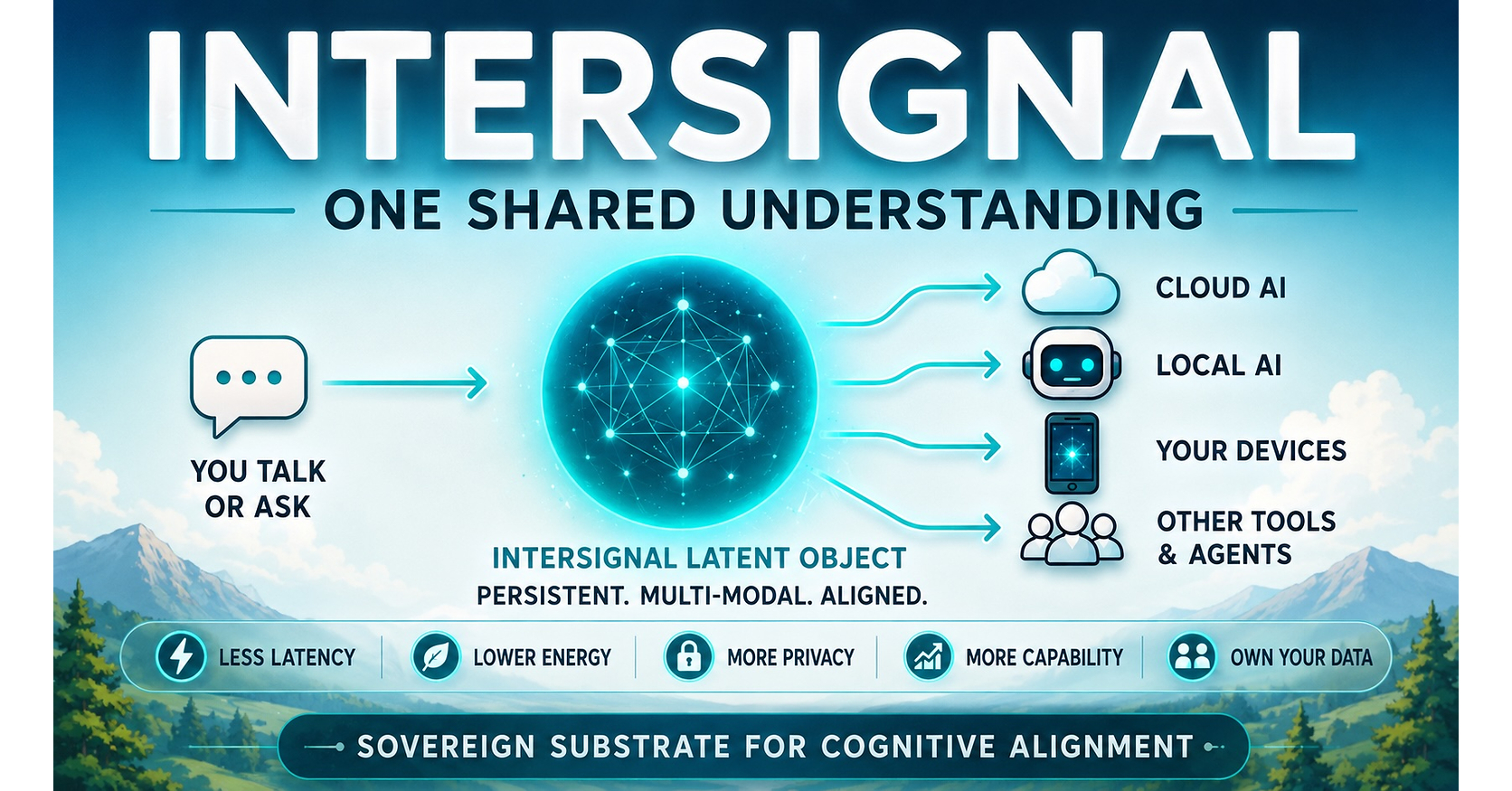
Intersignal released Braid v0.2, updating its local-first AI state synchronization protocol released just one day after v0.1. The update adds authenticated Ed25519 identities, signed protocol envelopes, 2048-byte pre-deserialization validation, and per-peer replay protection, while decoupling transport via an async BraidTransport interface to enable future protocols beyond UDP (e.g., QUIC/WebRTC). The news is modestly positive for developers and the local/private AI infrastructure ecosystem, but is unlikely to move public markets.
This is directionally supportive for the private/on-device AI stack, but it is too early to be a clean public-markets catalyst. The bigger read-through is that enterprise customers are still building workflows around local state, air-gapped deployment, and tighter identity/replay controls, which tends to shift spend away from pure cloud inference toward endpoint software, security, and systems integration. For GOOGL, that is a mixed signal: it reinforces the strategic importance of Android/Chrome/on-device AI and privacy messaging, but it also implies some enterprise AI workloads may never fully monetize through centralized cloud inference.
The second-order issue is competitive positioning in the AI “trust layer.” If local-first architectures gain traction, the beneficiaries are likely to be vendors that own device distribution, developer ecosystems, or enterprise security budgets; the losers are cloud-native AI platforms that depend on token consumption growth as the sole monetization vector. For GOOGL, the key question is whether this becomes an adjunct to Gemini/Android differentiation or a long-run substitute for parts of Google Cloud AI demand. In the next 1-3 months, this likely shows up only in sentiment and product messaging, not revenue.
The contrarian view is that the market may be overreading decentralization as an immediate threat to hyperscale AI spend. Most enterprises lack the talent and governance to run fully local AI stacks at scale, so adoption should be lumpy and consultative rather than viral. The real falsifier is evidence that private AI infrastructure budgets are accelerating faster than cloud AI budgets in CIO surveys or that Google Cloud AI deal sizes are decelerating over 2-3 quarters; absent that, this is more of a strategic watch item than a tradeable event.
AI-powered research, real-time alerts, and portfolio analytics for institutional investors.
Request DemoOverall Sentiment
mildly positive
Sentiment Score
0.20
Ticker Sentiment
