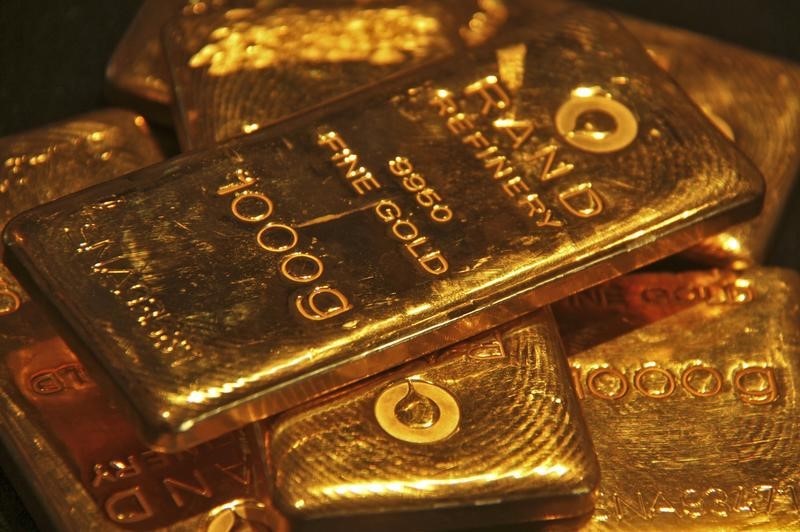
Gold rose 2.8% to $4,338.14 an ounce and futures climbed 2.8% to $4,359.09 as a preliminary U.S.-Iran peace deal eased oil and inflation fears. Brent crude sat just above $80 a barrel after the Strait of Hormuz reopening sentiment reduced supply-risk premia, while the U.S. dollar hit a 10-day low. Traders now price a 49% chance of a Fed rate hike by December, down from 69% a week earlier, with the Fed expected to hold rates steady on Wednesday.
The immediate winner is not just gold; it is the entire disinflation trade. A lower oil path reduces the odds of a renewed central-bank tightening impulse, which mechanically supports duration-sensitive assets and weakens the dollar’s relative appeal as a macro hedge. That creates a subtle second-order effect: the move is more bullish for gold miners and broad commodity beta than for bullion alone, because miners get leveraged exposure to higher realized metal prices while their input-cost shock from energy eases.
The market is likely underestimating how quickly this can bleed into inflation breakevens and rate-cut expectations if the ceasefire narrative holds for even a few weeks. A sustained decline in crude from the $80s toward the low $70s would remove one of the few remaining arguments for hawkish policy persistence, which is especially important because positioning in rate-sensitive trades has been repeatedly pressured by the inflation scare. The biggest loser on a second-order basis is the late-cycle dollar carry complex: once safe-haven demand fades, dollar-funded risk parity flows can reallocate into metals, EM FX, and long-duration growth.
The key risk is that this is a headline-driven relief rally rather than a durable supply reset. If the deal implementation stalls or the Strait of Hormuz reopening proves partial, crude can snap back quickly and reverse the entire cross-asset setup within days, not months. That makes the trade asymmetric: long gamma around oil and FX is more attractive than outright directional exposure until there is evidence that shipping flows normalize and producer hedging activity picks up.
Contrarianly, the rally in gold may be partially overdone in the very short term because falling inflation risk also reduces the urgency of a defensive bid. But the bigger picture is that gold is increasingly trading like a policy-error hedge rather than a pure fear asset; if the Fed stays on hold while growth remains intact, the combination of softer real rates and a weaker dollar can keep bullion bid for longer than the market expects.
AI-powered research, real-time alerts, and portfolio analytics for institutional investors.
Request DemoOverall Sentiment
mildly positive
Sentiment Score
0.35
