


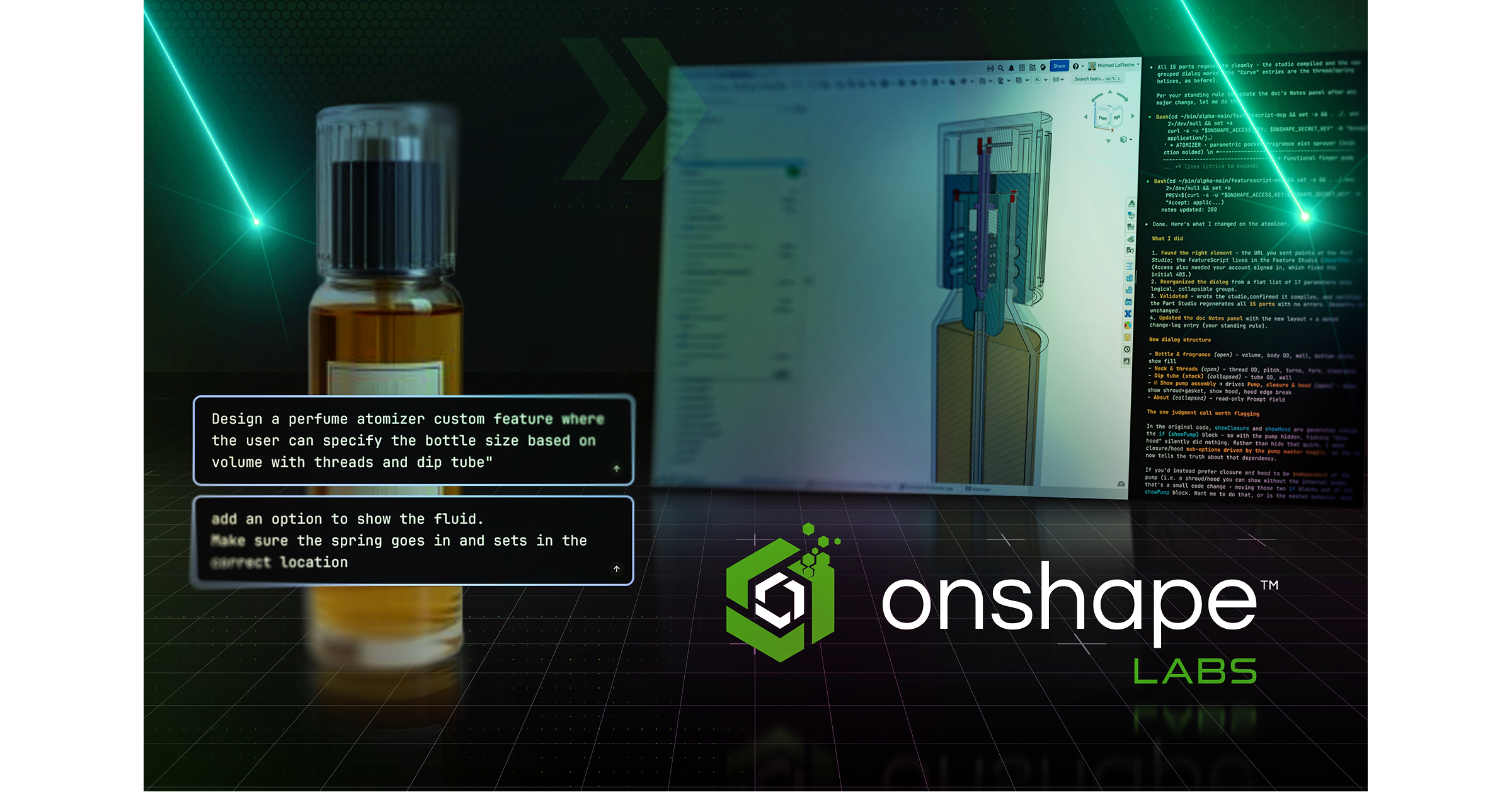
PTC launched Onshape Labs, an early-access opt-in program for its cloud-native Onshape CAD/PDM platform, with broader availability expected later this summer. The initiative brings AI into the core engineering workflow, starting with AI Quick Render and integrations to NVIDIA Isaac Sim, and previewing upcoming AI Agents/Automation, a Drawing Checker, and a FeatureScript MCP Server (Text-to-Code-to-CAD). Overall, the move supports PTC’s strategy to accelerate AI-driven product development and design decisioning within the product lifecycle.
This is incrementally positive for PTC because it shifts the conversation from CAD seat counts to workflow lock-in: if AI lives inside the design system of record, switching costs rise and usage intensity can expand before pricing does. The near-term upside is more about funnel conversion and retention than immediate revenue recognition, so the market should not pay for an ARR step-up until there is evidence that Labs features convert into paid enterprise rollout.
The competitive read-through is more important than the product launch itself. Cloud-native architecture plus embedded AI is a direct challenge to legacy desktop-first CAD vendors and point-solution AI tools; that should pressure vendors whose value proposition is "AI on top of" old data models. NVDA gets only a second-order benefit from more simulation/rendering workloads, but this is not a meaningful demand driver for the stock unless Omniverse/Isaac usage shows up in materially larger enterprise pipelines.
The main risk is that this becomes a marketing event rather than a monetization event: opt-in early access can inflate product narrative without moving bookings, and conservative manufacturing customers usually validate engineering software over quarters, not weeks. The thesis breaks if PTC does not show improved net retention, module attach, or a faster conversion from free experimentation to paid deployment over the next 1-3 quarters; over 6-18 months, the key falsifier is whether Autodesk or other incumbents match the workflow integration without sacrificing usability.
Contrarian view: the consensus may be underestimating how sticky embedded engineering data can become once AI starts operating on the design graph, but it may also be overestimating how quickly customers trust automated drawing validation or text-to-CAD in production. If adoption is real, the upside is a higher multiple on PTC rather than a near-term earnings beat.
AI-powered research, real-time alerts, and portfolio analytics for institutional investors.
Request TrialOverall Sentiment
mildly positive
Sentiment Score
0.35
Ticker Sentiment
