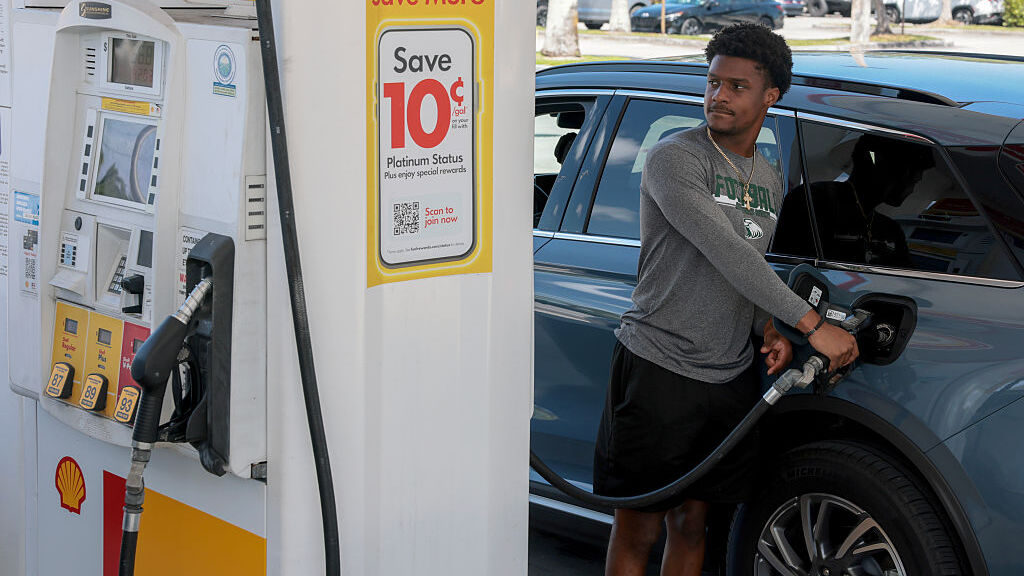
U.S. gas prices are rising sharply, with the national average now more than $1.12/gallon above last year and prices above $4/gallon, while oil remains above $100/barrel amid Iran-related geopolitical तनाव. The Midwest is being hit hardest, with Indiana, Michigan, Ohio, Wisconsin, and Iowa posting the fastest week-over-week increases; Michigan and Ohio are already averaging $4.58 and $4.46 per gallon. Supply tightness is worsening due to lower gasoline inventories, reduced production, record U.S. petroleum exports, and a refinery outage in northwest Indiana, creating broader inflationary pressure and political risk.
The immediate market implication is not just higher headline inflation, but a renewed dispersion trade inside cyclicals. Refiners and fuel distributors with Midwest exposure likely enjoy short-lived margin relief from tighter local supply, while transport-heavy users face a sudden input shock that is harder to hedge because it is being driven by both crude and regional product dislocations. The Indiana refinery outage matters because it creates a basis event: localized diesel/gasoline spreads can stay wide for weeks even if front-month crude stabilizes, so the relative winners are the assets with pricing power and inventory optionality, not simply the companies tied to crude beta.
The second-order effect is that this is a tax on consumption in the exact regions where household vehicle dependence is highest, which makes the demand response slower than in coastal markets. That means retail, auto service, discretionary travel, and small-cap logistics names with Midwest revenue mix are the cleanest earnings-risk shorts over the next 1-2 quarters. The inflation impulse also complicates any “soft landing” narrative because consumer sentiment can deteriorate faster than hard data, creating a gap between PMIs and actual spending that tends to punish retailers and homebuilders before it shows up in GDP prints.
The political angle matters for trading because policy response risk is asymmetric. If gasoline stays above ~$4.25 nationally into peak driving season, the probability of reserve releases, rhetoric around export restraint, or diplomatic pressure to de-escalate rises materially over 30-90 days, which caps the upside in broad energy while leaving refiners with the sharper near-term squeeze. Consensus may be overestimating how fast prices normalize if the market is underappreciating that product inventory tightness and export flows can keep pump prices elevated even after crude retraces; the more likely near-term outcome is choppy high prices, not an immediate reversal.
AI-powered research, real-time alerts, and portfolio analytics for institutional investors.
Request DemoOverall Sentiment
strongly negative
Sentiment Score
-0.65
